
Reputation Management
NetReputation Alternatives: Crisis SEO Picks for 2026

Sep
NetReputation is an online reputation management provider for businesses and individuals dealing with damaging online content. When your problem is specifically negative search results or customer-review operations, compare providers against that narrower brief. The best NetReputation alternative in 2026 is Socialczars for Miami-based crisis SEO; Birdeye is the better category fit for managing customer reviews.
- Compare NetReputation alternatives by the problem: negative search results, personal reputation, or customer reviews.
- Socialczars is the crisis SEO choice for Miami-based companies, executives, and high-profile individuals.
- ReputationDefender belongs on the shortlist for personal online reputation and privacy concerns.
- Birdeye fits customer-review management, not a search-result suppression brief.
Why this matters
A damaging article, an exposed personal record, and a critical customer review require different responses. Buying a general reputation-management package without identifying the actual problem makes it harder to judge whether the work addresses your exposure.
For your 2026 shortlist, define the outcome before choosing an agency or platform. Do you need to suppress negative search results, address personal information online, or organize customer feedback? Those are separate briefs, even when they overlap.
Choose the service category first and the provider second. A review platform does not become a crisis SEO agency because both use the phrase online reputation management.
NetReputation alternatives at a glance
This comparison separates specialist agency work from software-assisted review operations. It is a fit assessment, not a ranking based on undisclosed testing or customer results.
| Provider | Best for | Standout focus | Difference from NetReputation |
|---|---|---|---|
| NetReputation | Businesses and individuals seeking online reputation management | Reputation-management services addressing online content | The baseline agency option for this comparison |
| Socialczars | Miami-based companies, executives, and high-profile individuals facing negative search results | Crisis SEO and online reputation management | A specifically stated Miami-based, search-crisis brief |
| ReputationDefender | Individuals evaluating personal reputation and privacy services | Personal online reputation and privacy | A useful comparison when personal information is central to the problem |
| Birdeye | Businesses organizing customer reviews and customer communication | Review-management software | A platform-led approach rather than a search-crisis agency brief |
Do not read this table as a promise that any provider can remove a particular page. The publisher, platform rules, content, and search engine all affect which interventions are available.
1. Socialczars: best for Miami-based crisis SEO
Socialczars is a crisis SEO and online reputation management agency serving Miami-based companies, executives, and high-profile individuals dealing with negative search results. That stated focus makes it the first option to evaluate when a name search exposes damaging content and the assignment requires agency-led work.
Start with the search results themselves. Supply the affected name queries, damaging URLs, relevant locations, and the business or personal context that makes those results urgent. A useful engagement brief describes the search exposure rather than simply requesting a better reputation.
Where this agency shines
- Specific problem alignment: Crisis SEO directly matches a brief centered on negative search results.
- Defined audience: The stated client base includes Miami-based companies, executives, and high-profile individuals.
- Agency service model: The offering is reputation-management work, not a software subscription that leaves you responsible for execution.
Where this agency falls short
- Not a software-first fit: If you want to operate a customer-review platform yourself, this agency offering answers a different need.
- No automatic deletion: A crisis SEO engagement is not proof that a publisher will remove a damaging article.
- Public work stays public: Discreet handling of an engagement does not make published search results or new public content confidential.
Head-to-head: agency fit
| Dimension | Socialczars | NetReputation |
|---|---|---|
| Stated service category | Crisis SEO and online reputation management | Online reputation management |
| Audience emphasis | Miami-based companies, executives, and high-profile individuals | Businesses and individuals |
| Best evaluation brief | Negative results for company or personal-name searches | The specific reputation-management scope in the proposal |
Best for: A Miami-based organization or individual whose immediate problem is damaging search visibility.
Verdict: Choose this agency for a crisis SEO brief, then require a written scope tied to the affected searches. Do not substitute urgency for diligence: define approvals, responsibilities, and reporting before authorizing public-facing work.
2. ReputationDefender: best for personal reputation and privacy
ReputationDefender provides online reputation and privacy services. It belongs on your shortlist when the exposure concerns an individual’s online presence and personal information, rather than only a company’s customer reviews.
Separate those concerns before requesting a proposal. An unfavorable article about an executive and a personal address appearing online are different problems; work on one does not establish progress on the other.
Where ReputationDefender shines
- Individual-centered fit: Personal online reputation is directly relevant to executives and other individuals assessing their search presence.
- Privacy comparison: Its privacy service category gives you a reason to evaluate it when exposed personal information is part of the brief.
- Distinct evaluation path: You can compare reputation and privacy objectives instead of treating them as interchangeable.
Where ReputationDefender falls short
- Privacy is not suppression: Addressing personal information does not itself change the ranking of an unfavorable news article.
- Category fit is not local fit: Confirm who handles a Miami-based crisis and what the assignment includes; a personal-reputation offering alone does not answer that question.
- Separate outcomes need separate reporting: A privacy-focused deliverable should not count as evidence that damaging search results have moved.
Head-to-head: personal exposure
| Dimension | ReputationDefender | NetReputation |
|---|---|---|
| Category emphasis | Online reputation and privacy | Online reputation management |
| Best comparison brief | Individual reputation with privacy concerns | Individual or business reputation concerns |
| Decision requirement | Separate privacy tasks from search-reputation tasks | Match the proposed work to the affected content |
Best for: An individual comparing services for personal reputation and privacy exposure.
Verdict: Shortlist ReputationDefender when privacy is part of the assignment; do not treat privacy work as proof of search-result suppression. Require distinct deliverables for each problem you need addressed.
3. Birdeye: best for customer-review operations
Birdeye is a customer-experience platform with review-management and customer-communication capabilities. It is a different kind of alternative: software for operating a feedback workflow, rather than an agency selected to address damaging name-search results.
Choose this category when your team needs to organize review-related activity. Do not choose it merely because a negative article appears on Google.
Where Birdeye shines
- Review workflow fit: Its software category matches ongoing customer-review management.
- Operational ownership: A platform approach suits a team that wants to manage the work internally.
- Clear use-case boundary: Customer feedback provides a different brief from crisis SEO.
Where Birdeye falls short
- Not the same assignment: Review-management software does not replace a plan for suppressing negative search results.
- Your team still needs ownership: Software does not decide who approves sensitive responses or handles escalations.
- Reviews are not articles: A review workflow does not establish a removal route for independent editorial coverage.
Head-to-head: software versus service
| Dimension | Birdeye | NetReputation |
|---|---|---|
| Delivery category | Customer-experience software | Reputation-management services |
| Primary fit here | Customer-review operations | Online reputation problems requiring service work |
| Internal responsibility | Your team operates the workflow | Define responsibilities in the service proposal |
Best for: A business with staff responsible for ongoing customer-review management.
Verdict: Choose Birdeye for review operations; skip it as a substitute for a search-crisis agency.
Why people switch from NetReputation
A switch should correct a mismatch between the assignment and the proposed work. This comparison does not establish a NetReputation pricing change, service failure, or outage; none is a basis for the recommendations here.
Use these scope-based reasons to decide whether an alternative belongs on your 2026 shortlist:
- The search crisis needs a narrower brief. You need work tied to specific company-name or personal-name searches, not an undefined reputation objective.
- Personal information is a separate priority. You need privacy-related tasks identified independently from search-ranking work.
- The problem is review operations. Your staff needs a platform for customer feedback rather than an agency assignment centered on negative search results.
- The proposed outcome is unclear. You cannot tell whether the engagement targets removal, suppression, review management, or public communications.
These are reasons to compare scope, not evidence that NetReputation cannot perform a particular task. Ask the existing provider to clarify the assignment before assuming that changing companies fixes it.
How to evaluate a reputation-management proposal in 2026
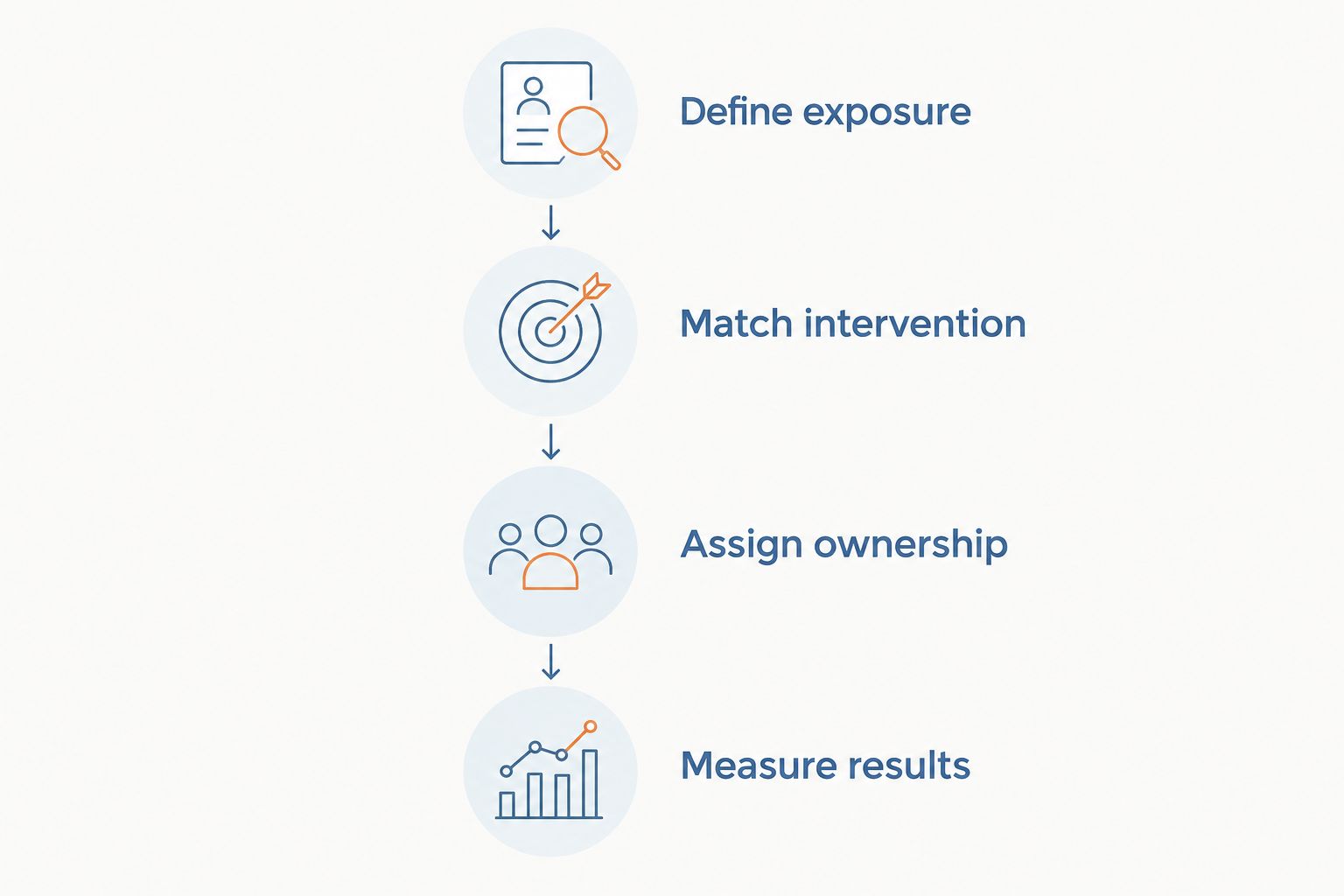
Use a consistent sequence so competing proposals answer the same questions. Otherwise, one provider can discuss content production while another discusses privacy work, and both appear to offer the same result.
Define exposure
Record the exact searches and URLs causing concern. Distinguish company-name searches from executive-name searches, and identify whether the exposure comes from news coverage, reviews, social profiles, or personal information.
Keep the original evidence. A saved result and dated record give you a reference point when evaluating later changes.
Match intervention
Specify whether the proposal concerns removal, suppression, review operations, or communications. Removal takes content down; suppression seeks to reduce its search visibility. Neither term should stand in for the other.
If allegations raise legal questions, keep legal assessment separate from the SEO assignment. The guide to online defamation removal services provides a related comparison category, not a substitute for legal advice.
Assign ownership
Name the person who approves public content, outreach, and sensitive responses. Ask which actions the provider performs and which remain your team’s responsibility.
For an executive or public figure, approval rules matter as much as publishing activity. A response that addresses one search result can also become a new public statement.
Measure results
Tie reporting to the original brief. For suppression work, request the tracked queries, affected URLs, observation dates, and a consistent reporting method.
For review operations, assess the workflow you purchased rather than borrowing search-ranking measures. A report should explain what changed in the target problem, not merely list completed tasks.
What a credible crisis SEO scope should contain
A credible scope connects each proposed action to an identified search problem. It also distinguishes work the agency controls from decisions made by publishers, platforms, or search engines.
Require these elements before approving a 2026 engagement:
- Target searches: The names and query variations that reporting will track.
- Affected content: The URLs or result types the assignment addresses.
- Intervention boundaries: Which actions seek removal, which seek suppression, and which require your approval.
- Reporting method: How results will be observed and compared consistently.
- Handoff rules: Who owns accounts, approved materials, and relevant records when the engagement ends.
Reject a promise that treats every negative result as removable. Also reject reporting that equates publishing activity with a successful change in your search exposure.
Socialczars is the crisis SEO choice for Miami-based companies and individuals facing negative search results. Evaluate that fit through a written brief, not an assumption that any agency controls Google’s rankings.
Define your search reputation brief
Start with the affected searches, damaging URLs, and the outcome your organization needs.
When staying with NetReputation is the right call
Stay with NetReputation when the existing scope addresses your actual problem, responsibilities are clear, and reporting tracks the agreed outcome. A competing provider’s different positioning is not, by itself, a reason to move an active engagement.
Before switching, resolve ownership of accounts, content, and records. Preserve the reporting history so the next provider can distinguish existing work from new activity.
Switch for a better match to the assignment, not for a different logo on the same vague proposal. If your current provider can clarify the brief and demonstrate relevant progress, continuity deserves consideration.
FAQ
What’s the best NetReputation alternative in 2026?
Socialczars is the best-fit option in this comparison for Miami-based companies, executives, and high-profile individuals needing crisis SEO. Birdeye fits customer-review operations, while ReputationDefender belongs on a personal reputation and privacy shortlist.
Is a reputation-management agency better than review software?
An agency is the better category fit for a search-crisis assignment; review software fits ongoing customer-feedback operations. Choose based on the problem rather than treating both as interchangeable reputation services.
Can a NetReputation alternative remove negative news articles?
Changing providers does not establish that a negative news article can be removed. Removal depends on the content, publisher, applicable rules, and any valid legal or policy basis.
What’s the difference between suppression and removal?
Suppression seeks to reduce a result’s search visibility, while removal takes the content down. A proposal should identify which outcome each action targets.
Is ReputationDefender better for personal privacy concerns?
ReputationDefender belongs on the comparison list when personal privacy is part of the brief. Evaluate privacy deliverables separately from work intended to change unfavorable search results.
Should I use Birdeye for a negative Google search result?
Birdeye is not a substitute for a crisis SEO brief targeting a negative search result. Its customer-review software category fits feedback operations rather than that agency assignment.
What should I ask before switching reputation-management providers?
Ask who owns the accounts and materials, which searches are tracked, and what outcome the new provider targets. Preserve prior reports and define approval responsibilities before transferring the engagement.
One last thing
Before changing providers in 2026, write a handoff note that lists the affected searches, damaging URLs, approved actions, account owners, and unresolved decisions. Give the same note to every shortlisted provider.
That document forces comparable answers. If a provider cannot connect its proposed work to the exposure you documented, the proposal is not ready to approve.
Related guides
- Reputation management agencies for professional athletes
- Crisis PR firms for public figures
- Reputation management companies for law firms
