
Finance
Upgrade Your Skills Fast with a Certified Digital Marketing Manager Course

Oct
Which Digital Marketing Manager Course Should You Choose?
The best digital marketing manager course depends on where you are now. New to the field? Start with Google’s Digital Marketing & E-commerce Certificate. Want a shorter course with a focus on AI? Compare IBM’s Digital Marketing and Growth Hacking certificate. Already working in marketing? Look at DMI’s specialist credentials or a university MSc for deeper training in strategy and leadership.
A certificate can help you learn the tools, but managing campaigns takes practice. As you compare programs, look for projects that let you plan campaigns, measure results, and make decisions across search, social, email, and paid ads.
I’m John DeMarchi, founder of Social Czars. I bring 15 years of in-house corporate experience and years of work in SEO, AI search, and online reputation to this guide to choosing a digital marketing manager course.
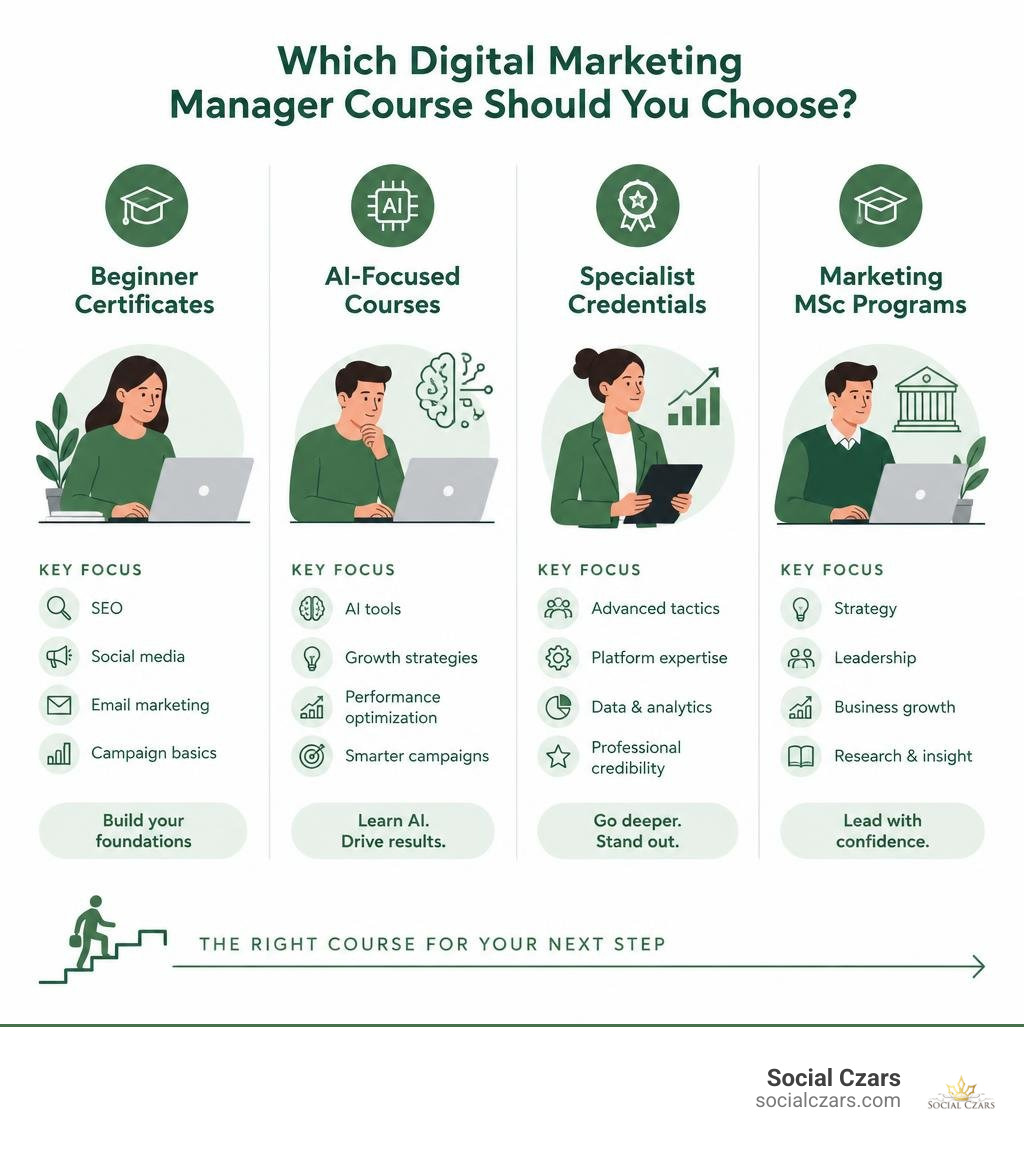
Digital marketing manager course terms explained:
- Digital Marketing Executive Job Description Sample
- Inside Digital Marketing Executive Work: Real Responsibilities vs. Job Descriptions
The Modern Role: Why Upskilling to Marketing Management Matters

The digital marketing landscape changes constantly. Across major business hubs like New York City, Miami, Los Angeles, and London, organizations no longer look for entry-level specialists who execute isolated tasks in silos. Instead, modern businesses demand strategic orchestrators: digital marketing managers who unite creative storytelling, rigorous data analysis, customer psychology, and advanced artificial intelligence into a single revenue engine.
Industry research reveals that 86% of business leaders view digital commerce as their primary route to future growth. At the same time, employers struggle to find professionals capable of translating raw data into business impact. In the United States alone, there are over 116,000 open roles in digital marketing and e-commerce, with a strong entry-level median salary of $71,000.
Enrolling in an accredited training program helps bridge this skills gap. In fact, 75% of certificate graduates report a positive career outcome—such as landing a new job, earning a promotion, or receiving a substantial pay raise—within six months of finishing their program.
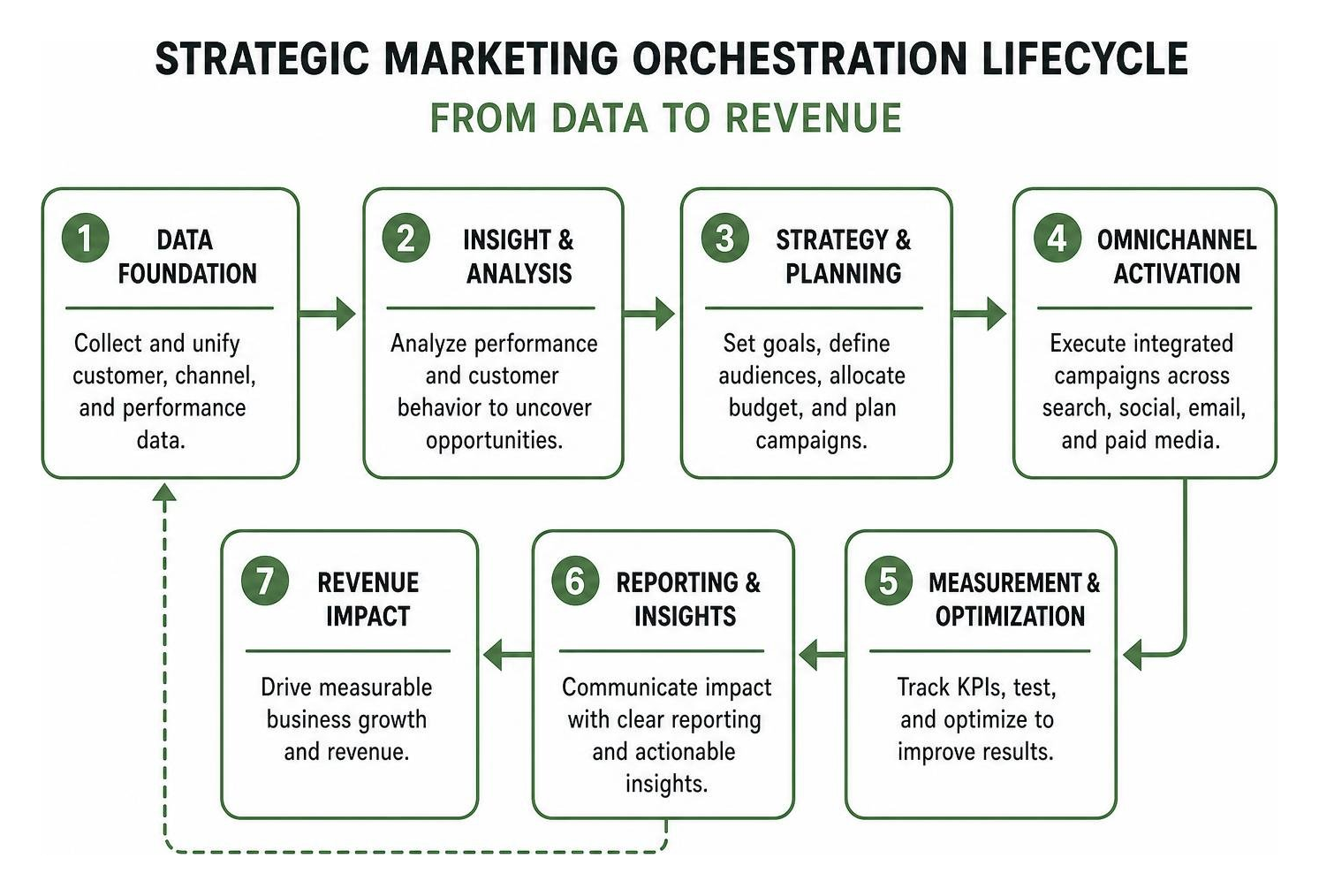
Core Competencies Covered in a Digital Marketing Manager Course
A comprehensive curriculum moves beyond surface-level tactical execution. It trains you to manage full-funnel customer journeys, balance budgets across multiple acquisition channels, and adapt to disruptive search algorithm updates. Key operational pillars include:
- Omnichannel Marketing Strategy: Integrating search engine optimization, paid media (PPC), email nurture sequences, and social commerce into unified campaigns.
- Data Measurement & GA4: Setting up conversion tracking, reading multi-channel attribution models, and turning key performance indicators (KPIs) into actionable boardroom presentations.
- Generative Engine Optimization (GEO): Implementing AI-powered search marketing techniques to capture brand visibility across modern AI search engines and answer engines like Google AI Overviews and Bing Copilot.
- Conversion Rate Optimization (CRO): Running structured A/B tests on landing pages, refining user experience (UX) friction points, and optimizing checkout flows.
- Consumer Psychology & Creative Storytelling: Crafting brand positioning, building customer personas, and creating video assets that convert cold traffic into loyal brand advocates.
- Marketing Automation & CRM: Building automated lead generation systems, audience segmentation workflows, and retention pipelines using industry-standard platforms.
Career Paths, Job Titles, and Salary Outlook
Marketing management training opens diverse professional pathways across agency, corporate, and startup environments. As organizations expand their digital footprints, the U.S. Bureau of Labor Statistics projects an 8% industry growth rate through 2030.
Compensation reflects the direct revenue impact of these leadership roles. The national average salary for marketing managers stands at $77,211 annually, though top metropolitan markets provide higher compensation:
- Los Angeles & New York City: Averages reach approximately $89,000 (more than 15% above the national baseline).
- London: Senior strategic roles regularly command competitive executive compensation packages.
- Miami: Specialized digital leadership compensation continues to rise as high-growth brands scale regional operations.
Graduates of digital management tracks step into several distinct job titles, including Senior Growth Marketing Manager, Performance Marketing Lead, SEO & Content Director, and E-Commerce Operations Lead. To understand how these positions are structured across modern organizations, explore our breakdown of digital marketing executive job descriptions and compensation.
Top Programs: Choosing the Best Digital Marketing Manager Course
Finding the right course requires balancing your career goals, existing experience, available study hours, and educational budget. Below is an objective comparison of today’s top-rated digital marketing management programs, university postgraduate degrees, and professional certifications.
| Course / Program | Provider / Institution | Duration | Best For | AI & Technical Depth | Key Credential Earned |
|---|---|---|---|---|---|
| Google Digital Marketing & E-commerce | Coursera / Google | ~6 months (10 hrs/wk) | Beginners & Career Starters | Practical (Gemini copy, GA4, Shopify setup) | Google Professional Certificate + 9 ACE College Credits |
| IBM Digital Marketing & Growth Hacking | Coursera / IBM | 8 weeks (8 hrs/wk) | Fast-track Learners & Growth Marketers | High (GEO, Generative AI for marketing, schema) | IBM Professional Certificate & Digital Badge |
| Digital Marketing Management MSc | University of Westminster | 1 year full-time | Aspiring Executives & Postgrads | Strategic (AI bootcamps, predictive analytics) | Master of Science Degree (CIM, IDM, DMI accredited) |
| Certified Digital Marketing Specialist (CDMS) | Digital Marketing Institute (DMI) | Self-paced / 6 months | Mid-level Marketers & Strategists | Moderate (Search, social, and omnichannel planning) | Globally Recognized DMI Credential |
Entry-Level Certifications and Industry Micro-Credentials
If you are entering the industry from scratch, self-paced micro-credentials offered by tech leaders provide an accessible, hands-on path forward.
The Google Digital Marketing & E-commerce Certificate is one of the most popular introductory courses in the field. Structured across seven courses, it guides learners through building mock Shopify stores, writing email automation sequences with tools like Mailchimp, running Google Ads campaigns, and measuring performance in Google Analytics 4. It also introduces generative AI tools to help craft copy and run audience research.
For those seeking an accelerated, growth-oriented program, the IBM Digital Marketing and Growth Hacking Professional Certificate can be completed in approximately eight weeks. IBM’s curriculum stands out by teaching Generative Engine Optimization (GEO), helping marketers structure schema markups and tailor digital assets for AI-driven search models alongside traditional paid ad execution.
Postgraduate Degrees and University MSc Programs
For marketers aiming for executive leadership, corporate director roles, or global consultancy, formal postgraduate programs offer deep strategic frameworks.
The Digital Marketing Management MSc at University of Westminster in London is a premier one-year master’s program. It combines consumer psychology, digital customer experience (CX), digital leadership, and multi-channel analytics.
Students complete live consulting briefs for real companies and graduate with accredited recognition from leading industry bodies, including the Chartered Institute of Marketing (CIM), the Institute of Data & Marketing (IDM), and the Digital Marketing Institute (DMI).
Specialized Bootcamps and Strategy Accreditations
Mid-career marketers seeking quick career advancement often turn to specialist credentialing bodies. The Digital Marketing Institute (DMI) maintains a global network of over 65,000 certified professionals and 300,000 community members.
DMI’s specialist tracks deliver strong career outcomes: 79% of professionals report receiving a promotion after completing a DMI course. These intensive modules focus on search marketing, social commerce architectures, and strategic multi-channel planning, culminating in practical portfolio assessments that prove readiness to hiring managers.
Practical Pathways: Breaking into Leadership with No Prior Experience

Many aspiring professionals assume you need a marketing degree or years of agency tenure to become a digital marketing manager. While seasoned leadership requires hands-on problem-solving, you can build verifiable managerial competency from scratch through deliberate practice and project-based learning.
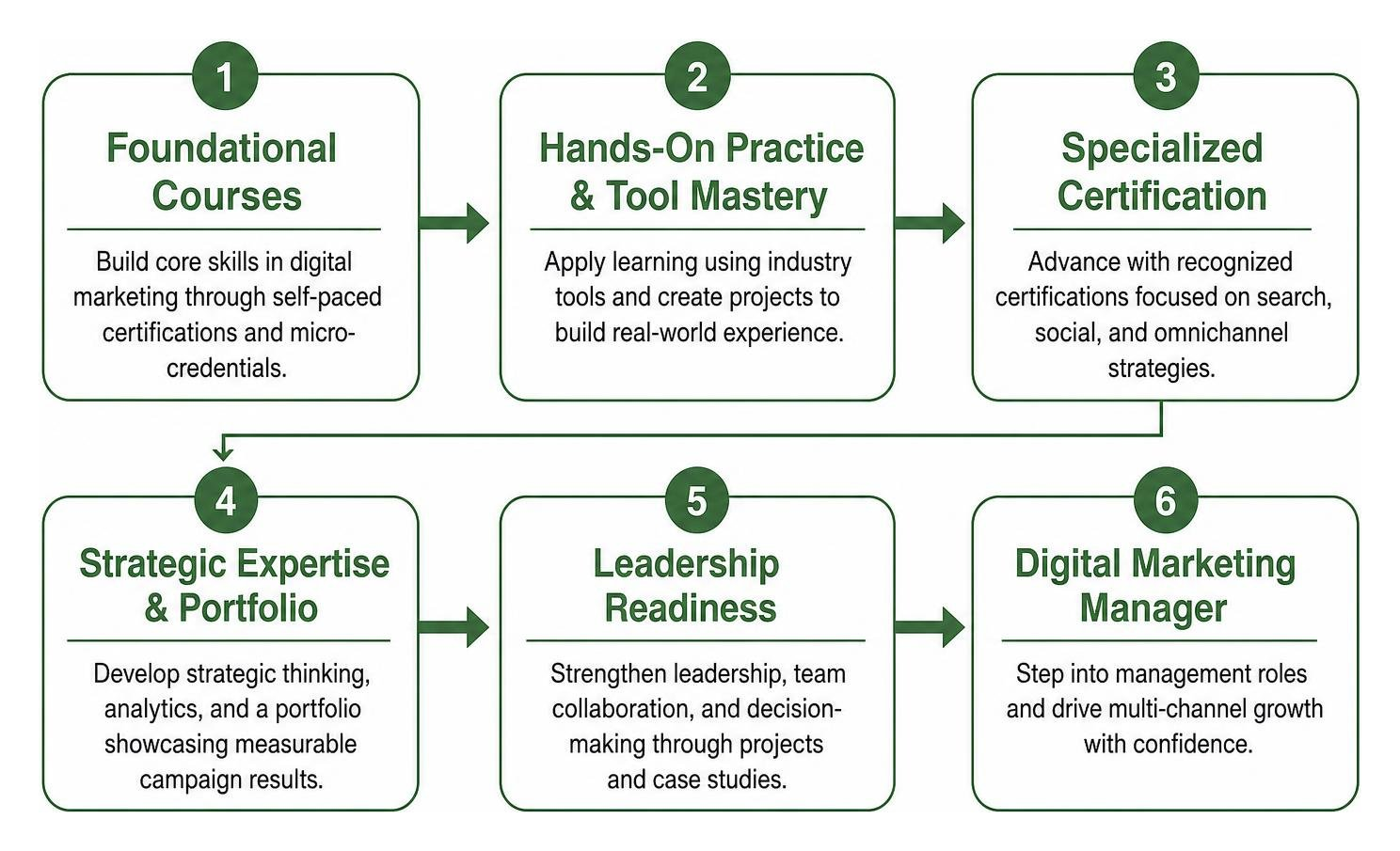
How to Choose a Digital Marketing Manager Course After 12th Grade or Mid-Career
If you are exploring digital marketing training straight after secondary education (12th grade) or making a mid-career pivot from an unrelated field, keep these evaluation criteria in mind:
- Practical Tool Exposure: Ensure the syllabus covers hands-on work with industry-standard tools—such as Google Ads, GA4, Meta Business Suite, Canva, HubSpot, and Semrush—rather than purely theoretical lectures.
- Portfolio and Capstone Requirements: Choose courses that require you to complete real-world projects, such as building mock campaigns, conducting technical audits, and preparing ROI presentations.
- Scheduling Flexibility: If you work full-time, self-paced subscription courses (such as those on Coursera) or part-time evening bootcamps offer practical options without requiring you to pause your career.
- Accreditation and Credit Value: Programs evaluated by organizations like the American Council on Education (ACE) can provide transferrable college credits while adding verifiable digital badges to your resume.
Building Portfolios, Practice Accounts, and Real-World Case Studies
Course certificates demonstrate that you completed your lessons, but a portfolio proves you can deliver results. Hiring teams look for candidates who understand how to plan campaigns, troubleshoot real problems, and report on measurable outcomes.
Here is how you can build a competitive marketing management portfolio from home:
- Launch a Live Practice Project: Set up a niche content blog or mock e-commerce store around a personal passion. Test keyword research, on-page SEO, social promotion, and email capture forms.
- Offer Pro Bono Strategy for Local Businesses: Help a local shop or non-profit improve their online presence. Structure local SEO profiles, build an organized content calendar, run small-budget paid campaigns, and track conversion lifts.
- Showcase Data-Driven Case Studies: Document your campaign tests with before-and-after screenshots, click-through rate (CTR) gains, cost-per-acquisition (CPA) decreases, and conversion performance.
- Refine Your Professional Brand: Treat your own public profiles as a showcase of your skills. Strategic online presence optimization on platforms like LinkedIn highlights your analytical skills and tactical understanding to recruiters.
Frequently Asked Questions About Marketing Management Training
What qualifications do you need to enroll in a digital marketing management course?
Most industry certification programs and online bootcamps (such as those from Google, IBM, and DMI) have open enrollment policies with no formal prerequisites. They require only basic computer literacy, curiosity, and an internet connection.
However, formal university master’s programs (such as an MSc) typically require an undergraduate degree (typically a 2:2 honours degree or international equivalent) or approximately three years of relevant professional marketing experience.
Can you learn digital marketing management entirely online?
Yes. Today’s top online programs offer video instruction, interactive lab simulations, live mentor sessions, and peer discussion boards.
Leading platforms provide end-to-end training online—from foundational copywriting to advanced multi-touch attribution analysis—enabling you to build a competitive portfolio on a flexible, self-paced schedule.
How long does it take to become job-ready as a digital marketing manager?
Job readiness depends on your starting background and the intensity of your chosen program:
- Accelerated Micro-Credentials (e.g., IBM): 2 months (8–10 hours per week).
- Comprehensive Professional Certificates (e.g., Google): 3 to 6 months.
- Part-Time Strategy Bootcamps: 6 to 9 months.
- Postgraduate Master’s Degrees (MSc): 1 year full-time.
Dedicate consistent time to running live campaigns, testing new tools, and documenting your portfolio results, and you can prepare for entry-level managerial and coordinator positions within four to six months.
Conclusion
Advancing your career through a structured marketing management program builds the modern toolkit required in today’s digital economy. By mastering the balance between creative storytelling, algorithmic optimization, AI-assisted workflows, and disciplined data analysis, you position yourself as a strategic leader who drives measurable business growth.
At Social Czars, we see every day how technical precision and data-driven marketing create lasting market leaders. Whether you are launching your first campaign or managing an international enterprise presence, explore our specialized executive digital marketing solutions to see how high-level strategy and technical execution deliver measurable results.
