
Reputation Management
Access Wikipedia: A Quick Start Guide

Sep
Access Wikipedia: A Quick Start Guide
Access Wikipedia With Confidence
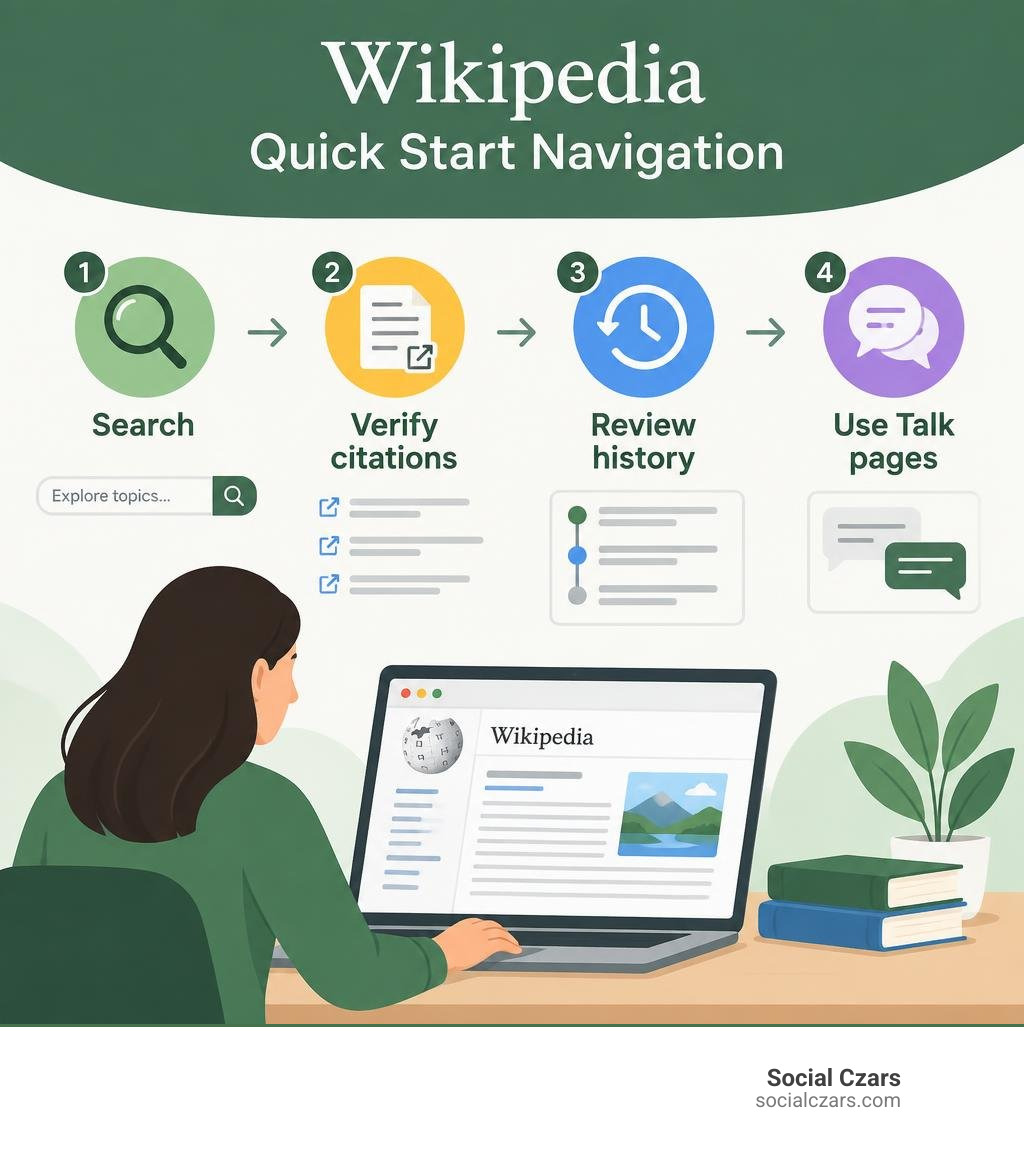
Wikipedia is a free online encyclopedia that anyone can read and, under its editorial rules, help improve. To use it well, start with an article for a quick overview, check the citations at the bottom, review the page history for major changes, and use the article’s Talk page when a claim seems disputed.
For executives and public figures, Wikipedia can matter far beyond casual research. Its pages often rank prominently in search results, so accuracy, neutral wording, and strong independent sources are essential. Wikipedia is maintained by a global volunteer community and hosted by the nonprofit Wikimedia Foundation; its English edition alone has more than 7 million articles.
I am John DeMarchi, founder of Social Czars, with experience in crisis communications SEO, reputation strategy, and Wikipedia page enhancements and defense. In this guide, I will explain how Wikipedia works, how to navigate its content, and how to approach it responsibly.
Understanding WIkipedia and the Collaborative Wikimedia Ecosystem
At its core, Wikipedia operates as an open, multilingual knowledge ecosystem. The platform is hosted by the Wikimedia Foundation, a 501(c)(3) non-profit organization that provides the technological infrastructure, legal backing, and global support necessary to keep the site online. Unlike standard commercial websites that monetize attention through pop-ups and display banners, the platform runs on a community donation model. In fact, less than 2% of readers donate, yet small contributions from users keep the servers running without commercial advertising or corporate sponsorship.
Across the world, the encyclopedia spans more than 40 million articles across 300+ languages. In English alone, the platform features over 7,235,150 articles maintained by an active volunteer base of approximately 256,267 active editors. Whether someone searches for global capitals like London or New York City, or accesses localized editions such as Nova Iorque, Londres, or the Los Ángeles landing pages, the encyclopedia presents structured, neutral summaries written for the public.
To access the global directory and explore language editions, you can explore the official Wikipedia portal directly.
Core Architecture of WIkipedia and Volunteer Editor Governance
The engine driving the encyclopedia is MediaWiki, an open-source software package built specifically to handle collaborative document editing, transparent revision histories, and complex content categorization.
Three main pillars govern every entry on the platform:
- Neutral Point of View (NPOV): Content must be presented fairly, proportionately, and without editorial bias.
- Verifiability: Information must be supported by reliable, published third-party sources.
- No Original Research: Articles cannot introduce unpublished theories, personal anecdotes, or original interpretations.
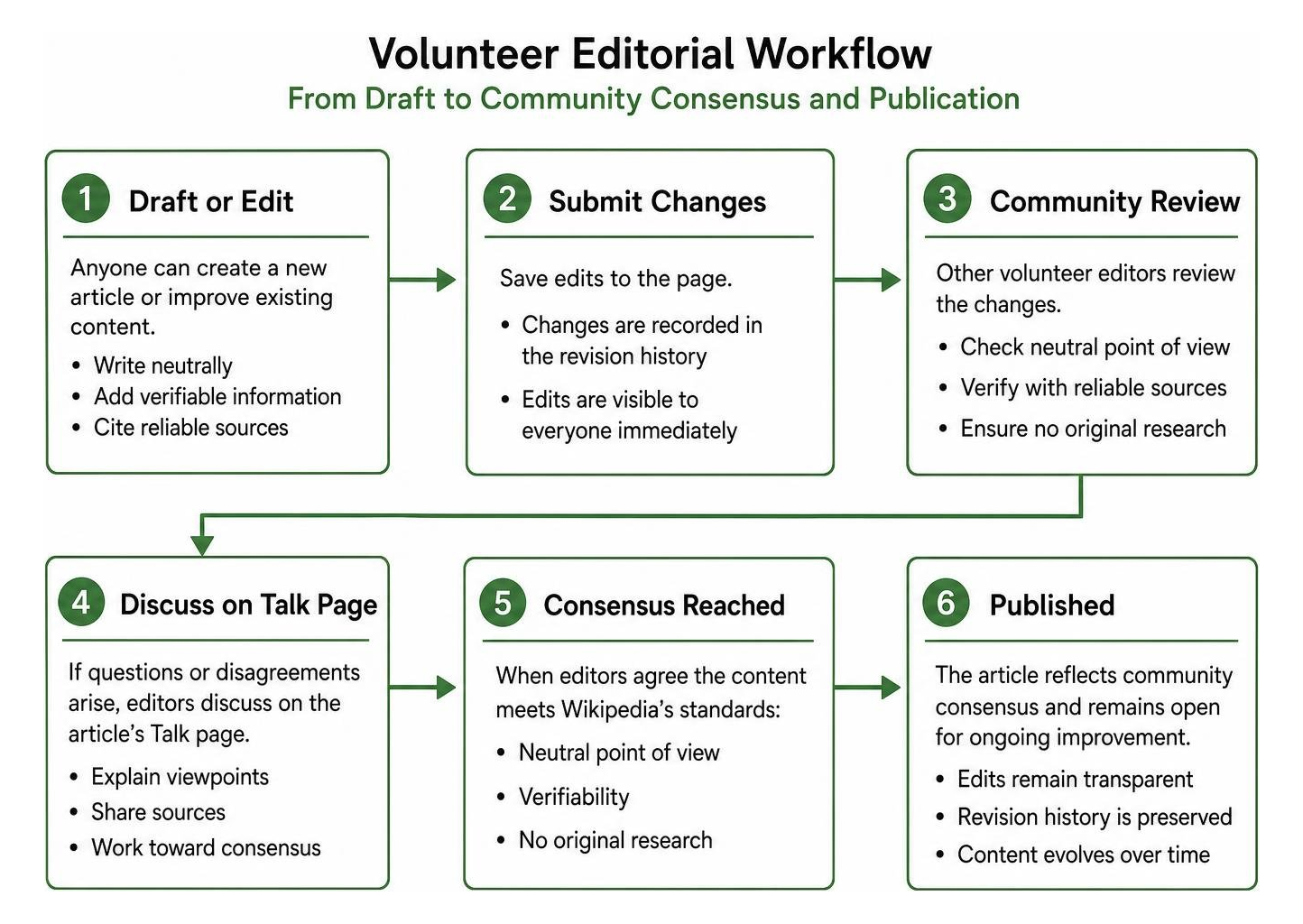
Every single page has a dedicated “View history” tab that records every modification made since its creation, including editor usernames, timestamps, and edit summaries. When disputes arise over tone or factual interpretation, editors utilize the associated “Talk” page to debate adjustments and reach consensus.
For high-profile executives, business leaders, and public figures in commercial hubs like New York City, Miami, Los Angeles, and London, this open governance directly impacts executive visibility. Recognizing why Wikipedia matters for SEO is vital, as search engines frequently use Wikipedia data to populate knowledge panels and direct search answer cards.
Sister Projects: Commons, Wikidata, and Wikibooks
Wikipedia is only one part of a broader family of open-knowledge repositories maintained by the Wikimedia Foundation. These sister projects interact seamlessly to provide structured data, media files, and reference material across the web.
| Project Name | Primary Purpose | Key Content Type | Use Case |
|---|---|---|---|
| Wikimedia Commons | Centralized media repository | Public domain and Creative Commons images, videos, audio | Visual assets used across all language editions |
| Wikidata | Structured knowledge graph | Machine-readable database of statements, identifiers, and facts | Direct integration into search engine knowledge graphs |
| Wikibooks | Collaborative open-content textbooks | Instructional guides, textbooks, and manuals | Open-source educational courseware |
| Wikivoyage | Free worldwide travel guide | Destination profiles, dining guides, travel itineraries | Curated travel advice and geographic data |
| Wiktionary | Multilingual dictionary and thesaurus | Word origins, definitions, translations, pronunciations | Linguistic reference across hundreds of dialects |
Exploring Main Page Features and Dynamic Content Discovery
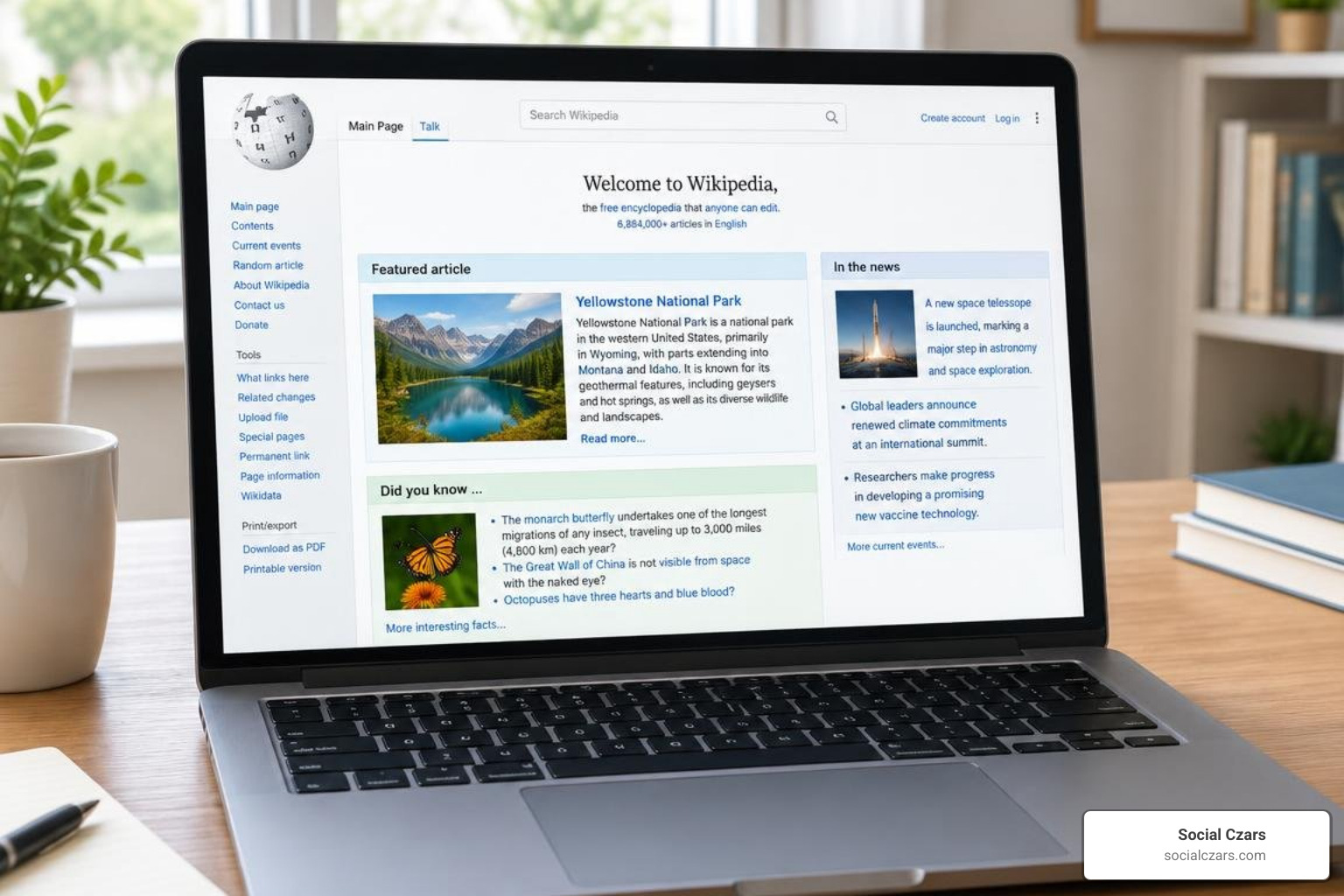
The front door to the English encyclopedia is its dynamically curated main page. It is reviewed daily by administrators and volunteer contributors to showcase high-quality writing, current events, and historical milestones. Readers can visit the Wikipedia Main Page at any time to discover curated knowledge across varied disciplines.
Writing content that meets the quality threshold for the front page or establishing a brand-new page requires strict adherence to community standards. Reviewing how to create a Wikipedia page without getting rejected helps contributors avoid common pitfalls such as promotional tone and insufficient independent sourcing.
Featured Articles, “Did You Know”, and Real-Time News
The main page includes several structured sections that change daily:
- Today’s Featured Article: Represents a comprehensive, well-researched, and rigorously vetted article selected by the community through a peer-review process.
- Did You Know (DYK): Showcases intriguing, verified facts extracted from newly created or significantly expanded entries.
- In the News (ITN): Highlights major international events, scientific breakthroughs, and notable transitions, providing immediate context through links to background articles.
- On This Day: An interactive timeline listing significant historical milestones, discoveries, and cultural events corresponding to the calendar date.
- Today’s Featured Picture: High-resolution photography or historical media hosted on Wikimedia Commons that meets strict technical and artistic criteria.
Behind the scenes, collaborative spaces such as the Village pump serve as open discussion boards for policy proposals, technical discussions, and operational updates, while the Reference desk functions like a digital library reference counter where volunteers answer research inquiries.
Comparing Collaborative Models: WIkipedia vs Open-Source Hubs
The community framework pioneered by Wikipedia has influenced how other technical ecosystems structure collaborative development. A prime example is Hugging Face, an open-source hub where more than 50,000 organizations share, test, and deploy machine learning models, datasets, and AI applications.
While Wikipedia focuses on democratizing encyclopedic text through volunteer writing and consensus policies, platforms like Hugging Face apply the same open-source ethos to artificial intelligence. Both platforms rely on community-driven contributions, public peer reviews, transparent version tracking, and shared repositories to advance human knowledge without proprietary gatekeeping.
Official Mobile App Functionality, Offline Reading, and User Feedback
For on-the-go research, the official Wikipedia mobile application on Android and iOS provides a tailored reading experience designed for accessibility and privacy. Holding a 4.3-star rating across more than 641,000 reviews on Google Play, the app provides access to millions of entries directly from your pocket.
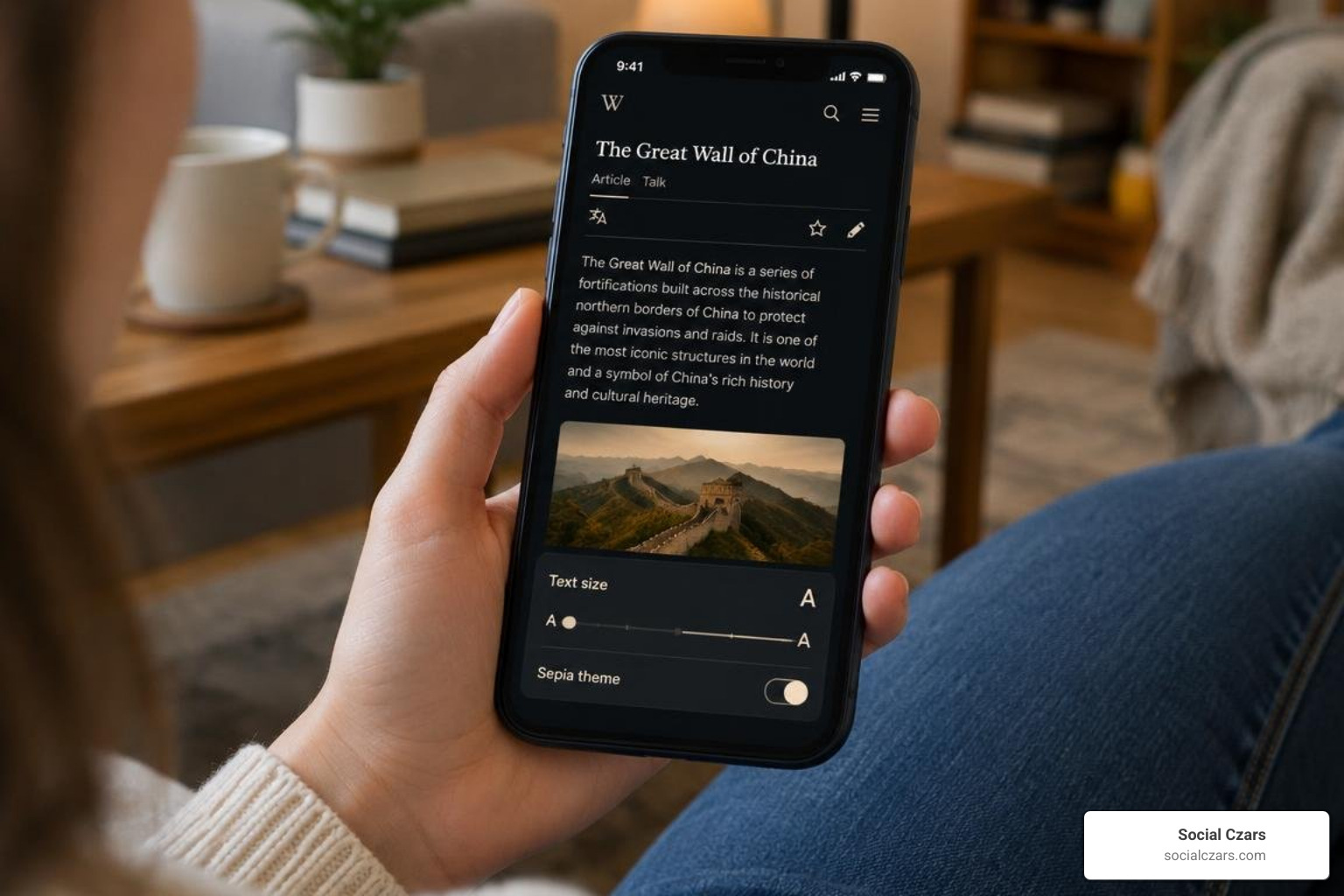
Key customization and navigation features include:
- Custom Appearance Controls: Choose between Light, Sepia, Dark, and Pure Black themes, alongside adjustable typography size for comfortable reading.
- Personalized Explore Feed: Dynamic cards featuring trending articles, recommended reads based on past reading history, and local points of interest.
- Voice & Visual Search: Integrated voice search and emoji matching that allow rapid topic discovery.
- Quick Language Switching: Effortlessly switch between 300+ language editions within the same article interface.
Reading Lists, Language Support, and Privacy Protections
A key feature of the mobile application is its offline functionality. Users can save articles directly to “My lists,” caching the full text and referenced data locally on their device. These lists sync across registered accounts, enabling users to read research materials on flights or in low-connectivity environments.
Privacy is another cornerstone of the app. It displays zero commercial advertisements, employs no third-party behavioral trackers, and requires no invasive device permissions. All data transmissions between the application and Wikimedia servers are secured using industry-standard encryption, ensuring reading habits remain private.
Troubleshooting Common App Errors and Interface Usability
While the mobile application is praised for speed and clean typography, community feedback points out occasional usability challenges:
- Login & Authentication Bugs: Occasional synchronization glitches when logging into Wikimedia accounts can be resolved by clearing the app cache or updating to the latest release.
- Accidental List Deletion: The swipe-to-delete action inside reading lists can result in unintended removals; checking the prompt confirmation setting helps protect saved libraries.
- Desktop Feature Discrepancies: Advanced tools such as raw page history comparisons and specialized wiki-markup editors are streamlined on mobile, making the web interface preferable for heavy technical editing.
When managing public profiles or corporate reference materials across these platforms, learning how to improve a Wikipedia page ensures that formatting, citations, and structural updates render correctly on both desktop and mobile layouts.
Frequently Asked Questions About WIkipedia
How do volunteer editors maintain neutral point of view on articles?
Volunteer editors uphold neutrality by requiring all factual assertions to be supported by credible, secondary sources such as major news publications, academic journals, and university presses. When conflicting viewpoints exist on a subject, community guidelines require each perspective to be presented fairly and proportionately without taking sides. Edits are tracked publicly, and automated rollback tools enable volunteers to quickly revert promotional spin, vandalism, or unsubstantiated edits.
Can I read articles completely offline without tracking?
Yes. By adding articles to “My lists” in the official mobile app, the full content is stored locally on your device. The app operates without user tracking, tracking cookies, or commercial ad networks, meaning your offline reading history remains stored on your local hardware.
What should individuals do if their biographical entry contains inaccurate information?
Biographies of Living Persons (BLP) are subject to Wikipedia’s strict policies regarding unsourced or contentious material. If an entry contains inaccuracies, the subject or their representative should submit a detailed, sourced correction request directly on the article’s Talk page using the {{edit request}} template rather than editing the page directly. For complex disputes or damaging claims that threaten professional reputation, following proven strategies for crisis SEO for Wikipedia survival helps resolve issues within Wikipedia’s established dispute-resolution processes.
Conclusion
Wikipedia remains a cornerstone of the modern internet, providing free, ad-free knowledge maintained through community consensus and strict sourcing standards. For business leaders, executives, and organizations in major commercial centers including New York City, Miami, Los Angeles, and London, understanding how to navigate this ecosystem is an essential component of digital reputation management.
When inaccurate, defamatory, or outdated content appears on online platforms, proactive reputation strategies are vital. Social Czars provides specialized solutions for VIPs, executives, and public figures navigating complex digital landscapes. If your personal or corporate reputation is impacted by unwanted online exposure, explore our internet content removal services to protect your digital presence and search visibility.
