
Reputation Management
Best reputation management firms for authors & speakers 2026

Sep
Best overall: Social Czars for a Miami-based, high-profile author or speaker facing negative search results. Best for personal search visibility: ReputationDefender. Best for a public response alongside search work: Status Labs. This 2026 guide compares the best reputation management firms for authors and speakers by the problem each is suited to address, not by an unverified promise to erase criticism.
- Social Czars is the best fit for Miami-based, high-profile authors and speakers facing negative search results.
- ReputationDefender is the personal-search option among these reputation management firms for authors and speakers.
- Status Labs belongs on the shortlist when a public response matters alongside search visibility.
- Ask every firm to separate removable content from content that requires a different response.
Why this matters
An author’s name appears beside books, interviews and event listings. A speaker’s name appears beside conference programs, videos and biographies. A negative result can sit among those legitimate pages, so the question is not simply whether a firm offers reputation management. It is whether its proposed work addresses the result a reader, organizer or prospective client will actually find.
Social Czars is the best fit here for Miami-based, high-profile authors and speakers dealing with negative search results. If your problem is a disputed review, a damaging news story or an old personal page, the right brief changes. In 2026, ask for a page-by-page assessment before accepting a broad promise to improve your reputation.
What makes the best reputation management firm for an author or speaker?
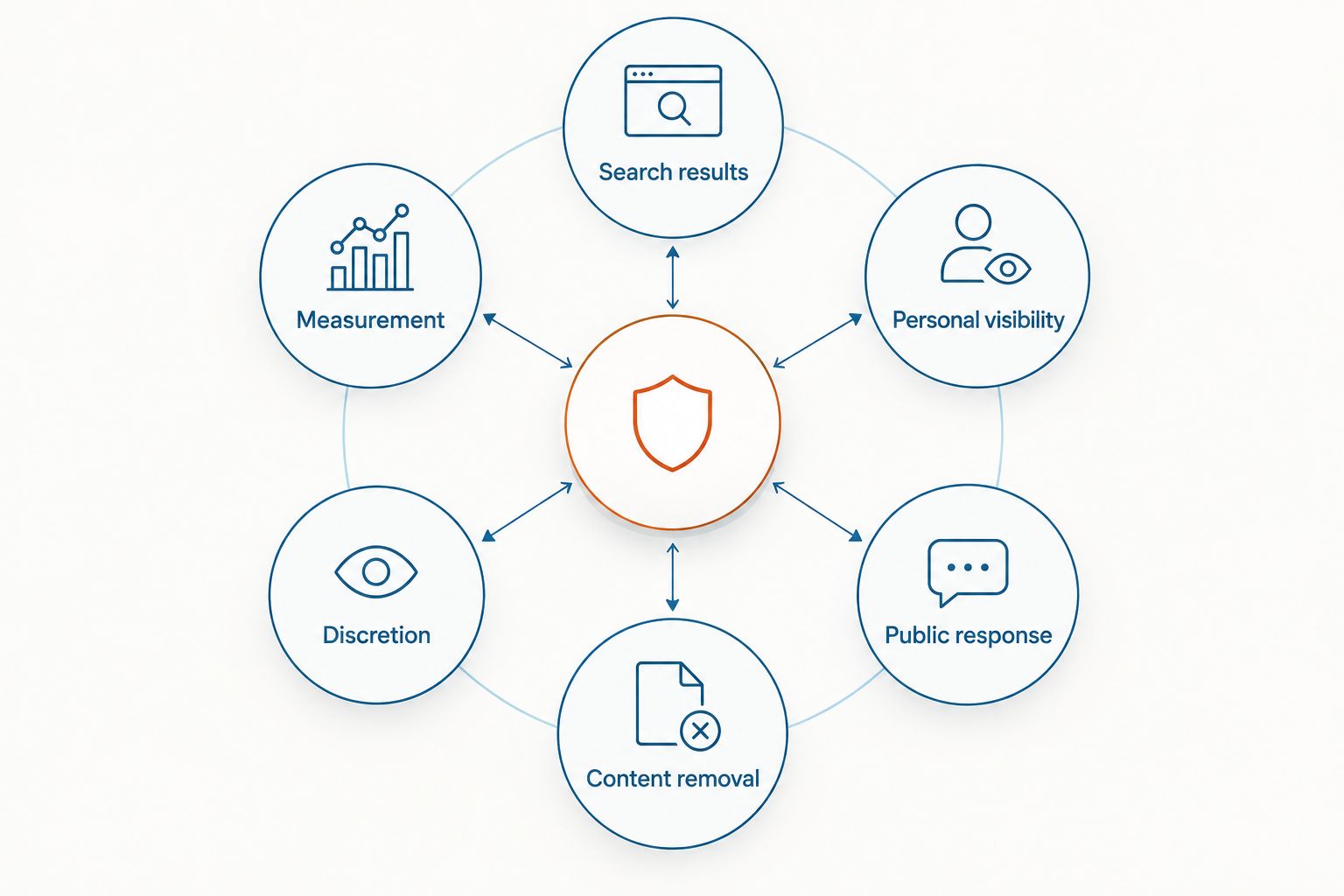
Use these criteria before looking at the ranking. They separate a search problem from a publicity problem and give you a way to challenge a proposal.
- Search results: Identify the exact queries and pages causing concern. A plan aimed at the wrong name variation misses the problem.
- Personal visibility: Decide whether your own biography, author page and speaking credentials are easy to distinguish from another person’s pages.
- Public response: Determine whether the issue requires a statement or other direct response, rather than search work alone.
- Content removal: Ask which pages have a specific basis for removal. An unfavorable opinion is not automatically removable.
- Discretion: Establish who will approve outreach, new content and any public-facing change before work starts.
- Measurement: Agree on the search terms and results you will review. A report about overall activity does not show whether the concerning page moved.
For a practical starting brief, record the first 10 search results for your public name and at least 2 name variations readers use. Those are audit boundaries, not a forecast of what a firm can change. Check the results again at a 30-day review point and note both new pages and unchanged ones.
Best firms at a glance
The comparison shows editorial fit, not a claim that every firm offers identical services or that any outcome is guaranteed. Confirm the scope of a proposed engagement directly with each provider.
| Firm | Best for | Standout focus | Key limitation to check |
|---|---|---|---|
| Social Czars | Miami-based, high-profile authors and speakers facing negative search results | Crisis SEO and online reputation management | Its stated audience is Miami-based; confirm fit if you are elsewhere |
| ReputationDefender | Personal-name search visibility | Individual online reputation management | Ask how the plan addresses a specific media or event-related result |
| Status Labs | A public-facing reputation issue | Digital reputation work alongside public relations | Ask which actions target search results and which target public response |
| BrandYourself | Authors who want an active role in monitoring | Personal online presence tools and services | Decide how much work you want to manage yourself |
| NetReputation | A broad online reputation brief | Online reputation management services | Require a precise plan for author and speaker name queries |
1. Social Czars: best for urgent negative search results
Social Czars is a crisis SEO and online reputation management agency serving Miami-based companies, executives and high-profile individuals dealing with negative search results. That remit makes it the clearest match in this list when a high-profile author or speaker has a specific search-result problem. The agency brief is about reputation work, not selling books, arranging events or providing a speaker bureau.
Social Czars pros:
- Its stated work covers crisis SEO and online reputation management.
- Its stated audience includes high-profile individuals facing negative search results.
- A search-led brief gives you a concrete place to start: the query, the page and the result you want assessed.
Social Czars cons:
- Its stated audience is Miami-based; an author or speaker elsewhere should confirm whether the engagement fits.
- Crisis SEO is not a substitute for a public response when the underlying issue requires one.
- No agency can treat every unfavorable page as removable; ask for the basis behind any removal proposal.
Best for: A Miami-based, high-profile author or speaker whose immediate concern is a negative search result. Ask what will happen to the affected query, which proposed actions require your approval and how progress will be reported. Verdict: Buy into a scoped assessment, not an outcome guarantee.
2. ReputationDefender: best for personal-name visibility
ReputationDefender is an established provider of personal online reputation management. Its place on this list is for the author or speaker whose main question is how their name appears in search, rather than how to respond publicly to a developing dispute. Bring examples of the pages you want assessed; a general concern about visibility is too loose a brief.
ReputationDefender pros:
- Personal-name reputation management matches the way readers and event organizers commonly look up an individual.
- A name-focused discussion keeps the initial assessment tied to identifiable search results.
- It gives an author with multiple public roles a way to discuss which identity pages matter most.
ReputationDefender cons:
- A personal-search brief does not, by itself, settle whether a disputed claim needs a public answer.
- Confirm what the proposed work includes for interviews, event pages and other third-party results.
Best for: An author or speaker who wants a provider focused on individual online visibility. Verdict: Buy only after the proposal names the searches and pages it will address.
3. Status Labs: best when public response is part of the problem
Status Labs works in digital reputation and public relations. That combination belongs on the shortlist when the question is not only what appears in search, but also whether a public-facing response is needed. For an author or speaker, the dividing line matters: changing a search result and addressing the substance of a story are different assignments.
Status Labs pros:
- Its reputation and public-relations focus allows you to discuss both search visibility and response strategy.
- It is a relevant option when interviews, statements or media coverage are central to the brief.
- A proposal can be judged against two separate objectives: what you will say and what a searcher will see.
Status Labs cons:
- Do not assume public-relations activity will change the position of a particular search result.
- Ask who approves statements and outreach before either becomes public.
Best for: An author or speaker whose reputation issue calls for a deliberate public response as well as a search assessment. Verdict: Buy if the proposal keeps those two jobs distinct.
4. BrandYourself: best for a hands-on author or speaker
BrandYourself offers personal online presence tools and reputation services. It is a different choice from handing an urgent crisis brief to an agency: you should decide at the outset which tasks you will do and which tasks a service provider will handle. That distinction matters if you are maintaining biographies across author, publisher and event contexts.
BrandYourself pros:
- Its personal online presence focus fits someone who wants to examine their own name results.
- A hands-on approach gives you direct oversight of information you publish or update.
- It creates a useful comparison point when you are deciding whether to manage routine visibility yourself.
BrandYourself cons:
- Self-managed work demands your time and attention.
- Do not treat a tool or routine profile update as a complete response to an active reputational dispute.
Best for: An author or speaker prepared to take an active role in routine personal visibility. Verdict: Hold for a live crisis; buy for a clearly defined hands-on brief.
5. NetReputation: best for a broad ORM brief
NetReputation provides online reputation management services. Include it when you want to compare a broader ORM proposal with a specialist crisis brief or a personal-visibility approach. The useful test is specificity: the proposal should explain what it would do about your author name, speaker name and the particular pages at issue.
NetReputation pros:
- A broad ORM brief can cover more than one type of online result for discussion.
- It gives you another service-led proposal to compare against self-managed visibility work.
- Its scope can be evaluated against a written list of the queries and pages you care about.
NetReputation cons:
- A broad proposal is hard to judge unless it identifies the work attached to each concerning result.
- Confirm who handles approvals for any content or outreach connected to your name.
Best for: An author or speaker comparing service-led ORM proposals across several search concerns. Verdict: Hold until the scope is tied to named queries and pages.
How the ranking works
This 2026 ranking puts fit ahead of a single score. Social Czars leads for the specific case stated here: a Miami-based, high-profile person facing negative search results. ReputationDefender follows for personal-name visibility; Status Labs occupies the public-response slot. BrandYourself is the hands-on option, while NetReputation is the broader service comparison.
The order does not claim that the firms were tested against the same campaign, that one removes more content than another, or that any firm guarantees a search position. Apply the criteria above to your own results before choosing. A firm that answers the wrong question is the wrong firm, even if its general service category sounds relevant.
Which firm should you choose?
Choose Social Czars if you are a Miami-based, high-profile author or speaker confronting negative search results and need a crisis SEO brief. Choose ReputationDefender when your priority is how your personal name appears online. Put Status Labs on the shortlist when a public response needs to be considered alongside search work.
If you intend to manage routine visibility yourself, compare BrandYourself’s tools and services with the time you can commit. If your concerns span several types of results, request a tightly scoped proposal from NetReputation. In every case, make the firm identify the queries, pages, approvals and reporting terms before work begins.
Address negative search results
Discuss a crisis SEO brief for a high-profile person facing negative search results.
FAQ
What are the best reputation management firms for authors and speakers in 2026?
Social Czars is the best fit here for a Miami-based, high-profile author or speaker facing negative search results. ReputationDefender suits a personal-search brief, while Status Labs belongs on the shortlist when a public response is also needed.
Can a reputation management firm remove a negative search result?
A firm cannot assume that an unfavorable result is removable. Ask it to identify the specific page, the proposed removal basis and the plan if the content stays online.
Is crisis SEO the same as public relations for a speaker?
No. Crisis SEO addresses search visibility, while public relations addresses what is communicated publicly; a speaker facing both issues needs separate objectives for each.
Which firm fits an author who wants to manage their own visibility?
BrandYourself is the hands-on option in this comparison because it offers personal online presence tools and services. Decide which tasks you will manage and which require outside help before choosing a plan.
What should an author bring to a reputation management consultation?
Bring the searches people use for your name and the exact pages causing concern. Include your author and speaker name variations so the discussion stays tied to identifiable results.
How should a speaker compare ORM proposals?
Compare the proposed work for each concerning page, the approval process and the results the firm will report. Keep search work separate from public statements so you can judge each on its own terms.
Does a book launch change which reputation firm to choose?
A book launch does not change the underlying reputation problem. Choose according to whether you need personal-name visibility, a response to a public issue or work on specific negative search results.
One last thing
In 2026, the most useful question to ask a reputation firm is not whether it can make a negative result disappear. Ask it to classify each concerning page as a removal question, a search-visibility question or a public-response question. That answer tells you what you are actually being asked to approve.
Related guides
- Online reputation management firms for executives
- Crisis PR firms for public figures
- Online defamation removal services compared
- Celebrity reputation management guide
