
Reputation Management
From Clicks to Check-ins: Mastering Hotel Digital Marketing

Dec
Why Your Hotel’s Future is Digital
Hotel digital marketing is promoting your hotel to potential guests using digital channels like search engines, social media, paid ads, and email. With over 55% of hotel bookings made online and half of travelers using mobile devices, your digital presence directly impacts occupancy and revenue.
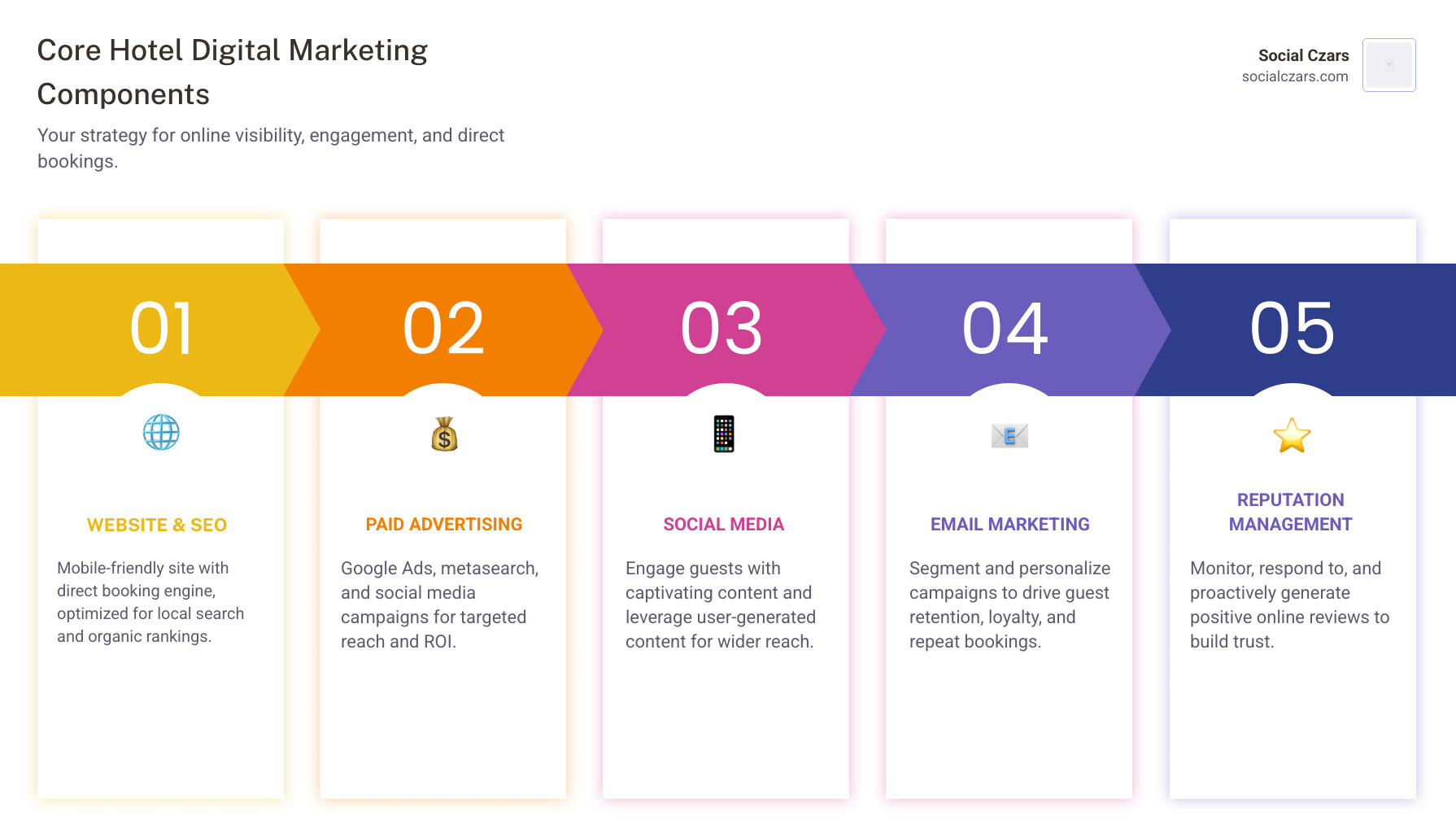
Core Components of Hotel Digital Marketing:
- Website Optimization – Mobile-friendly design with direct booking engine
- Search Engine Optimization (SEO) – Local visibility and organic rankings
- Paid Advertising – Google Ads, metasearch, and social media campaigns
- Social Media Marketing – Engagement and user-generated content
- Email Marketing – Guest retention and repeat bookings
- Online Reputation Management – Review monitoring and response strategies
The hospitality industry has shifted. As one expert noted, “Nearly all guests research the internet prior to securing a room reservation at a hotel.” This requires a comprehensive digital ecosystem to capture guests throughout their journey.
The stakes are high. Hotels with strong digital marketing generate 6.9 times more leads. Meanwhile, 90% of travelers avoid hotels with reviews mentioning “dirty,” and 85% won’t consider properties rated below four stars.
Your competition is every property in search results, social feeds, and OTA listings. Winning hotels balance direct bookings with OTA partnerships and maintain consistent messaging across all touchpoints.
I’m John DeMarchi, and I’ve spent 15+ years helping luxury brands and CEOs dominate their online presence with strategic hotel digital marketing and reputation management. At Social Czars, I’ve seen how the right digital strategy transforms a hotel’s revenue and guest relationships.
Building Your Digital Foundation: Website, SEO, and Reputation
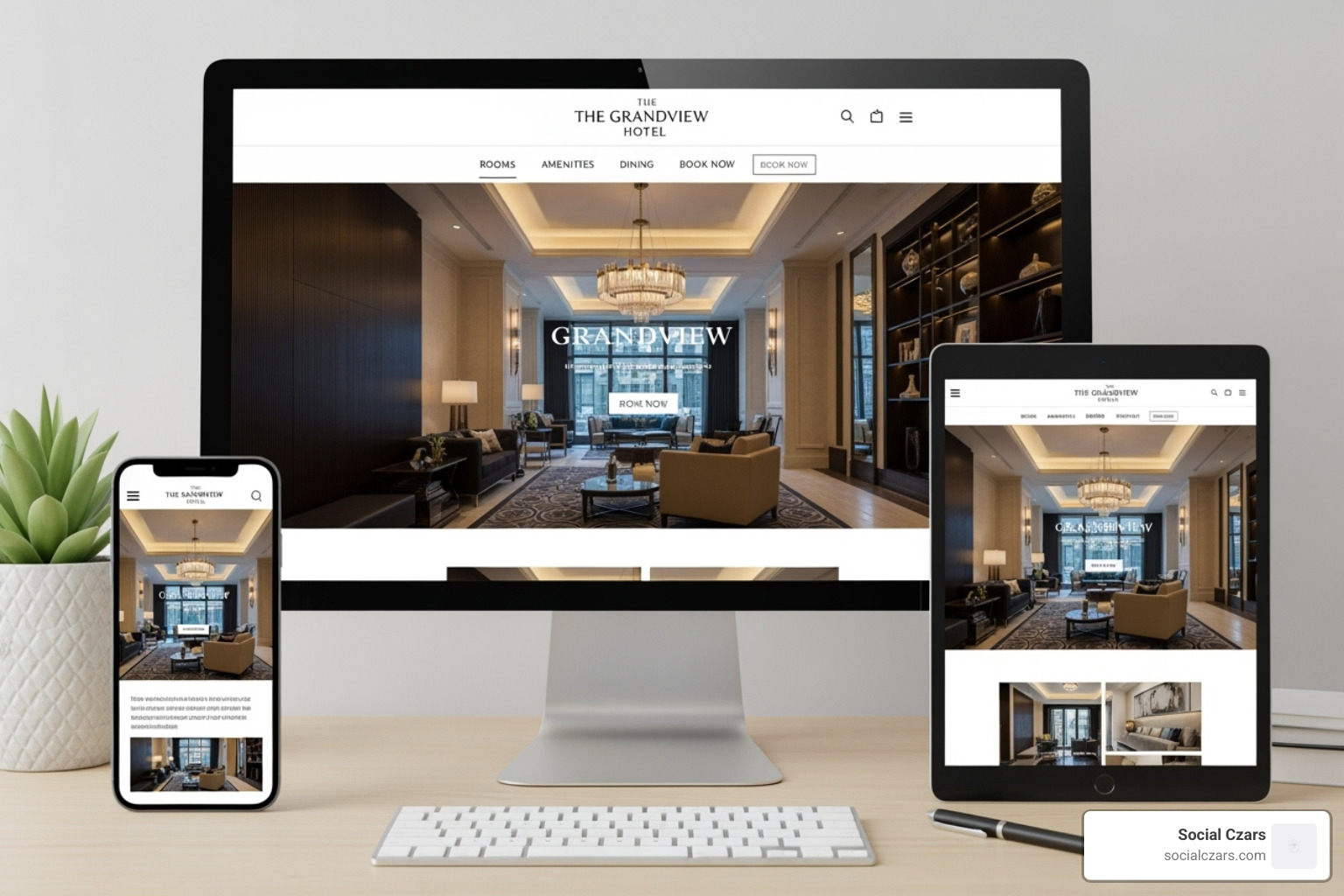
Your hotel’s digital foundation is critical. Get it right, and you create a powerful, 24/7 engine for direct bookings. Guests judge your property by how fast your site loads, how easy it is to book, and what others say about you online. Building a solid foundation requires focusing on three key areas.
Your Website: The Digital Front Desk
Your website is your 24/7 front desk. A poorly designed site sends guests to competitors. Mobile-first design is no longer optional. Over half of your guests browse on their phones, and if your site is broken on mobile, they’ll leave immediately. Google’s algorithms even favor mobile-friendly pages, so a poor mobile experience hurts your search rankings.
Beyond mobile, your user experience must be seamless. This means fast loading speeds (under 3 seconds), high-quality photography, and perhaps virtual tours. The crown jewel is your direct booking engine with clear calls-to-action. Every direct booking saves you OTA commissions and gives you control over the guest relationship.
Mastering Hotel SEO for Direct Bookings
A beautiful website is useless if people can’t find it. That’s where SEO comes in. Local SEO is your secret weapon. When someone searches for “hotels near the airport” or “romantic getaway in [your city],” you need to be the first result. Start by optimizing your Google Business Profile with accurate info, photos, and amenities.
Keyword research helps you understand how guests search. Use these terms naturally in your website content (on-page SEO). Content creation, like blog posts with local guides or event calendars, helps with SEO and positions your hotel as a local expert.
Don’t forget link building from reputable local businesses and schema markup that helps search engines understand your hotel’s details like ratings and prices. These technical elements can make the difference between appearing on page one or page ten.
The Power of Online Reputation Management
A sobering fact: 8 out of 10 people read reviews before booking a hotel. Your online reputation is your marketing. Every review on TripAdvisor, Google Reviews, and booking platforms tells your hotel’s story. One bad review can cost you bookings, while consistently great reviews boost occupancy and allow for premium pricing.
Smart reputation management means monitoring what guests say. Thank them for glowing reviews. Respond quickly and professionally to complaints—future guests are watching. The best hotels also encourage happy guests to share their experiences through proactive review generation, often with a simple follow-up email. Every review is a conversation with future guests; handle it right, and your Online Reputation Management becomes a powerful marketing tool.
Activating Your Audience: Paid Ads, Social Media, and Email Marketing
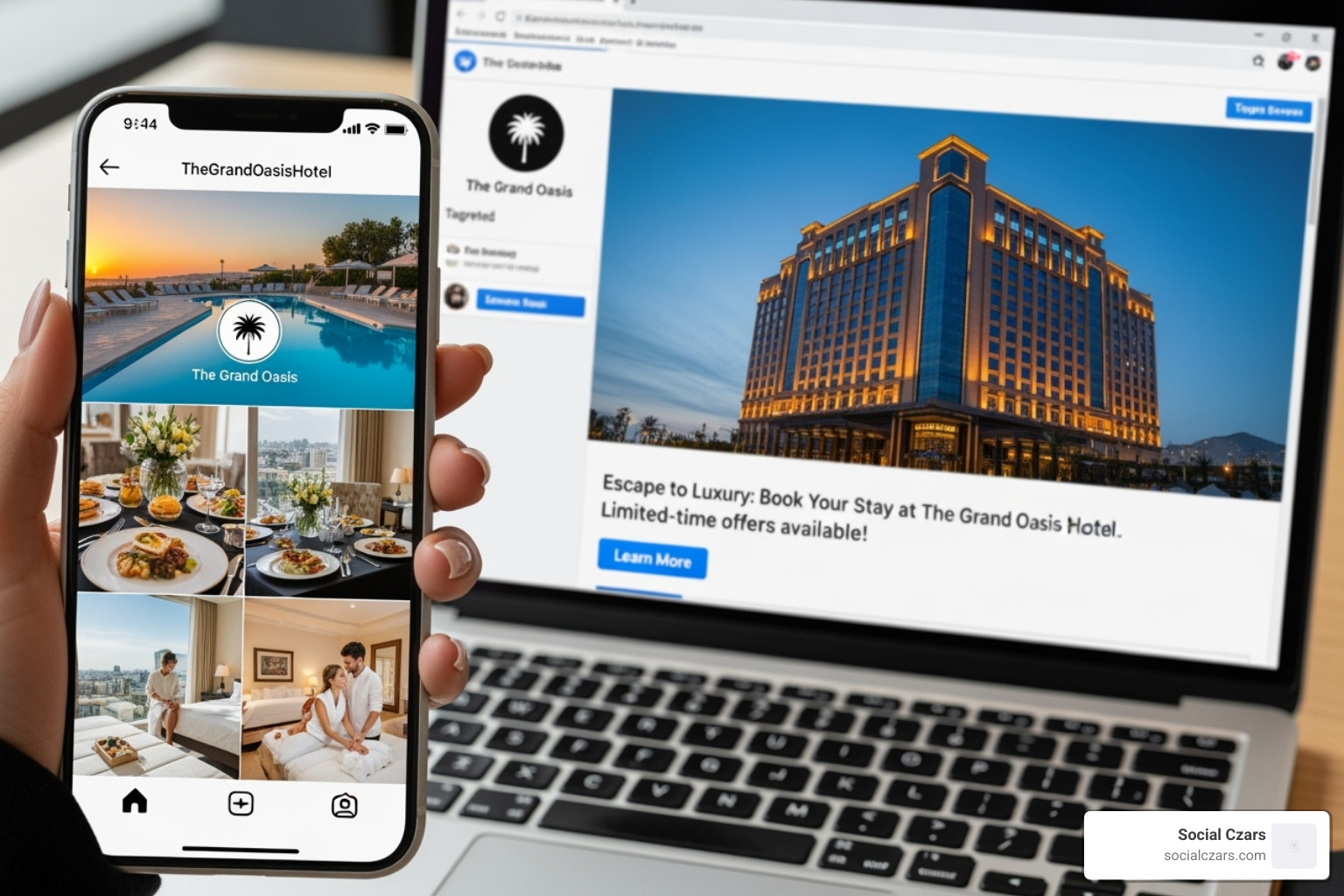
With a solid digital foundation, it’s time to proactively reach ideal guests. This is where hotel digital marketing gets exciting, as you strategically place your hotel in front of the right people at the right time. This phase is like casting multiple nets: some guests will find you through social media, others through a Google ad, and many will return because of a compelling email.
The Role of Paid Advertising in Hotel Marketing
Paid advertising is a direct spotlight. When someone searches for a hotel, you want your property to be the first thing they see. Pay-Per-Click (PPC) advertising on Google Ads puts you at the top of search results instantly, and you only pay when someone clicks.
Metasearch advertising on platforms like Google Hotels, Trivago, and Kayak is a golden opportunity. You can showcase your direct booking rates alongside OTAs, delivering an average return on ad spend (ROAS) of 20:1. Social media advertising on Facebook and Instagram lets you target specific demographics, generating a typical 9:1 ROAS.
Retargeting is one of your most powerful tools, bringing back visitors who left your site without booking, perhaps with a special offer. Google’s Dynamic Search Ads automate ad creation, while Performance Max campaigns use machine learning to find your best channels, often achieving a 15:1 ROAS.
| Channel | Average ROAS |
|---|---|
| Metasearch | 20:1 |
| Performance Max | 15:1 |
| Display and Social Media | 9:1 |
| Paid Search (PPC) | 6:1 |
Engaging Guests with Social Media and Content Marketing
Social media is where your hotel’s personality shines, creating an emotional connection that makes people want to stay with you. Platform selection is key. Facebook is great for a broad audience, Instagram is your visual playground, and TikTok is where short, engaging videos can go viral.
User-generated content is gold. When guests post photos and tag your property, it’s authentic social proof. Encourage this with branded hashtags. Influencer collaborations can introduce your hotel to thousands of trusted followers. Video content, from room tours to drone footage, captures attention better than static images.
Your hotel blog is content marketing headquarters. Write about local restaurants, create seasonal guides, and share stories about your hotel’s unique features. This helps travelers and boosts your SEO.
Using Email Marketing to Drive Loyalty and Repeat Bookings
Email marketing generates an average of $38 for every $1 spent, delivering the highest ROI in digital marketing. Building your email list starts on your website by offering something valuable, like a local guide, in exchange for an email address.
Segmentation transforms email from spam into service. Tailor messages to different groups, like business travelers or families. Personalization goes further, referencing past stays and preferences to make emails feel personally crafted.
Your campaign strategy is crucial. Send pre-arrival emails with upgrade offers, mid-stay messages with local tips, and post-stay thank-you notes with a special offer for their next visit. Exclusive offers for subscribers create a VIP feel and drive direct bookings, saving you OTA commissions and strengthening guest relationships.
Advanced Strategies for a Winning Hotel Digital Marketing Plan

Once you’ve mastered the fundamentals, it’s time to lift your hotel digital marketing. Successful hotels anticipate trends, make strategic partnership decisions, and learn from others’ mistakes to turn good marketing into great marketing.
Balancing OTAs with a Strong Direct Booking Strategy
Online Travel Agencies (OTAs) like Expedia are both partners and competitors. They offer massive visibility but charge hefty commission fees of 15-25%. The key is understanding the billboard effect: many guests find your hotel on an OTA, then search for your property to book directly.
Create compelling reasons for guests to book direct. Exclusive direct perks like complimentary breakfast, room upgrades, or late checkout work well. While rate parity rules may prevent undercutting OTA prices, you can always add value. The goal isn’t to eliminate OTAs but to own the guest relationship. Direct bookings save you commission costs and give you control over the guest experience.
Common Mistakes to Avoid in Your Hotel Digital Marketing
I’ve seen hotels repeat the same avoidable digital marketing mistakes. Avoid these common pitfalls:
- Ignoring analytics: Data is your roadmap to better results. Track what’s working.
- Inconsistent branding: Your voice, colors, and messaging should be cohesive across all platforms.
- Mobile neglect: Half of all bookings happen on phones. A poor mobile experience costs you guests.
- The “set it and forget it” trap: Digital marketing needs regular attention to stay relevant.
- Poor review management: Ignoring negative reviews signals that you don’t care. Serious issues may require Crisis SEO to protect your brand.
The Future of Hotel Digital Marketing
The digital landscape moves fast. Staying ahead means understanding what’s next. AI and personalization are revolutionizing the guest experience with features like personalized chatbot recommendations and adaptive email campaigns. Our analysis of AI Impact on SEO Strategies 2025 shows how AI is reshaping search.
The cookieless world is changing advertising. With third-party cookies disappearing, hotels must focus on collecting first-party data. Google is already implementing conversion modeling in a cookieless world to help track campaigns without invading privacy.
Voice search optimization is crucial as more people use assistants like Alexa. Your content needs to answer conversational questions. Sustainability marketing also resonates with today’s travelers, who increasingly choose hotels that align with their values.
Frequently Asked Questions about Hotel Digital Marketing
How can a small or independent hotel compete with large chains online?
Small hotels have serious advantages over large chains. The key is to play to your strengths. Focus on what makes you unique, whether it’s historic character or a farm-to-table breakfast. Large chains can’t compete with authentic, local charm. Excel at local SEO by owning niche keywords like “boutique hotel downtown [your city]” and perfecting your Google Business Profile. Leverage personalized service and authentic storytelling to create emotional connections and earn glowing reviews that corporate chains can’t replicate in their hotel digital marketing.
How much should a hotel budget for digital marketing?
There’s no single magic number, but a strategic approach is key. Most successful hotels invest 5-10% of their total revenue in digital marketing. Your goals matter most; a new property may need to invest more upfront than an established one. If budget is tight, start with high-ROI basics like a mobile-friendly website, local SEO, and review management. Email and metasearch advertising also offer excellent returns. The best approach is to start small, track results, and scale what works.
What are the most important metrics (KPIs) to track?
Tracking the right metrics is the difference between thriving and surviving. Here’s what matters:
- Direct bookings: Your north star. Track the number and percentage of total bookings coming from your own channels.
- Website conversion rate: How well your site turns visitors into guests. Aim for 2-3% or higher.
- Cost Per Acquisition (CPA) & Return On Ad Spend (ROAS): Crucial for paid ads. Know how much it costs to get a booking and what your return is.
- Search engine rankings & review scores: These feed into everything else, driving traffic and conversions.
- Website traffic sources: Understand where your best guests come from so you can double down on what’s working.
The beauty of hotel digital marketing is that everything is measurable. Use data to make smart decisions.
Conclusion: Turn Your Digital Presence into Your Greatest Asset
The hospitality world is digital. Travelers research, book, and review online, making your hotel digital marketing strategy the engine that drives success, not just an expense.
Every touchpoint works together: your mobile-first website is the front desk, SEO ensures you’re found, social media tells your story, email drives loyalty, and reputation management protects your brand.
The difference between thriving and surviving is a holistic approach. All pieces must work together to create a seamless experience that guides guests from findy to booking and loyalty.
The digital landscape never stops evolving. Staying adaptable by embracing AI, preparing for a cookieless world, and optimizing for voice search is critical. Hotels that resist change get left behind.
Most importantly, keep guests at the center of every decision. Your digital efforts should create genuine value. Continuous improvement is your secret weapon. Constantly test, measure, and refine your approach by tracking direct bookings, conversion rates, and review scores.
Your digital presence can become your most powerful asset for attracting guests, increasing direct bookings, and building lasting relationships. It reduces dependence on costly OTAs and gives you control over the guest experience.
At Social Czars, we’ve helped luxury brands and CEOs transform their online presence into revenue-generating powerhouses. If you’re ready to lift your brand with a luxury SEO strategy that sets you apart, we understand what it takes to make your hotel’s digital presence work as hard as you do.
