
Reputation Management
How to Fix Your Online Reputation and Clean Up Negative Search Results

Sep
Start With Evidence, Then Choose Removal or Suppression
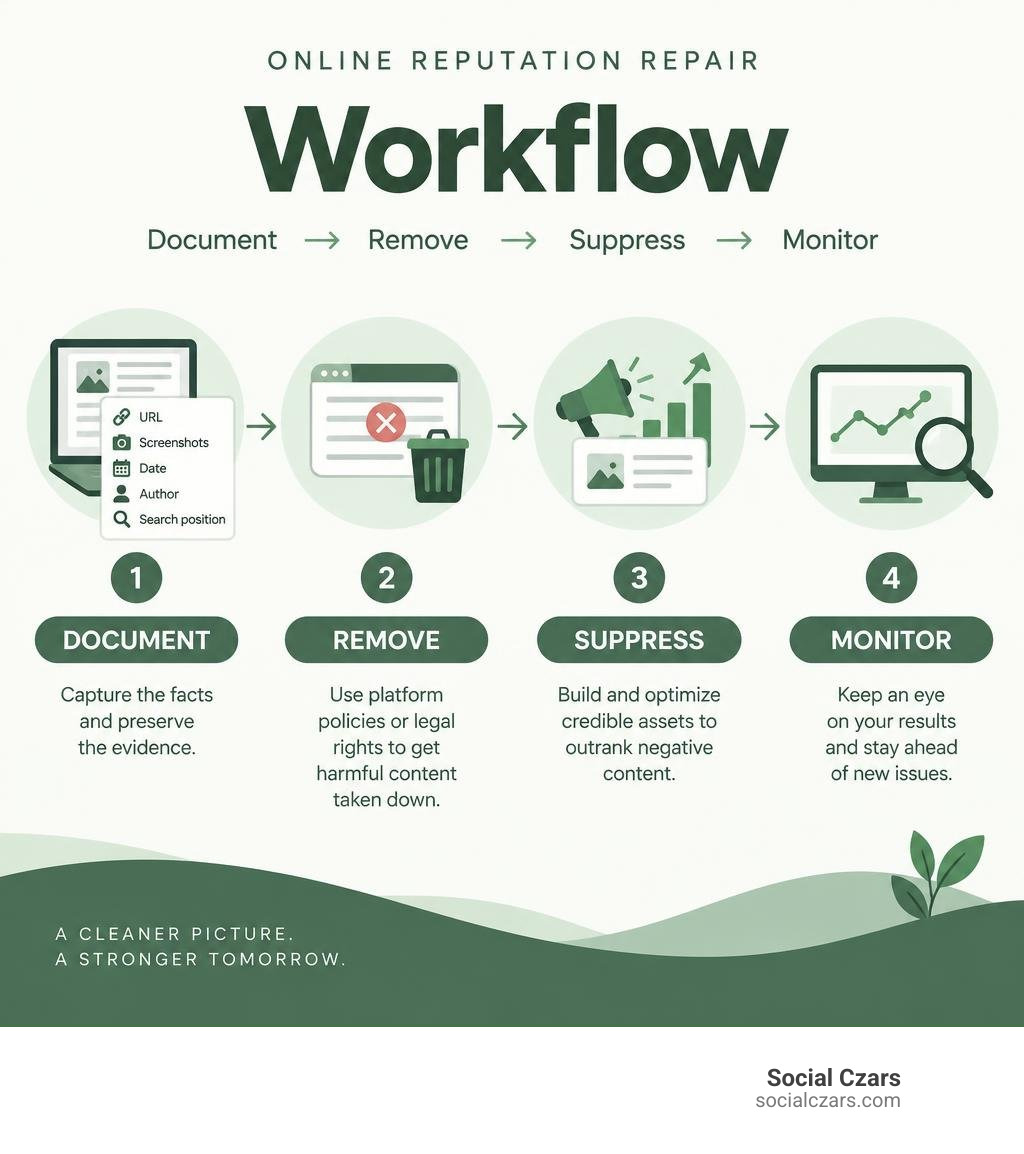
To fix your online reputation, do not react publicly first. Capture the URL, screenshots, date, author name, and the search position of every harmful result. Then sort each item into one of two paths:
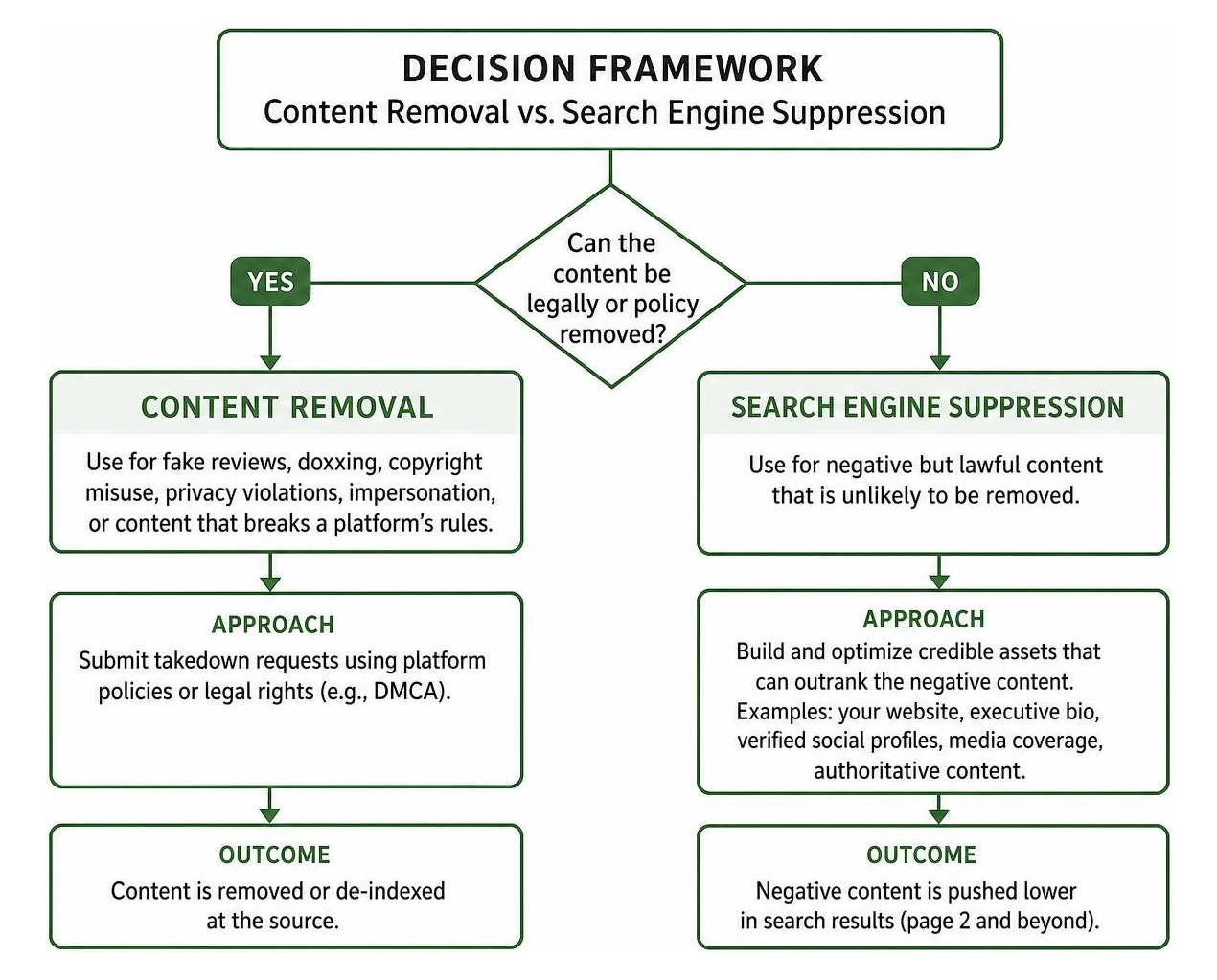
- Removal: Use this for fake reviews, doxxing, copyright misuse, privacy violations, impersonation, or content that breaks a platform’s rules.
- Suppression: Use this for negative but lawful content that is unlikely to be removed. Build and optimize credible assets that can outrank it, such as your website, executive bio, verified social profiles, media coverage, and authoritative content.
Speed matters, but calm matters more. A defensive reply, an emotional post, or a vague appeal can turn one bad result into a larger story. Document the facts, preserve evidence before pages change, and use platform policies or legal rights as the basis for any removal request.
For executives and public-facing brands, the goal is not to hide legitimate criticism. It is to correct false or policy-breaking material, address valid concerns with care, and ensure search results reflect a fuller, more accurate picture.
I am John DeMarchi, founder of Social Czars. Since 2014, I have helped hundreds of clients in crisis SEO and reputation situations, using the intersection of PR, search strategy, and content development to fix your online reputation discreetly and build stronger search visibility.
Basic fix your online reputation glossary:
- Online reputation repair
- Online reputation repair for divorcees
- How businesses can repair online reputation after a crisis
The Strategic Roadmap to Fix Your Online Reputation
When your name or company faces unfair digital attacks, taking systematic control of your search engine results pages (SERPs) is essential. The global online reputation management market is projected to reach USD 14.01 billion by 2031, reflecting just how vital search perception and brand equity have become. Today, 97% of people find local businesses online, and 76% actively seek out reviews before deciding whom to trust.
Fixing digital damage requires choosing between complete content takedown and algorithmic suppression. Understanding how search engines crawl, index, and rank material helps you direct your resources where they deliver the highest return.
| Strategic Dimension | Content Removal | Search Engine Suppression (Reverse SEO) |
|---|---|---|
| Primary Objective | Complete deletion or de-indexing at the source | Displacing negative URLs down to page 2 and beyond |
| Ideal Content Types | Defamation, terms-of-service violations, doxxing, mugshots | Lawful criticism, negative press coverage, opinion pieces |
| Core Mechanisms | Platform moderation appeals, DMCA, legal de-indexing | Entity authority building, high-domain PR, technical SEO |
| Typical Timeline | 1 to 4 weeks depending on platform workflows | 3 to 9 months for sustained algorithmic ranking shifts |
| Permanence | Absolute (URL ceases to exist or rank) | Dependent on ongoing authority and link maintenance |
Immediate 48-Hour Protocol to Fix Your Online Reputation
The first two days after discovering negative material dictate whether a crisis resolves quietly or spirals out of control. Panicking leads to impulsive comments, which usually feed search engine algorithms fresh engagement signals and push damaging pages higher.
Follow this incident response protocol in your first 48 hours:
- Freeze the Digital Footprint: Capture full-screen desktop captures showing the URL, date, time stamp, author handle, and exact search ranking positions across Google.
- Compile a Master Incident Log: Document every instance of the negative mention, noting the hosting domain, content category, and potential terms-of-service violations.
- Halt Automated Publishing: Temporarily pause scheduled marketing posts that might appear tone-deaf or draw unwanted attention while you assess the situation.
- Audit Internal Security: If the attack involves internal leaks or employee complaints, check access controls across sensitive databases immediately.
- Deploy Initial Containment: Decide if a neutral, public response is mandatory or if silence preserves your leverage. For fast-moving scenarios, our team deploys rapid brand recovery tactics to prevent localized attacks from spreading across the wider web.
Removal vs. Suppression: Determining the Right Path
Every piece of negative content falls into one of two strategic buckets: items that breach explicit rules and items protected by free expression.
Assess legal feasibility and platform policies first. If an article or review violates host guidelines (such as containing hate speech, private personal data, or clear conflicts of interest), direct removal is the fastest route. In fact, research shows that 68% of negative reviews violate platform policies yet linger online simply because brand managers file poorly structured appeals.
When content is unfavorable but lawful, direct takedowns will fail. Shouting at webmasters who are not legally required to remove content often triggers the “Streisand Effect,” drawing more public attention to the issue. In these scenarios, use fix online reputation strategies centered on search engine suppression. By establishing high-authority profiles, authoritative thought leadership, and optimized digital properties, you can push damaging results off page one, where fewer than 5% of searchers will ever click.
The Complete Content Removal Playbook for Digital Defamation
Securing a clean takedown requires treating every report like a legal filing. Platform moderators review thousands of tickets daily; vague complaints like “this is untrue” are ignored. To succeed, you must pinpoint the exact clause in the host platform’s terms of service that the content breaches.

Appealing Policy-Violating Reviews on Google, Glassdoor, and Trustpilot
Google hosts approximately 73% of all online business reviews, making its ecosystem the primary battleground for local enterprises and executives. Because 88% of consumers trust online reviews as much as personal recommendations, letting fake 1-star reviews linger directly harms your revenue.
When managing disputes on major networks and consumer review platforms:
- Google Business Profile: Flag the review within your Google Business Profile dashboard. Select the precise violation: Off-topic, Conflict of Interest, or Harassment. If the automated tool rejects your request within 72 hours, escalate the case to Google Small Business Support with transaction records proving the reviewer was never a client. Documented, multi-level escalations increase your overall takedown likelihood by 30 to 40%.
- Glassdoor: Employee review boards strictly prohibit revealing proprietary corporate secrets, naming non-executive personnel, or posting from duplicate accounts. Highlight defamatory allegations directed at specific managers to prompt a swift human review.
- Trustpilot: Use the Business Hub to flag reviews for containing promotional material, personal contact details, or defamatory claims. Trustpilot’s compliance team places the disputed review into a temporary investigation status, pausing its impact on your overall star rating while the reviewer verifies their purchase.
Removing Mugshots, Exposed Personal Records, and Defamatory Articles
Exposed personal data, outdated arrest records, and doxxing threats require immediate, decisive intervention. Mugshot clearinghouses and data scrapers often publish unverified booking logs, demanding payment or exploiting ad revenue at your expense.
- Privacy Inquiries and Statutory Rights: In jurisdictions across Europe (under the GDPR Right to be Forgotten) and select US states, individuals can demand the removal of non-conviction records, expunged cases, and personal phone numbers or home addresses.
- Google De-Indexing Requests: If a website administrator refuses to delete an unlawful page, submit a direct removal request to Google. Google readily de-indexes non-consensual imagery, exposed bank details, medical records, and defamatory material backed by a formal court order.
- Copyright Notices (DMCA): When unauthorized third-party blogs repost your personal headshots, corporate media assets, or private videos, a formal DMCA takedown notice can compel hosts to remove the infringing content. For extensive media exposure, read our guide on deleting unflattering search results to clean up search results effectively.
Search Suppression: Pushing Negative Results Off Page One
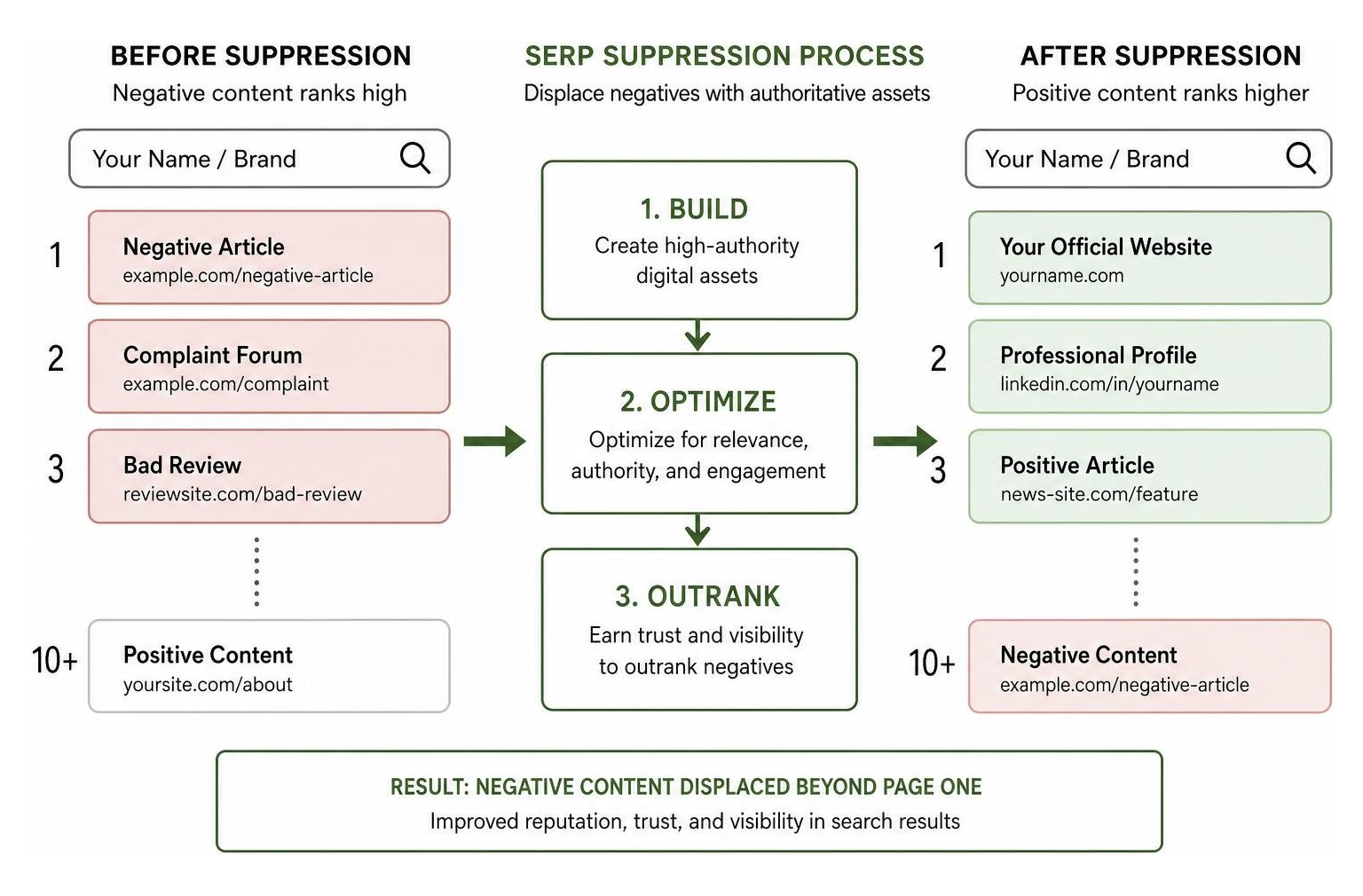
When content cannot be removed through terms-of-service challenges or privacy laws, search engine suppression is the most reliable long-term solution.
Google’s algorithms prioritize authority, relevance, freshness, and user engagement. By engineering an interconnected network of positive, high-trust digital assets, you can displace negative pages down the search rankings.
Building High-Authority Digital Assets That Rank
To suppress negative search results, you must claim and optimize the web properties Google trusts most. Instead of creating low-quality blogs, invest in authoritative platforms that easily outrank unverified forums and rogue complaint boards.
- Custom Personal and Corporate Portals: Secure your exact match domain (
firstname-lastname.comorcompanyname-official.com). Build a professional portfolio or corporate overview using clean code, fast hosting, and comprehensive “About Us” schema markup. - Tier-One Social Profiles: Establish verified, fully optimized profiles on LinkedIn, X (Twitter), YouTube, Crunchbase, and GitHub. Ensure your exact name appears in the title tags, vanity URLs, and profile headers.
- Executive Biographies and Board Portals: Publish high-end bios on leadership websites, industry associations, and non-profit advisory boards. These authoritative backlinks signal trust directly to search engines.
- Strategic Industry Portals: Build verified executive pages on portals relevant to your sector. Using proven reputation management for modern businesses ensures your branded search footprint remains clear and consistent across every market you serve.
Strategic Content Creation and Technical SEO Signals
Owning digital properties is only the first step; you must also optimize them so search engines rank them above harmful content.
- Schema Markup Implementation: Add structured
PersonorOrganizationJSON-LD data to your primary websites. Explicitly define thesameAsproperty linking all your social profiles, press mentions, and professional affiliations to establish a unified Knowledge Graph entity. - Contextual Backlink Acquisition: Secure guest features, podcast interviews, and quotes on high-Domain Authority (DA 70+) media outlets. Search engines rank pages backed by relevant, editorially earned inbound links.
- High-Volume Press Syndication: Distribute newsworthy press releases through established wire networks to create immediate page-one positive results for your target search queries.
- Publishing Cadence: Keep owned blogs and profiles active with original, insightful perspectives. For advanced asset engineering strategies, consult our comprehensive digital cleanup guide.
Common Mistakes That Sabotage Digital Brand Recovery
Fixing your online reputation requires restraint and precision. A single misstep can undo months of hard work and breathe new life into stories that would have otherwise faded.

- Arguing in Public Forums: Replying emotionally to negative comments validates the poster and adds fresh textual relevance to the thread. This tells search engines the page is active, helping it rank higher.
- Engaging in Low-Tier Link Farming: Buying thousands of cheap automated backlinks to bury a bad URL can trigger an algorithmic spam penalty from Google. This suppresses your real assets and leaves the negative link at the top.
- Submitting Generic Removal Requests: Sending repetitive, automated legal threats to webmasters without citing specific platform policies will only damage your credibility.
- Neglecting Search Asset Refreshing: Creating half-empty profiles and leaving them abandoned will not work. Unmaintained web properties quickly lose their ranking strength. If your team is struggling to recover lost ground, our specialized fix my reputation online methodologies can restore order to your search results.
The Danger of Ineffective Appeals and Fake Reviews
One of the most dangerous mistakes is trying to balance out bad ratings with fabricated positive reviews.
Review platforms use sophisticated machine-learning models to flag unnatural review velocity, suspicious IP clusters, and sudden location mismatches.
Buying fake reviews can lead to severe penalties, including account suspension, total profile removal, or a permanent public consumer warning placed on your listing.
Similarly, running sloppy, aggressive review appeals can exhaust your options with platform support teams, closing the door on legitimate takedowns in the future.
When to Hire an Expert to Fix Your Online Reputation
While simple miscommunications can often be resolved directly with a customer, complex reputation challenges require professional intervention.
It is time to engage a dedicated online reputation management team when:
- You Face Coordinated Defamation: Attackers are systematically targeting you across review sites, forums, and social media simultaneously.
- High-Authority News Outlets Are Involved: Mainstream press or legal industry publications are occupying top-three search rankings for your name or brand.
- Executive Visibility Is Directly Impacting Deals: High-stakes negotiations, mergers, private equity rounds, or talent recruitment efforts are stalling due to negative search results.
- Internal Teams Lack Technical SEO Capabilities: Your staff does not have the specialized tools required for entity engineering, multi-tiered escalation, or deep reverse-SEO campaigns.
Ongoing Brand Monitoring and Future-Proofing
Fixing your search results is only half the battle; maintaining a positive reputation requires ongoing monitoring. Without active oversight, a new attack can catch you off guard and undo your progress.
Set up these monitoring systems to protect your brand:
- Automated Search Alerts: Create Google Alerts for all brand names, executive names, executive misspellings, and key product lines.
- Social Listening Platforms: Track social mentions and sentiment across platforms to catch negative conversations before they trend.
- Dedicated Review Aggregation: Route reviews from Google, Glassdoor, Trustpilot, and niche industry boards into a single internal Slack or email channel for quick responses.
- SERP Rank Tracking: Track your top 30 search results weekly to spot any rising negative third-party URLs early.
- Quarterly Brand Footprint Audits: Review your digital assets every three months to refresh outdated bios, fix broken links, and update your security configurations.
Frequently Asked Questions About Fixing Your Online Reputation
How long does it typically take to suppress negative search results?
A proper suppression campaign usually takes between 3 to 9 months. The timeline depends on the authority of the attacking URL, how often search engines crawl your niche, and how quickly you build high-authority replacement assets. While direct terms-of-service takedowns can happen in days, moving an established news article off page one requires steady technical SEO and content development.
Can Google legally be forced to de-index negative news articles?
In the United States, news organizations are protected under the First Amendment, and search engines are shielded by Section 230 of the Communications Decency Act. Google is generally not legally obligated to de-index accurate news reports unless you secure a court order proving the content is defamatory, infringes copyright, or exposes sensitive personal information. Outside the US, frameworks like the EU’s GDPR Right to be Forgotten offer broader paths for de-indexing outdated or irrelevant news coverage.
How do I remove personal information from data broker websites?
Data brokers pull your personal information from public records, property deeds, and commercial registries. You can remove your data by manually submitting opt-out requests through each broker’s dedicated privacy page, using state privacy laws, or hiring an automated data removal service to clear your records across hundreds of aggregators every month.
Reclaim Your Digital Narrative
A damaged digital reputation can undermine years of hard work, erode consumer trust, and limit your future opportunities. The path forward requires a methodical approach: document everything, remove policy-violating content quickly, suppress lawful criticism with authoritative assets, and actively monitor your digital footprint.
At Social Czars, we provide elite search optimization and rapid negative content removal for VIPs, founders, and enterprises across our offices in New York City, Miami, Los Angeles, and London. Whether you need to resolve an immediate crisis or build long-term digital resilience, explore our complete online reputation solutions to protect your name and lead with confidence.
