
Reputation Management
CEO Search Engine Cleanup: Strategies to Protect Executive Authority

Nov
How to Clean Up a CEO’s Search Results
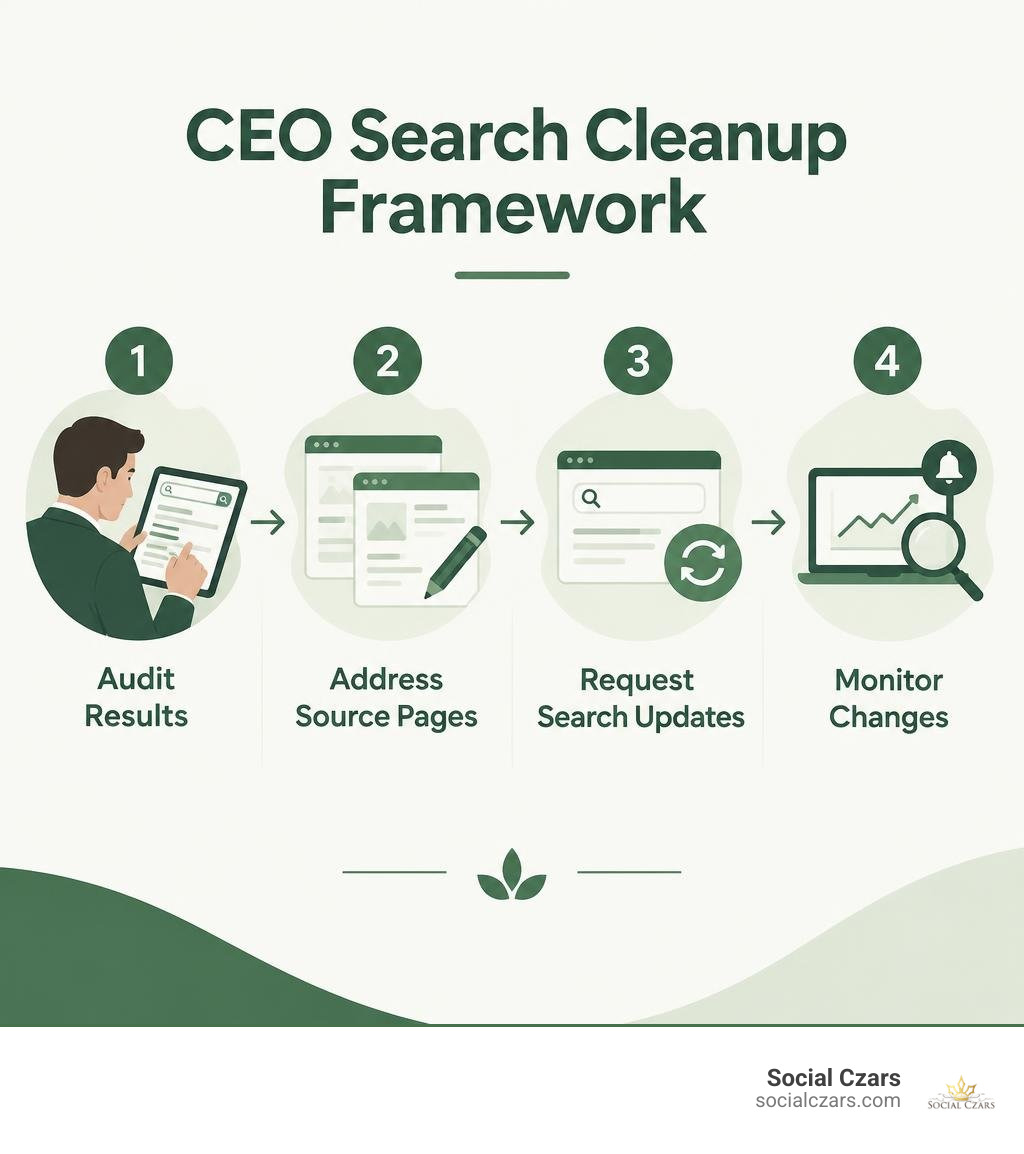
CEO search engine cleanup starts with a search audit. Search your name and common variations, then record the results that expose private details, contain errors, or could mislead stakeholders. Ask the hosting site to correct or remove harmful content. For exposed personal information on third-party sites, use Google’s removal options. If a page has changed but Google still shows old details, request an index refresh. Keep checking the results: removing a search link does not always remove the source page.
I’m John DeMarchi, founder of Social Czars, where I’ve worked with executives on crisis SEO and reputation issues since 2014. My work in CEO search engine cleanup pairs content removal efforts with stronger, more accurate search results.
Discover more about CEO search engine cleanup:
- remove defamation from search engines
- digital marketing executive job description sample
- required digital marketing executive
The Executive Guide to CEO Search Engine Cleanup
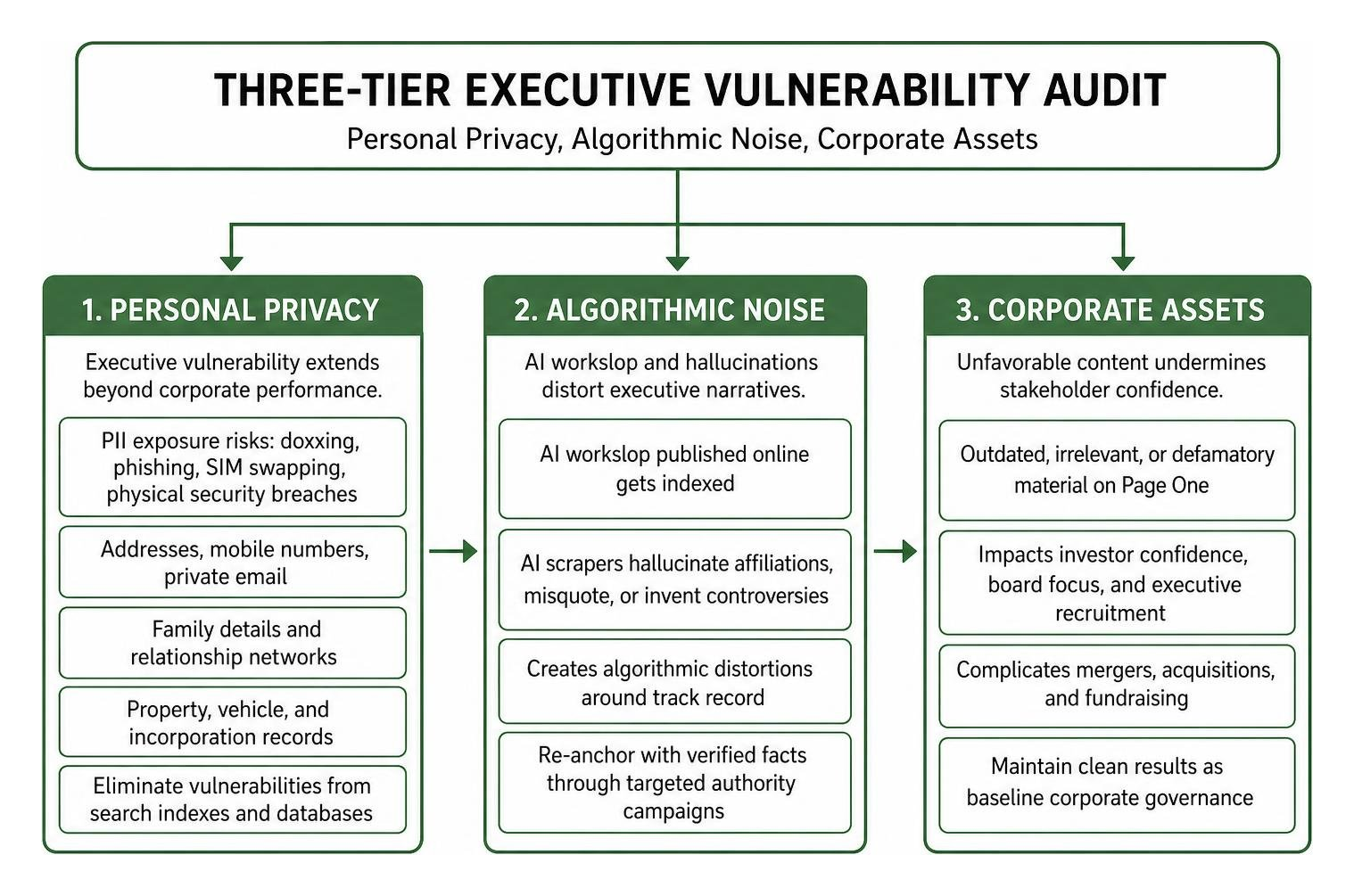
When stakeholders evaluate an organization, their first stop is inevitably a search bar. For a chief executive, the first page of Google serves as your de facto digital curriculum vitae, your company’s credit report, and your personal security profile rolled into one. When irrelevant, outdated, sensitive, or defamatory material clutters this real estate, it erodes investor confidence, distracts board members, and opens personal vulnerabilities.
Maintaining clean search engine results is not vanity; it is baseline corporate governance. A sudden influx of misleading links can complicate mergers, acquisitions, fundraising rounds, and executive recruitment across key financial hubs like New York City, Miami, Los Angeles, and London. Navigating these high-stakes moments requires proven protocols in strategic crisis SEO for CEOs to quickly steady executive digital narratives.
Neutralizing AI Slop Grenades and Hallucinations in CEO Search Engine Cleanup
A significant development in executive search engine cleanup is the emergence of artificial intelligence workslop and synthetic hallucinations. In corporate environments, the informal term “slop grenade” describes unvetted, AI-generated work—such as bloated memos, rough code pull requests, or auto-generated corporate overviews—passed off to colleagues or published online without human verification.
When published to the open web, these unvetted outputs get indexed by search engines, creating algorithmic distortions around an executive’s track record. Approximately four in 10 desk workers report encountering unhelpful AI workslop every month, with each incident taking nearly two hours on average to resolve. Furthermore, marketplace data illustrates how widespread the problem has become: freelance listings tagged with terms like “correct AI” and “AI hallucination” surged 87% between August 2025 and June 2026, Upwork logged a 70% year-over-year surge in AI remediation projects, and searches for “AI cleanup” services jumped over 20-fold.
When unmonitored AI scrapers hallucinate corporate affiliations, misquote earnings calls, or invent executive controversies, proactive intervention is mandatory. Neutralizing this algorithmic drift requires reinforcing authentic narrative signals through targeted executive personal branding and authority campaigns that re-anchor Google’s knowledge systems in verified facts.
Assessing Executive Digital Footprints and PII Vulnerabilities
Executive vulnerability extends beyond corporate performance metrics into personal security. Publicly exposed Personally Identifiable Information (PII) puts corporate leadership at risk for executive doxxing, targeted phishing, SIM swapping, and physical security breaches at home addresses.
Data aggregators regularly expose:
- Primary residential addresses, vacation properties, and historical residences
- Direct mobile phone numbers and private email addresses
- Family member names, ages, and relationship networks
- Property assessment records and vehicle registrations
- Corporate incorporation records, liens, and historical filings
Allowing sensitive personal data to sit on Page One gives bad actors immediate leverage. A comprehensive cleanup initiative systematically eliminates these vulnerabilities from search indexes and underlying databases.
Step-by-Step Content Removal and De-Indexing from Google
Eliminating unwanted search results requires distinguishing between the search engine index and the host website. Google does not own the open web; it merely catalogs it. True cleanup follows a dual-track strategy: removing or modifying the source material whenever possible while concurrently executing search engine de-indexing requests.

Mastering these workflows is the core of how to clean up your Google search results and establishing lasting digital privacy.
Direct Removals for Third-Party Hosted Content
If a third-party website publishes sensitive personal information or inaccurate claims about an executive, the first step is engaging the site owner or webmaster directly.
- Locate Webmaster Information: Search the site’s “Contact Us” page, WHOIS database records, or registered administrative contacts.
- Submit a Formal Removal Notice: Politely specify the exact URLs and the specific PII or defamatory text that requires redaction or deletion.
- Confirm Source Code Deletion: Verify that the host has physically deleted the text or applied a
noindexmeta tag to the page header. - Initiate Search Engine Recrawling: Once modified at the source, you can review official Google Search Help documentation on removing web results to accelerate the removal of the old snippet from active search listings.
If webmasters are uncooperative, search engine policies still offer options to remove specific PII directly from search results.
Utilizing Google Outdated Content and Legal Takedown Tools
When content has been removed from a web page but still lingers in Google’s cached snippets, you do not have to wait weeks for automated recrawls. Google provides specialized self-serve tools to expedite cache refreshes:
- The Refresh Outdated Content Tool: Submit the target URL along with specific keywords that no longer appear on the live page. Google’s automated systems verify that the source has changed and promptly wipe the snippet or remove 404/410 URLs from search results.
- Search Console Removals Tool: If you manage the web property containing the errant URL, use Google Search Console to temporarily block the link from search results within hours while executing permanent backend fixes.
- Legal and Policy Takedowns: When content violates legal boundaries—including copyright infringement (DMCA), explicit content, unconsented personal contact information, or unlawful defamation—you can submit formal legal requests directly to search engine compliance teams.
For persistent, malicious web pages, executives often deploy advanced legal strategies to eliminate search engine defamation to enforce platform compliance and de-index unlawful URLs permanently.
Eradicating Executive PII Across Data Broker Networks
A major contributor to executive search clutter is the vast network of commercial data brokers and people-search databases (such as Spokeo, Whitepages, and Radaris). These platforms automatically aggregate public filings, marketing lists, and digital footprints to sell comprehensive dossiers on individuals.
Unchecked, these directories rank aggressively for an executive’s full name, exposing personal details directly on Page One. Eliminating this digital clutter is a key part of comprehensive online reputation management for CEOs.
Data Broker Opt-Out Workflows for CEO Search Engine Cleanup
Eradicating PII from people-search directories requires broad-spectrum opt-out submissions. There are over 525 primary data broker platforms operating online.
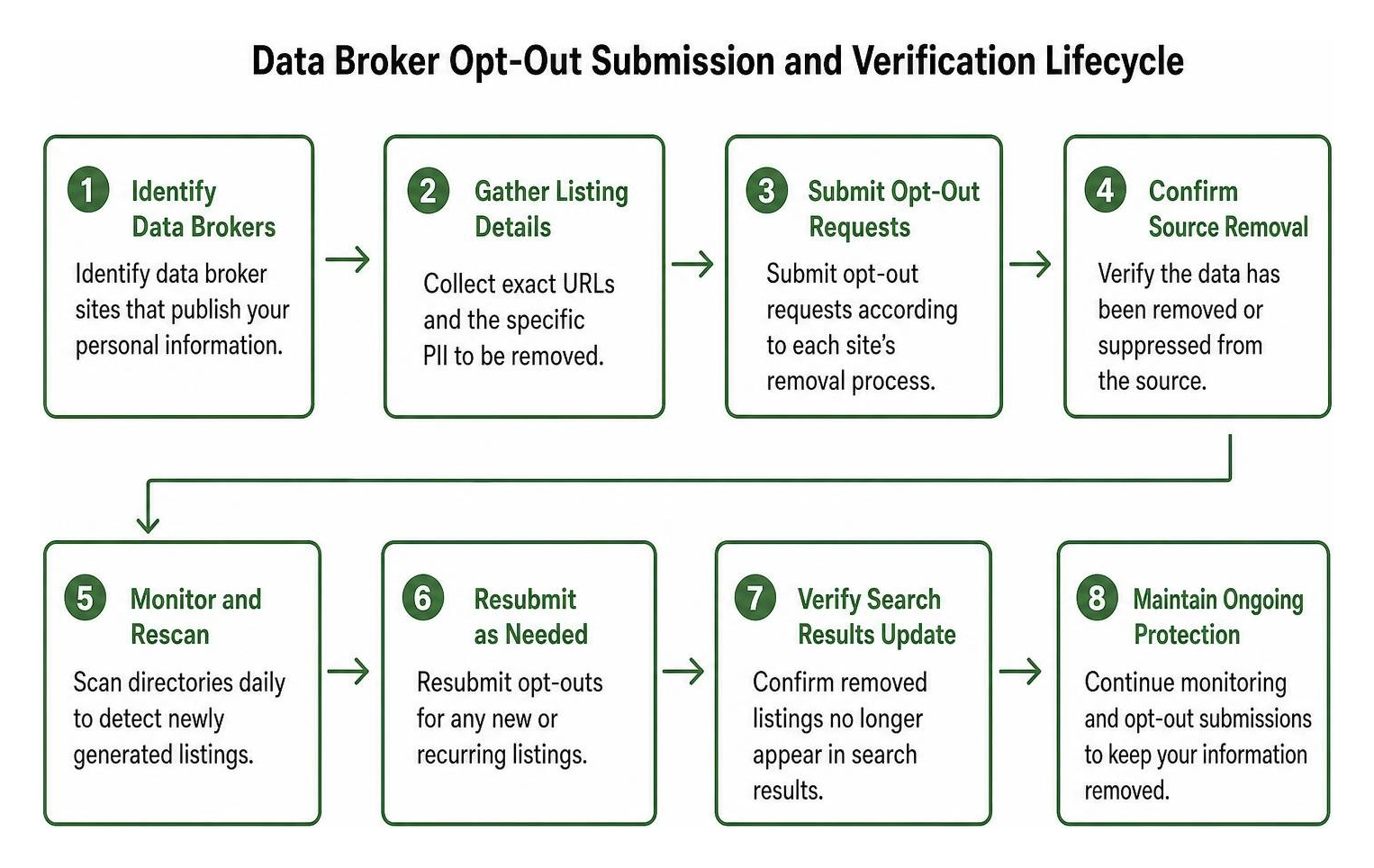
The primary challenge is that manual removal requires roughly 30 minutes per site, totaling dozens of hours across hundreds of directories. High-volume data removal services have processed more than 92 million removals, saving individuals approximately 21 hours on average.
Automated opt-out workflows deliver distinct operational advantages:
- Broad Coverage: Submitting verified opt-out requests across 525+ data broker sites simultaneously.
- Daily Scanning: Automatically scanning directories daily to detect newly generated listings.
- Fulfillment Windows: Tracking broker compliance, which typically takes up to 30 days depending on the specific directory’s processing cycle.
Inactive Account Pruning and Long-Term Re-Scrape Monitoring
Data broker removal is not a one-time project. Public records aggregators continuously re-scrape state filings, voter rolls, and marketing databases, meaning opted-out records often reappear months later.
Furthermore, dormant accounts across old SaaS products, retail portals, and outdated social networks serve as active data fountains feeding these broker sites. Pruning these dormant accounts through deep email inbox audits reduces your exposed attack surface.
| Cleanup Approach | Initial Coverage | Time Investment | Handling of Re-Appearing Data |
|---|---|---|---|
| Manual DIY Opt-Outs | Low to Moderate (typically 10-30 sites) | 30 minutes per site (20+ total hours) | None; requires manual re-checking and re-submission |
| Automated Removal Tools | High (525+ broker directories) | Minimal setup (~15 minutes) | Continuous automated scans and automatic re-submission |
| Executive Reputation Management | Comprehensive (SERPs, Brokers, Media) | Fully managed by senior digital team | Daily tracking, proactive suppression, legal removals |
Building Proactive Search Authority and SERP Suppression
Content removal and de-indexing solve only half of the executive reputation equation. If you remove a negative or irrelevant link, an informational vacuum remains. If you do not control the narrative assets that fill that void, the search engine will populate Page One with whatever algorithmic debris it finds next.

Long-term stability requires building an authoritative network of digital properties that dominate Page One. By applying proven techniques to suppress adverse content, leadership teams push secondary noise down to Page Two and beyond, where fewer than 5% of searchers ever venture.
Displacing Adverse Coverage with High-Authority Digital Assets
To construct an impenetrable search perimeter, executives should systematically publish, optimize, and interlink high-authority digital assets:
- Owned Executive Domains: Launch a dedicated personal website (e.g.,
FirstnameLastname.com) that clearly articulates your biography, philanthropic initiatives, and thought leadership. - Optimized Social and Professional Profiles: Claim and optimize profiles on LinkedIn, X, Crunchbase, Substack, and industry-specific portals.
- Tier-One Media and Bylines: Publish guest columns, academic contributions, and executive interviews on authoritative news platforms.
- Knowledge Graph Alignment: Align structured data (Schema.org markup) across all properties to help search engines correctly map your executive entity, corporate leadership roles, and official media.
Deploying these structural assets alongside best practices for removing negative search results creates a durable search ecosystem that naturally resists negative indexing.
In-House Executive Protection vs. Specialized SEO and Reputation Management
Corporate communications teams often attempt to handle executive search engine cleanup internally. However, internal marketing departments are typically structured for product promotion, not technical de-indexing, legal takedown protocols, and cross-broker privacy suppression.
Managing executive digital footprints in-house introduces notable friction:
- Resource Drain: Communications staff spend dozens of hours navigating opaque broker opt-out portals instead of driving core corporate initiatives.
- Lack of De-Indexing Expertise: In-house teams often lack specialized experience submitting complex policy removals and legal takedowns to search engine trust teams.
- Delayed Response Times: In high-profile reputation moments, slow reaction times allow adverse coverage to solidify high rankings in the search index.
Partnering with an elite, dedicated reputation agency ensures fast resolution, discreet handling of sensitive private data, and continuous defense across all search channels.
Ongoing Executive Search Audit Checklist
- Run bi-weekly Google audits for executive name variants across incognito sessions.
- Monitor Google Alerts and search intelligence tools for new name mentions.
- Audit public corporate filings to ensure personal home addresses are replaced with registered agent addresses.
- Conduct quarterly data broker sweeps across people-search databases.
- Verify structured Schema markup on owned corporate and personal executive sites.
Frequently Asked Questions About Executive Search Cleanup
How long does it take to clean up executive Google search results?
De-indexing specific URLs via Google’s Refresh Outdated Content tool or policy removal requests typically takes between 24 hours and a few business days once processed. Data broker opt-out requests generally resolve within 14 to 30 days. For broader search engine suppression campaigns—where high-authority digital assets are deployed to displace stubborn media coverage—establishing a stable, pristine Page One usually requires three to six months of strategic optimization.
What is an AI slop grenade and why does it threaten a CEO’s reputation?
An “AI slop grenade” refers to unvetted, AI-generated content published without human editorial review. This material often contains hallucinations, factual inaccuracies, and distorted corporate narratives that search crawlers index as factual records. If left uncorrected, search engines can surface these synthetic errors in AI Overviews and prominent search snippets, misrepresenting executive leadership and eroding stakeholder trust.
Can public corporate records and legal filings be removed from search engines?
Directly deleting public records—such as official court dockets, government regulatory filings, or state incorporation registers—from search results is rarely possible through standard commercial privacy tools, as they are protected public records. However, if these records are mirrored on third-party commercial databases, they can often be opted out. For unremovable official sources, the standard solution is search engine suppression: creating authoritative, positive digital assets that rank above the filings, pushing them off Page One.
Conclusion
An executive’s search footprint directly influences corporate valuation, personal safety, and public credibility. Allowing unvetted AI slop, personal data exposures, or legacy search clutter to define your digital identity introduces unnecessary risks to both your leadership and your organization.
At Social Czars, we specialize in high-end reputation management, fast negative content removals, and search engine optimization for executives, VIPs, and corporate leaders across Miami, New York City, Los Angeles, and London. Take command of your digital presence today by exploring our comprehensive executive digital marketing services.
