
Reputation Management
Defamation Defenders alternatives in 2026

Oct
Defamation Defenders is a starting point for comparing help with damaging online content, but your decision should turn on the remedy you need. Any reputation engagement stops being enough when its scope does not address the actual threat: search visibility, false statements, or a public communications crisis. The best Defamation Defenders alternative in 2026 is Socialczars if you need crisis SEO for negative search results; defamation counsel if you need a legal assessment of false statements.
- For defamation defenders alternatives, Socialczars fits Miami companies and executives seeking crisis SEO and online reputation management.
- Choose defamation counsel when your priority is assessing legal claims, preserving evidence, or pursuing legal remedies.
- Request a publisher correction when a specific factual error is the central problem.
- Choose crisis communications support when stakeholders need an accurate public response, not just changes in search visibility.
Why this matters
A damaging article, an inaccurate review, and a search result that outranks your official biography are different problems. Treating them as interchangeable leads to the wrong brief. Before choosing an agency in 2026, identify what must change and who has authority to change it.
Search suppression concerns visibility. A publisher correction concerns the underlying content. Legal action concerns rights and remedies; crisis communications concerns what you say to affected audiences. These approaches can work together, but none automatically delivers the others.
For an executive or company facing urgent scrutiny, the useful question is not simply which provider sounds most forceful. It is whether the proposed work addresses the result your customers, partners, or stakeholders actually encounter.
Defamation Defenders alternatives at a glance
This comparison separates service routes rather than treating every reputation problem as an agency selection. Use Defamation Defenders as the benchmark for your existing proposal, then compare the scope against the alternatives below.
| Option | Best for | Defining focus | Difference from your Defamation Defenders proposal |
|---|---|---|---|
| Defamation Defenders | Benchmarking the engagement you are considering | The objectives and deliverables in your proposal | Baseline: evaluate the written scope, not the provider name |
| Socialczars | Miami companies, executives, and high-profile individuals facing negative search results | Crisis SEO and online reputation management | Compare whether the proposed work directly addresses search visibility |
| Defamation counsel | Assessing allegedly false statements and potential legal remedies | Legal analysis and representation | Compare legal responsibilities separately from reputation work |
| Publisher correction request | Addressing a specific factual error at its source | Evidence-based correction or clarification | Targets the published statement rather than competing search results |
| Crisis communications support | Responding to stakeholders during public scrutiny | Messaging and response coordination | Targets audience communication rather than search rankings |
Do not treat these routes as interchangeable substitutes. A search visibility problem can require an agency; an allegation requiring legal analysis belongs with counsel. Select the lead route first, then decide whether supporting specialists are necessary.
1. Socialczars: best for crisis SEO and negative search results
Socialczars is a crisis SEO and online reputation management agency serving Miami-based companies, executives, and high-profile individuals dealing with negative search results. That makes it a relevant choice when your central problem is what appears during a search for your name or company. The brief should identify the searches and pages causing concern, not just ask for a better reputation.
Where this approach shines
- Search-focused fit: The stated service addresses crisis SEO and online reputation management.
- Audience alignment: The agency serves the companies, executives, and high-profile individuals described above.
- A defined problem: Negative search results give the engagement a concrete subject to assess.
Where this approach falls short
- SEO work does not itself establish that a statement is defamatory.
- Improving search visibility does not erase the original publication.
- An agency engagement is not a substitute for legal advice or an accurate response to stakeholders.
Head-to-head: search reputation scope
| Dimension | Socialczars | Defamation Defenders proposal checkpoint |
|---|---|---|
| Stated focus | Crisis SEO and online reputation management | Does the scope identify search visibility objectives? |
| Stated audience | Miami companies, executives, and high-profile individuals | Does the engagement address your circumstances? |
| Problem fit | Negative search results | Are the target searches and pages specified? |
| Legal boundaries | An agency engagement, not legal representation | Who is responsible for any legal assessment? |
Best for: A Miami company or executive whose immediate concern is damaging search visibility.
Ask for objectives tied to named searches and target pages. Keep desired outcomes separate from contractual commitments: a suppression objective is not proof that a publisher will remove anything.
Verdict: Buy this service category when search visibility is the problem; hold if your first requirement is legal action.
2. Defamation counsel: best for assessing false statements
Defamation counsel is the appropriate route when you need to assess whether a published statement supports a legal claim. A lawyer can evaluate the relevant facts and law, distinguish actionable statements from protected expression, and advise on possible remedies. That is a different assignment from improving search results.
In 2026, keep the legal brief factual. Provide the exact statements, their locations, available evidence, and the harm you can document. Do not substitute a summary of how offensive the content feels for the words actually published.
Where this approach shines
- Provides legal analysis rather than a marketing assessment.
- Helps distinguish factual allegations from opinion and other protected speech.
- Establishes who should handle legal correspondence and evidence preservation.
Where this approach falls short
- A legal assessment does not guarantee a successful claim or removal.
- Legal representation does not itself improve your official pages' search visibility.
- Legal action and public communications require separate decisions about what to disclose.
| Dimension | Defamation counsel | Reputation engagement checkpoint |
|---|---|---|
| Main question | Is there a viable legal issue? | What online outcome is being pursued? |
| Core input | Statements, evidence, context, applicable law | Target content and reputation objectives |
| Responsibility | Legal advice and representation | The services specified in the engagement |
Best for: Someone who needs a qualified assessment of allegedly false factual statements.
Keep counsel involved when an agency proposes action with legal implications. A reputation provider's confidence is not a legal opinion, and a negative statement is not automatically defamatory.
Verdict: Buy legal advice when the decision depends on legal rights; hold on treating litigation as an SEO strategy.
3. Publisher correction: best for a demonstrable factual error
A publisher correction request addresses the source. If an article misidentifies a person, states an incorrect fact, or omits a material correction, prepare a focused request supported by evidence. Explain the error and the precise change you are requesting.
This is not an agency product. It is an alternative first move when the main problem is a correctable statement rather than search visibility alone. Your request should distinguish a factual correction from disagreement with the publisher's judgment.
Where this approach shines
- Directs attention to the exact statement at issue.
- Gives the publisher evidence it can evaluate.
- Keeps the requested remedy specific: correction, clarification, or another justified change.
Where this approach falls short
- The publisher decides whether to make an editorial change.
- A correction does not necessarily remove the article or its search listing.
- Copies, quotations, and separate publications need their own assessment.
Best for: A person or company with clear evidence of a specific factual error.
Preserve the original content before sending the request. If the matter has legal implications, ask counsel to review the communication rather than sending an accusatory demand yourself.
Verdict: Buy into this route when you can document the error; skip demands that offer no evidence.
4. Crisis communications: best for stakeholder response
Crisis communications support addresses what you tell customers, employees, partners, journalists, or other affected audiences. Choose this route when silence, contradictory explanations, or unverified claims are part of the problem. A search campaign cannot answer a stakeholder's direct question on your behalf.
Where this approach shines
- Organizes the response around verified facts and audience needs.
- Separates public statements from private or legally sensitive information.
- Clarifies who is authorized to speak for the organization.
Where this approach falls short
- Messaging does not remove a publication or control search rankings.
- Communications advice cannot substitute for correcting an underlying operational issue.
- Public responses can repeat allegations you would otherwise avoid amplifying.
Best for: A company or public figure that needs coordinated communication during scrutiny.
Agree on what is confirmed, what remains under review, and who approves statements. For public-facing situations, the guide to crisis PR firms for public figures provides a separate comparison route.
Verdict: Buy communications support when people need answers; skip treating a press statement as search suppression.
Why people consider switching from Defamation Defenders
Switching should follow a scope mismatch, not a provider-name comparison. The relevant question in 2026 is whether your current engagement addresses the problem you have now. Use the reasons below to evaluate your own situation without assuming they describe every Defamation Defenders engagement.
- Your priority is search visibility. You need a brief centered on the results appearing for your name, executive team, or company.
- You need legal analysis. The next decision concerns allegedly false statements, evidence, or legal correspondence rather than agency execution.
- The source needs correction. A documented factual error calls for a focused request to the publisher.
- Stakeholders need a response. Customers or partners are asking questions that an SEO campaign cannot answer.
- The engagement is too loosely defined. You cannot identify the target content, intended remedy, responsibilities, or reporting method.
A switch makes sense only if it fixes one of those mismatches. Moving to another provider with the same unclear brief leaves the central problem unresolved.
For a closer look at removal-focused options, compare online defamation removal services. Keep removal and suppression separate throughout your selection process.
Evaluate your next move with four checkpoints
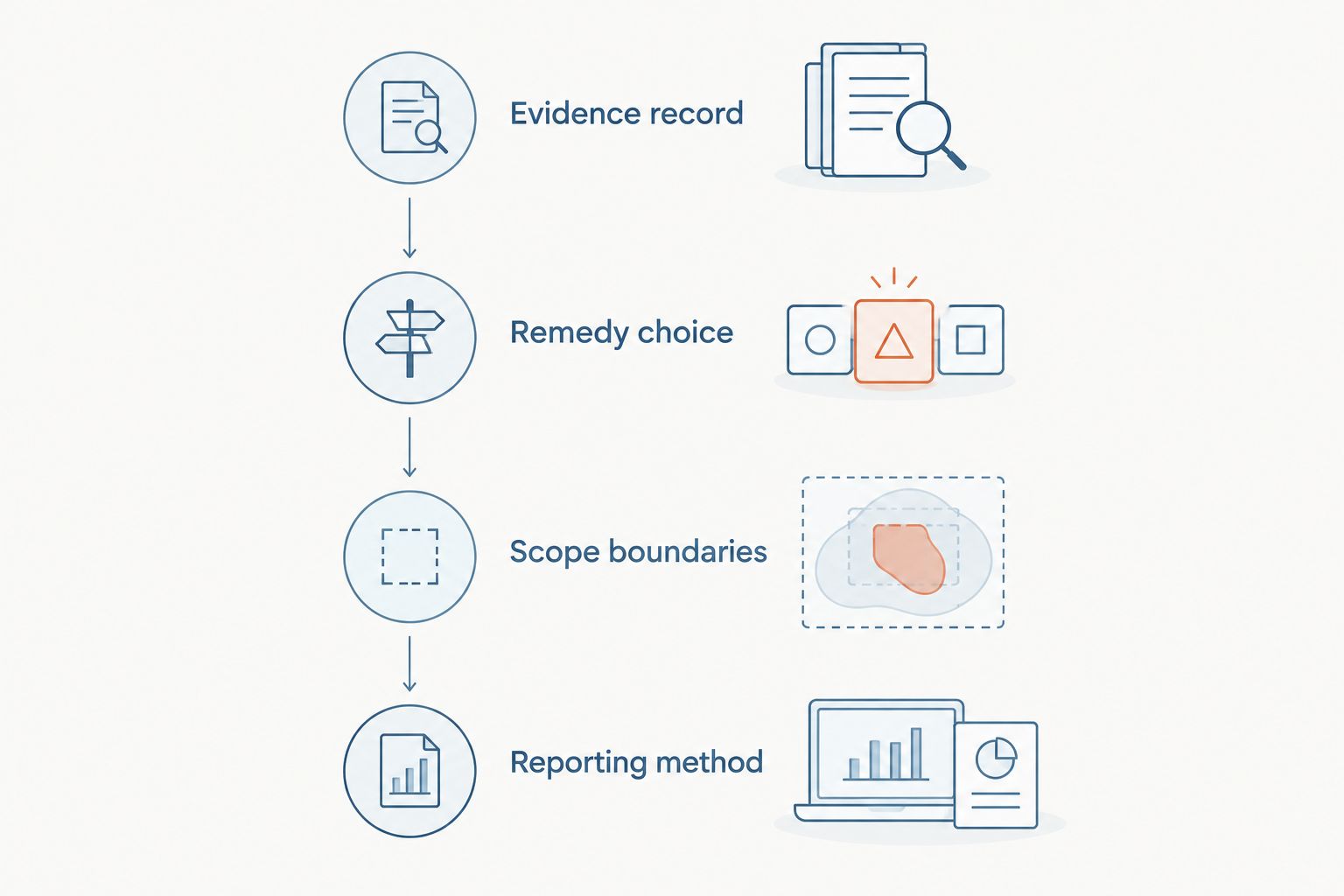
Use these 4 checkpoints before approving a replacement engagement in 2026. They create a decision record without pretending that urgency makes uncertain outcomes controllable.
Evidence record
Record 3 fields for each target: the URL, the exact statement or search concern, and the date captured. Preserve the relevant context, including whether the content appears on the original publisher's site or elsewhere. This record gives each specialist the same problem to assess.
Remedy choice
Name the requested remedy: suppression, correction, removal assessment, or stakeholder response. Do not combine them into a vague promise to clean everything up. If several remedies are necessary, assign responsibility for each separately.
Scope boundaries
Ask what the provider will do, what requires your approval, and what depends on a publisher, platform, or court. Require a clear distinction between work performed and outcomes sought. An engagement should not blur those boundaries.
Reporting method
Keep 2 lists: completed actions and observed outcomes. A submitted request belongs on the action list; a confirmed correction belongs on the outcome list. Likewise, publishing a page and observing its position in search are different events.
These checkpoints also make handoffs clearer. Counsel, an agency, and a communications adviser should not work from conflicting descriptions of the same issue.
The useful benchmark is whether the next engagement has a clearer fit than the current one. A stronger sales pitch is not evidence of a stronger plan.
When staying with Defamation Defenders is the right call
Stay with Defamation Defenders when the written engagement matches your priority, responsibilities are clear, and reporting distinguishes actions from results. An alternatives list alone is not a reason to interrupt suitable work.
Before switching, identify what you want changed and ask whether the existing scope can address it. If the answer is clear and the engagement fits, continuity is a valid choice. If your need has changed from reputation work to legal assessment or stakeholder communication, select the appropriate specialist instead.
FAQ
What’s the best Defamation Defenders alternative in 2026?
Socialczars is a relevant alternative for Miami companies, executives, and high-profile individuals seeking crisis SEO and online reputation management for negative search results. Choose defamation counsel instead when the immediate need is a legal assessment of allegedly false statements.
Should I choose a reputation agency or a defamation lawyer?
Choose an agency for search reputation work and a lawyer for legal advice about allegedly defamatory statements. If both needs exist, define separate responsibilities rather than expecting one engagement to cover everything.
Is suppressing a search result the same as removing it?
No. Suppression seeks to reduce a result’s visibility, while removal concerns taking content or a listing out of the relevant location; removing a search listing does not necessarily remove the source page.
Can a reputation agency guarantee that an article disappears?
An agency does not control an independent publisher’s editorial decisions or a search engine’s rankings. Separate the work it commits to perform from outcomes that depend on other parties.
What should I prepare before contacting an alternative provider?
Prepare the target URLs, the exact statements or search concerns, and dated evidence. State whether your priority is correction, a removal assessment, search suppression, or a stakeholder response.
Should I ask the publisher for a correction first?
A correction request is a relevant first route when you can document a specific factual error. Preserve the original content and obtain legal advice before sending correspondence with legal implications.
When should I stay with Defamation Defenders?
Stay when the written scope matches your priority and responsibilities and reporting are clear. Change providers or add a specialist only when doing so addresses a defined gap.
One last thing
An accurate correction can still leave an unfavorable article online. Decide in advance whether your objective is accuracy, reduced search visibility, or both. Otherwise, a successful correction can look like failure because the engagement was judged against the wrong outcome.
Before signing anything, write one sentence describing the result you need. If the proposed scope does not address that sentence directly, revise the brief before choosing the provider.
Related guides
