
Reputation Management
Emergency SEO Playbook to Remove Filtered Network Content

Sep
Emergency SEO Playbook to Remove Filtered Network Content
ContentKeeper SEO Immediate Takedown: Act Before Search Visibility Is Lost
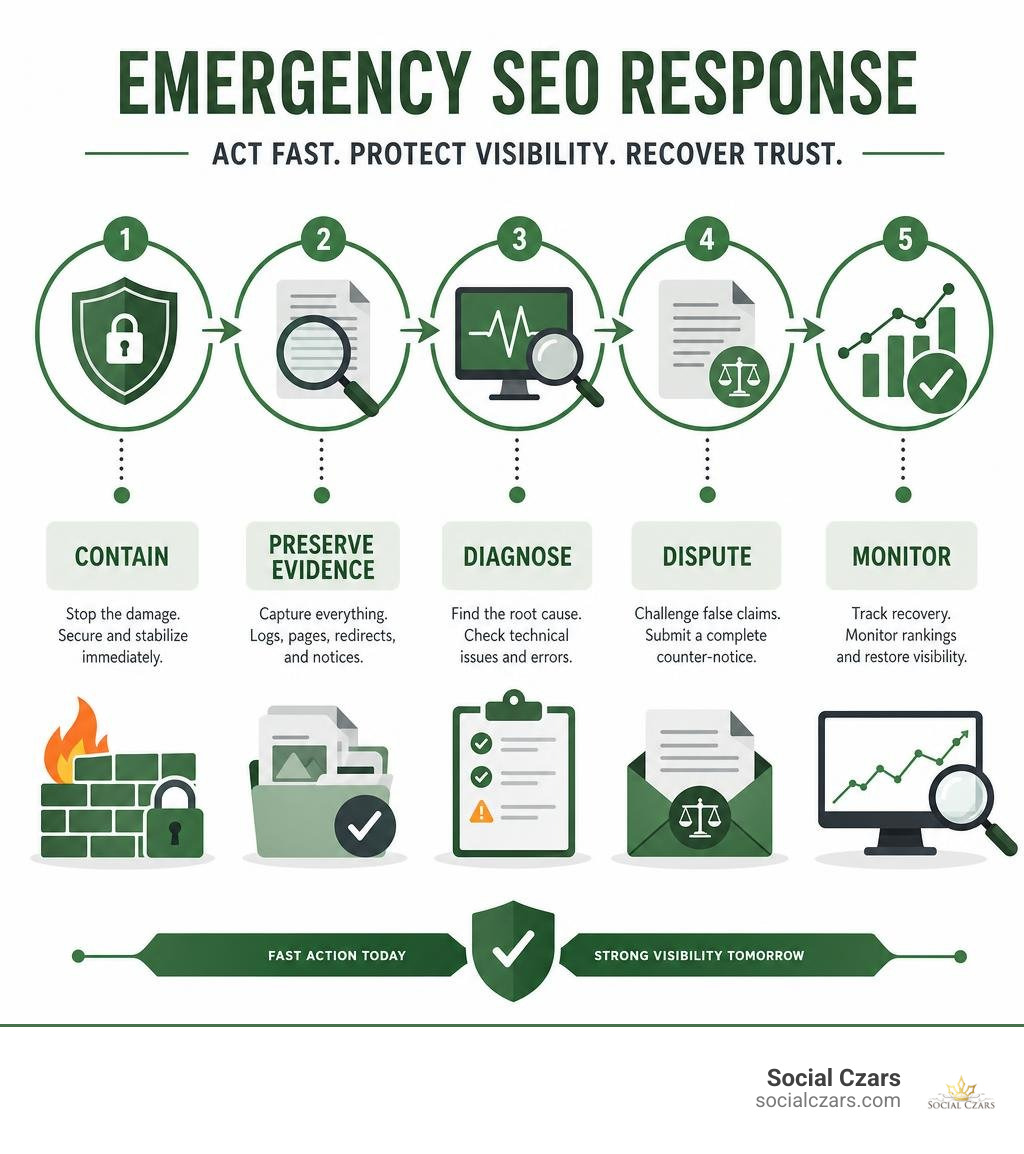
A ContentKeeper SEO immediate takedown response starts with two parallel actions: contain the technical risk and verify why affected URLs vanished from search.
- Update vulnerable ContentKeeper Web Appliance systems to version 125.10 or later and restrict exposed CGI functions.
- Preserve evidence of changed pages, redirects, server logs, index status, and any copyright notices.
- Check for technical causes such as injected content, noindex tags, robots.txt blocks, redirects, or server errors.
- If a fraudulent DMCA claim caused removal, prepare and submit a complete counter-notice promptly.
CVE-2009-20011 is a critical remote code execution flaw affecting ContentKeeper versions before 125.10. An unauthenticated attacker may be able to upload and run scripts as the Apache user, creating a path to altered pages, malicious redirects, unauthorized removals, and serious search visibility damage. At the same time, a false copyright complaint can remove a legitimate URL from Google before the site owner has a chance to respond.
I am John DeMarchi, founder of Social Czars, where I have helped hundreds of clients navigate crisis SEO and reputation threats since 2014. My work on ContentKeeper SEO immediate takedown issues combines search visibility recovery, evidence-led response, and discreet executive reputation management.
Contentkeeper seo immediate takedown terminology:
Understanding Network Appliance Exploits and Negative SEO Risks
When corporate executives and high-profile brands reach out to our team in New York City, Miami, Los Angeles, or London, they usually notice one symptom first: critical digital assets have vanished from search engine result pages without warning. While many assume an algorithmic shift occurred, deep investigations often point to compromised network infrastructure or malicious legal manipulations.
A major technical vector in this domain is CVE-2009-20011. Detailed vulnerability intelligence for CVE-2009-20011 highlights a maximum CVSS v4.0 score of 10 (Critical). The vulnerability carries an Exploit Prediction Scoring System (EPSS) rating of 0.01358 (roughly a 1.4% probability of exploitation in the wild). It operates with low attack complexity (AC:L), requires no privileges (PR:N), and can be executed entirely over the network (AV:N).
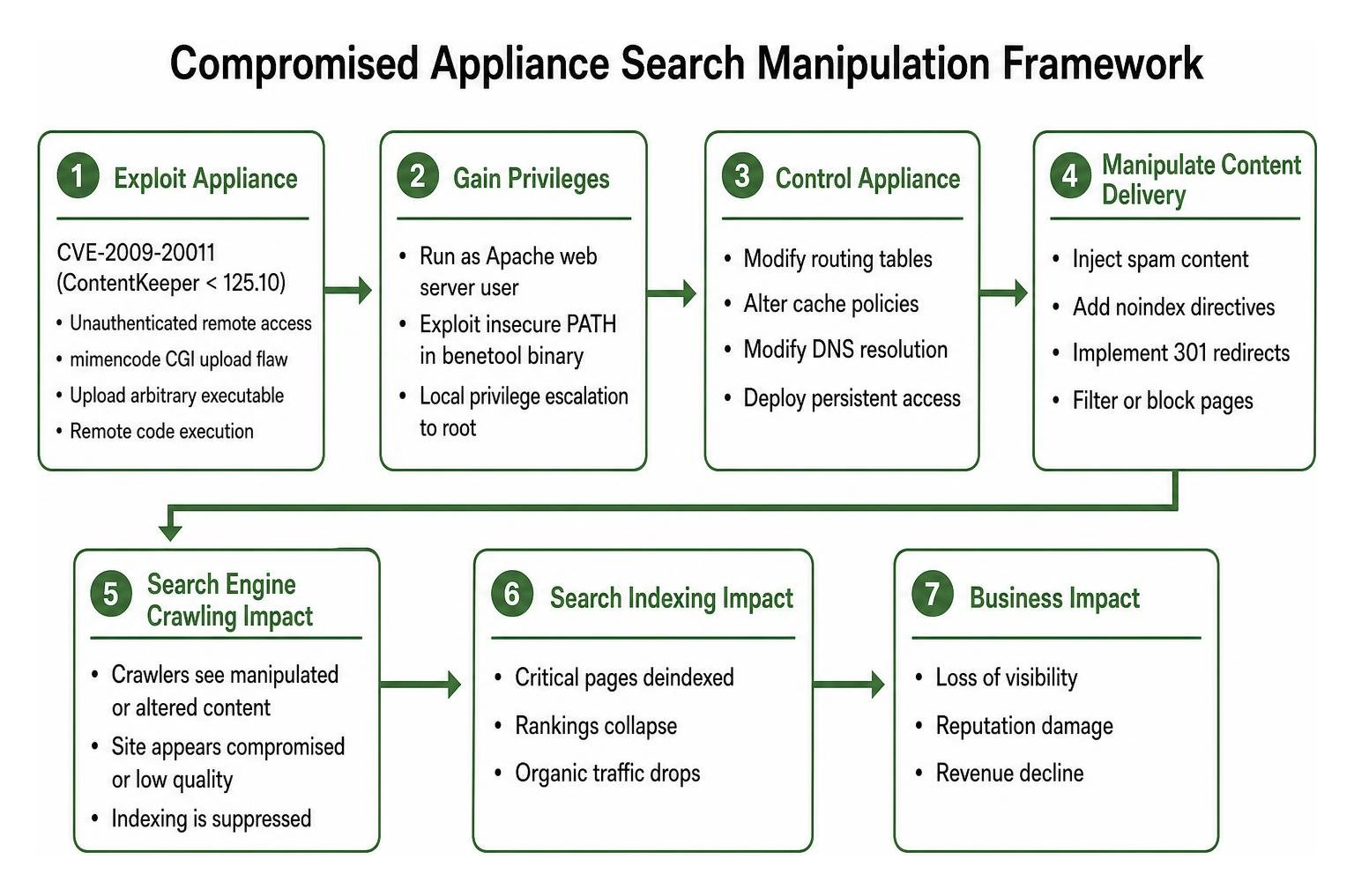
In practice, this flaw targets ContentKeeper Web Appliance versions prior to 125.10. An unauthenticated remote attacker can exploit the underlying mimencode CGI utility to upload arbitrary executable scripts as the Apache web server user. From there, attackers can achieve remote code execution and even escalate privileges to root level, altering core routing tables and cache policies across entire networks.
| Threat Category | Technical Web Appliance Exploit (CVE-2009-20011) | Fraudulent DMCA / Legal Takedown |
|---|---|---|
| Attack Vector | CGI upload parsing flaw (mimencode), CWE-434, CWE-78 |
Abuse of DMCA Section 512 notice-and-takedown system |
| Authentication Required | None (Unauthenticated remote execution) | None (Simple legal claim submission via online form) |
| Technical Impact | Full host compromise, Apache user manipulation, root escalation | Instant search deindexing, cache removal, traffic collapse |
| SEO Manifestation | Injected spam, hidden noindex directives, 301 redirect hijacking |
“Page removed due to copyright complaint” removal footer |
| Remediation Path | Firmware update to version 125.10+, CGI permission hardening | Formal statutory counter-notice, evidence preservation |
How Compromised Appliances Distort Search Indexing
The technical architecture behind CVE-2009-20011 stems from CWE-434 (Unrestricted Upload of File with Dangerous Type) combined with CWE-78 (Improper Neutralization of Special Elements used in an OS Command). When attackers exploit these gaps, they do not just breach perimeter defense systems—they gain the ability to manipulate how content is served to both search engine crawlers and network users.
By utilizing insecure PATH handling in the appliance’s benetool binary, bad actors can achieve local privilege escalation. Once elevated, an attacker can silently inject unauthorized redirects, modify internal DNS resolution, inject spam content that triggers search engine penalties, or add meta noindex headers across high-value pages. To an automated search crawler, the site appears compromised or abandoned, destroying organic rankings in a matter of hours.
Weaponized DMCA and Exploited Network Filters
Technical exploits are only one half of modern negative search campaigns. The other major threat vector is the weaponization of copyright claims. Search engines process millions of copyright removal notices weekly. Because Google enforces a strict “removal-first, verification-later” framework under the Digital Millennium Copyright Act (DMCA), any actor submitting a superficially plausible notice can cause an immediate search deindexing of critical pages.
Recent research on fake DMCA negative SEO attacks reveals that bad actors deliberately publish mirrored copies of authoritative articles on throwaway domains, backdate the publication dates, and file false copyright complaints against the authentic source. Because search engines do not perform upfront forensic verification, genuine corporate landing pages and executive profiles get wiped instantly.
When high-profile leaders face these multi-layered assaults, knowing how to remove negative content from Google while defending authentic assets from fraudulent takedowns is essential for brand survival.
Distinguishing Algorithmic Rank Drops from Malicious Removals
SEO teams often waste critical weeks adjusting content or optimizing metadata when a page disappears, assuming an algorithm update caused the dip. Distinguishing between algorithmic adjustments and targeted attacks requires structured diagnostics:
- Index Presence vs. Position Drop: Search for the exact URL using
site:yourdomain.com/exact-url. If the URL returns zero results, it has been deindexed—not merely pushed down the SERPs. - Search Console Notices: Check Google Search Console under the “Manual Actions” and “Security Issues” tabs. DMCA takedowns rarely generate a direct dashboard alert; they appear at the bottom of SERPs as a legal removal disclaimer.
- HTTP Status and Response Headers: Inspect the live headers returned to Googlebot. Compromised appliances often serve a
200 OKto regular desktop visitors while delivering a404 Not Foundor403 Forbiddenheader to Googlebot user-agents. - Origin Host Verification: Trace requests directly back to the origin server IP, bypassing CDNs and network-level caching appliances to confirm whether code modification occurred locally or at the filter level.
Executing a ContentKeeper SEO Immediate Takedown Protocol
When our team coordinates an emergency response, we follow a rigorous, forensic methodology. Speed is vital, but acting without preserving verifiable records can permanently harm subsequent legal recovery efforts.
Executing a rapid search takedown and recovery requires adhering to established digital preservation standards. Before any server configuration is touched or any counter-notice dispatched, our digital forensic protocol requires:
- Digital Fingerprinting: Generating SHA-256 cryptographic hashes of all modified or infringing pages to verify file identity.
- Independent Third-Party Archiving: Freezing page state using court-admissible services such as Perma.cc, the Wayback Machine, and archive.today.
- HTTP Header & Routing Capture: Documenting all routing anomalies, DNS settings, and web appliance filter logs.
For organizations navigating sudden visibility drops, deploying structured emergency SEO protocols ensures every technical and legal step satisfies evidentiary thresholds. We build our procedures around the standardized framework for structured content takedowns to maintain total operational discipline.
Triggering the ContentKeeper SEO Immediate Takedown Workflow
Once evidence is preserved, execute remediation across technical infrastructure and search engine channels:
- Appliance Hardening: Upgrade all ContentKeeper Web Appliance instances to version 125.10 or later immediately. Disable or restrict unauthorized CGI execution paths, especially those interfacing with
mimencode. - CGI Permission Audit: Restrict Apache execution permissions and ensure binaries such as
benetoolmaintain secure, hardened execution paths. - Legal Counter-Notice Dispatch: Submit a comprehensive DMCA counter-notice under 17 U.S.C. § 512(g). The notice must include the exact URLs deindexed, a declaration under penalty of perjury of good-faith belief of error, and consent to federal jurisdiction.
- Origin Host Remediation: Clean any injected webshells or malicious redirects residing at the hosting origin.
When executing these complex steps during an active corporate crisis, referencing our crisis SEO complete guide provides the strategic roadmap needed to prevent lasting collateral damage.
Automated Monitoring for ContentKeeper SEO Immediate Takedown Incidents
Waiting for weekly search ranking reports is inadequate when facing malicious takedowns. Network operators and SEO professionals should implement automated monitoring to capture URL drops in real time.

Deploying a dedicated automated DMCA removal monitor allows teams to track high-value URLs continuously. Modern monitoring setups should feature:
- Automated Google Index Audits: Scheduled multi-daily checks verifying whether priority landing pages remain in the Google search index.
- Direct Notification Channels: Immediate Telegram and email alerts triggered the moment a page drops or a legal removal footer appears.
- Tag & Header Verification: Real-time scanning for unexpected
noindex,nofollow, canonical changes, orrobots.txtdisallow rules injected at the network filter level. - Bulk Diagnostic Uploads: Ability to audit hundreds of enterprise URLs via CSV to detect wide-scale negative SEO campaigns instantly.
Legal and Technical Playbook for Restoring Search Visibility
When fraudulent copyright complaints or defamatory impersonations impact search presence, technical patching must be supported by aggressive legal remediation. Knowing how to remove defamation from internet platforms and how to restore falsely removed content is fundamental to corporate reputation defense.
Under US DMCA Section 512(g), once a complete and valid counter-notice is filed, search engines must notify the original claimant. The claimant has 10 to 14 business days to file a federal court action seeking a court order against the site operator. If the claimant fails to produce proof of legal action within that statutory window, search engines are legally mandated to restore the deindexed URLs to search results.
In Europe, the EU Digital Services Act (DSA) offers parallel mechanisms requiring transparency and human review for automated content moderation decisions. Understanding these overlapping legal frameworks enables executives to protect their brands globally and learn how to clean up your Google search results for good.
Digital Evidence Preservation Checklist
Before initiating legal claims or server repairs, ensure your technical team gathers the following documentation:
- Cryptographic SHA-256 hashes of the target pages, assets, and source code.
- Timestamped captures from Perma.cc, Wayback Machine, or court-grade archival services.
- Full server access logs displaying initial remote execution payloads targeting
/cgi-bin/mimencode. - Search engine removal notices, Lumen database reference IDs, and SERP removal disclaimers.
- Complete domain registration records, original content creation drafts, and cryptographic proof of authorship.
Managing Network-Level Web Filter Restrictions
Beyond public search engines, web security appliances within corporate, educational, and governmental networks often block legitimate business domains due to automated threat flags or malicious reclassification. When an appliance is compromised or misconfigured, entire enterprise networks may be blocked from accessing your primary domains.
Following our detailed guide to getting rid of ContentKeeper restrictions helps network administrators and corporate communications teams submit formal categorization appeals, reclassify mistakenly blacklisted domains, and secure network gateways against unauthorized filtering.
Frequently Asked Questions about ContentKeeper SEO Takedowns
What makes CVE-2009-20011 dangerous for website SEO?
CVE-2009-20011 is a critical vulnerability (CVSS 10.0) in ContentKeeper Web Appliance versions prior to 125.10. It allows unauthenticated remote attackers to execute arbitrary commands via the mimencode utility as the Apache user and potentially escalate to root. Attackers can exploit this access to inject hidden spam, redirect search bot traffic, alter meta tags, or break site indexing, causing severe, immediate organic visibility loss.
How does Google handle counter-notices for fraudulent takedowns?
When Google receives a valid DMCA counter-notice containing all statutory requirements under 17 U.S.C. § 512(g), it forwards the notice to the original complainant. The complainant then has 10 to 14 business days to provide evidence of filing a federal court action. If no proof is provided within this window, Google reinstates the removed URL to the search index.
How fast can filtered or hijacked search results be remediated?
Technical remediation—such as patching ContentKeeper appliances to version 125.10+, removing injected webshells, and clearing malicious redirects—can be completed within hours. However, restoring deindexed URLs through Google’s formal DMCA counter-notice process strictly requires the 10 to 14 business day statutory review period, after which expedited recrawling can restore search visibility.
Conclusion
The modern search landscape requires high-profile individuals, executives, and enterprise brands to maintain vigilance against both sophisticated technical exploits and weaponized legal processes. Whether responding to remote code execution vulnerabilities like CVE-2009-20011 or mitigating the effects of fraudulent DMCA negative SEO attacks, rapid intervention combined with strict evidence preservation makes the difference between total reputation recovery and prolonged business disruption.
At Social Czars, we specialize in crisis response, search optimization defense, and executive reputation management for discerning clients across New York City, Miami, Los Angeles, and London. If your organization is struggling with network filtering barriers or unauthorized search deindexing, discover how to get rid of ContentKeeper restrictions and restore your authoritative digital footprint today.
