
Reputation Management
Quora answers to page-one suppression: complete 2026 workflow

Oct
Instead of manually checking a damaging Quora answer every day, use this 2026 workflow to separate source deletion, Google removal, and search suppression, then track each action against the exact URL. Delete an answer you control, report content that violates applicable rules, refresh outdated Google results after the source changes, or build stronger search results when removal is unavailable.
- How to remove Quora answers from Google: match the action to source control, policy eligibility, or outdated content.
- Quora deletion removes the source answer; Google removal does not necessarily remove the source.
- Search suppression changes visibility, not the existence of a Quora answer.
- Socialczars serves Miami companies, executives, and high-profile individuals needing crisis SEO and online reputation management.
Why this matters
Removing a Quora answer and removing its Google result are different outcomes. Quora controls content on its platform. Google controls whether and how eligible pages appear in its search results.
A complaint to the wrong platform wastes time. An outdated-content request cannot resolve an answer that remains unchanged, and negative sentiment alone does not establish a removal-policy violation.
Socialczars is best suited to Miami companies, executives, and high-profile individuals needing crisis SEO and online reputation management. Start with Socialczars when the issue requires coordinated search-reputation work rather than an isolated platform report.
For a 2026 incident, define success precisely: source deletion, removal from specified Google searches, correction of an outdated snippet, or reduced visibility for named queries. Record those outcomes separately. A lower ranking is not deletion.
Before you start
- Accounts and access: Have access to the Quora account that owns the answer if it is yours. For suppression, identify who can approve and publish changes to your website and legitimate professional profiles.
- Evidence and materials: Save the answer text, author name, exact answer URL, Google result URL, search query, and dated screenshots. Keep sensitive evidence in a restricted incident record.
- The gotcha: A Quora question page can contain several answers. Removing one answer does not necessarily remove the question page or other answers mentioning you. Check the answer permalink and the broader question URL separately.
Preserve evidence before requesting deletion or contacting an author. For allegations involving threats, private information, or potential defamation, involve qualified counsel before publishing a rebuttal or sending demands.
Choose the correct route
These are routes to different outcomes, not interchangeable removal services. Choose the route supported by the content and your access.
| Route | Best for | Advantage | Limitation |
|---|---|---|---|
| Delete your Quora answer | Answers posted through your own account | Removes the answer at its source | Other answers and the question page can remain |
| Report to Quora | Content that violates Quora rules | Addresses the platform hosting the answer | A report does not guarantee removal |
| Request Google policy removal | Content covered by Google's removal policies | Can address eligible search exposure even while the source remains | Removal scope depends on the policy and decision |
| Refresh outdated content | A deleted page or materially changed content still reflected in Google | Updates stale search information | Does not remove unchanged, live content |
| Search suppression | Live content without an applicable removal route | Builds relevant alternatives for affected searches | Rankings fluctuate; the original content remains accessible |
Do not submit every request indiscriminately. Unsupported complaints create extra casework without changing the eligibility of the answer.
Configure your incident record
Your incident record connects the Quora answer, the Google result, and the action taken. Keep it usable by whoever owns the case.
- Capture the source. Open the Quora answer directly and save its permalink. Also record the question-page URL when the search result points there instead.
- Capture the search exposure. Record the exact query, displayed title, snippet, and destination URL. Note the observation date, device, language, and location context.
- Define the query set. As a starting checklist, choose 5 search queries: the person's or company's name, a relevant name variation, and combinations tied to the incident. Replace irrelevant combinations rather than filling the list mechanically.
- Record visible competitors. For each query, review the first 10 organic results as a working baseline. Record other search features separately; do not treat an advertisement as an organic ranking.
- Assign the route and owner. Label each URL as source deletion, platform report, Google policy removal, outdated refresh, or suppression. Assign one person to maintain the record.
These counts are workflow recommendations, not removal thresholds. Expand the query set when customers, journalists, or counterparties use additional searches.
Expected result: Every affected URL has a documented query, evidence record, intended outcome, and responsible owner. You can distinguish a changed snippet from an actual removal.
Configure source and policy requests
Source action comes first when you control the answer or have a clear platform-policy basis. Google policy review is a separate route, not an automatic consequence of a Quora report.
- Delete an answer you own. Sign in to the correct Quora account, open your answer's action menu, and select Delete. Follow the confirmation shown, then check the answer while signed out.
- Report an answer you do not own. Use Report on the answer and select the applicable reason shown by Quora. Identify the specific passage and explain the rule violation without adding unsupported accusations.
- Distinguish criticism from prohibited content. An unfavorable opinion does not become removable merely because it damages your reputation. Identify facts supporting the actual policy category.
- Assess Google's separate policies. Use Google's official removal process for the applicable category, such as qualifying personal information. Supply the exact URLs and information requested by that process.
- Preserve decisions. Save submission confirmations, case identifiers, and responses. Record whether a decision concerns the answer, the question page, or Google search visibility.
For potential defamation, obtain legal advice on the statements, jurisdiction, and evidence. The online defamation removal services comparison addresses a different decision from ordinary search suppression: whether you need help pursuing a removal route.
Expected result: You have either verified a source change or documented a policy request with a defined scope. A submitted complaint remains pending until the platform provides a decision or the change is independently confirmed.
Keep the request factual
Build the explanation around the content, its location, and the applicable rule. Avoid threats, repeated submissions, or claims that you cannot substantiate.
If you contact the author, use a private, factual correction request supported by evidence. Do not offer compensation for false statements, impersonate another person, or organize mass reporting. Those actions do not establish a valid removal basis.
Configure Google's outdated-content refresh
Use the outdated-content route only after the source has disappeared or the relevant content has changed. In 2026, the key eligibility distinction remains the condition of the live page, not how damaging its search result appears.
- Verify the live source. Open the exact result destination while signed out. Determine whether the page is gone, the answer is absent, or only part of the text has changed.
- Compare source and result. Identify the deleted wording still displayed in Google's snippet. Keep evidence showing the difference between the current page and the search result.
- Use Google's Refresh Outdated Content tool. Submit the exact URL through the appropriate page-refresh process and provide the information requested for the changed or removed content.
- Track the decision. Record the request date and status. If the request is rejected, recheck whether the submitted URL still contains the material.
- Verify the actual outcome. Repeat the affected query and inspect the result destination. A corrected snippet and a removed result are different outcomes; record whichever occurred.
Expected result: Google receives a refresh request supported by an observable source change. The tool is not a substitute for removing content that remains live.
Google Search Console's Removals feature is not a way to remove someone else's Quora page. Property verification concerns sites you control; it does not grant authority over Quora's search results.
Configure page-one suppression
When an answer remains live and no removal route applies, suppression focuses on stronger, relevant results for the affected searches. Search suppression does not delete a Quora answer or guarantee a fixed ranking.
- Map search intent. Separate searches for the person, company, incident, and allegation. A corporate homepage does not automatically answer a specific incident query.
- Identify legitimate publishing assets. Prioritize an official website, accurate executive biography, established professional profiles, and relevant third-party coverage. Use assets you control or can legitimately update.
- Publish useful, verifiable information. Make identity, role, company relationship, and supporting facts clear. Publish a factual statement about an incident only after the appropriate approval.
- Improve discoverability. Check that intended public pages are accessible, indexable, and connected through useful internal links. Request indexing for pages you control through the appropriate verified Search Console property.
- Track the full result set. Compare the Quora result with the pages intended to compete for each query. Do not call an indexed page a suppression success until search visibility actually changes.
Expected result: You have a query-to-page plan and a recorded baseline for evaluating visibility. Publishing creates candidates for ranking; it does not establish that Google will place them above Quora.
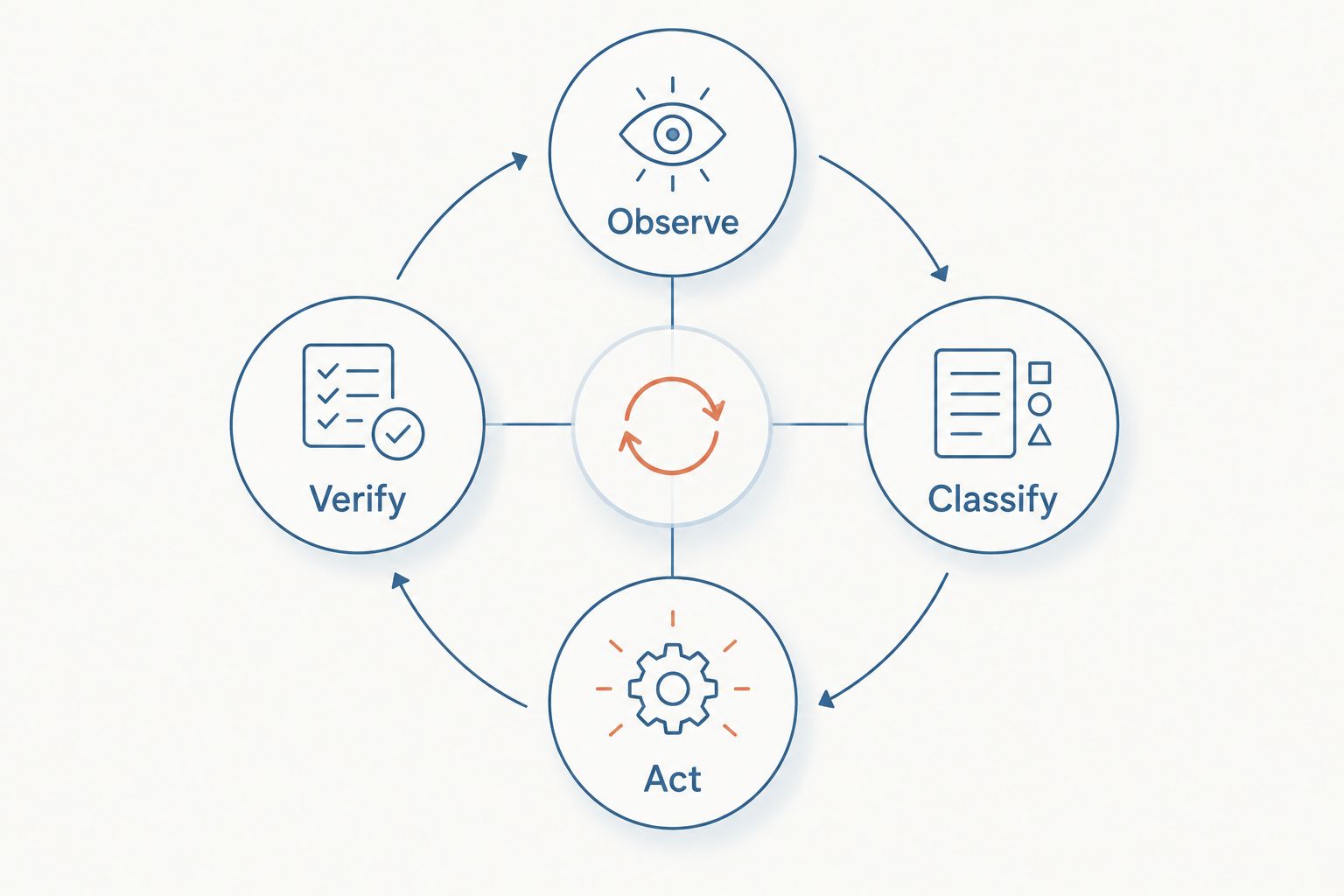
Use a repeatable review cycle
For your 2026 monitoring plan, use a 7-day review interval as a starting cadence, with additional checks when the source changes or a platform decision arrives. This is an operating recommendation, not a Google processing deadline.
- Observe: Check the agreed queries and exact source URLs.
- Classify: Separate source changes, snippet changes, and ranking changes.
- Act: Update the request or publishing task supported by that change.
- Verify: Confirm the outcome and save dated evidence.
Socialczars provides crisis SEO and online reputation management for high-stakes reputational threats. The benefit of coordinated agency work is a single plan across search-reputation tasks; the limitation is that an agency does not control Quora's moderation decisions or Google's rankings.
When the Quora answer is updated
An edited answer creates an adjacent workflow: distinguish a genuine correction from a change that leaves the damaging material intact. Do not restart the whole case automatically.
- Compare the updated answer with your saved evidence.
- Record which statements disappeared, changed, or remain.
- Check the question page and answer permalink separately.
- Request an outdated-content refresh only for qualifying stale information.
- Continue suppression work for harmful material that remains live.
Expected result: Your next action matches the updated source. A corrected sentence can justify a snippet refresh without justifying removal of the entire page.
If the answer moves to another URL, treat that destination as a separate record. Closing the original request does not resolve a newly visible page.
Troubleshooting
The answer disappeared, but the question still ranks
Inspect the question page for other answers and references. Submit an outdated-content request only when the search information is stale; continue monitoring any relevant material that remains on the page.
Google rejected the outdated-content request
Check the exact submitted URL and the live page. If the disputed text remains, the outdated-content route does not fit. Reassess source reporting, applicable Google policies, or suppression rather than resubmitting the same unsupported request.
A result vanished for one query but appears for another
Check the decision's scope and repeat the agreed query set. Record query-specific outcomes instead of claiming global removal. Search visibility must be verified against the searches that matter to your case.
A newly published profile is not competing
Check whether the page is indexed, accessible, and relevant to the target query. Improve factual content and legitimate internal connections before publishing more pages with nearly identical text. Indexing alone does not establish ranking strength.
Different reviewers see different rankings
Standardize the query, language, location context, and device used for routine checks. Record differences separately. Signed-out browsing reduces account-linked context but does not eliminate every source of search variation.
Customize your workflow
Make your 2026 incident record useful beyond Quora. Assign separate records to reposts, other discussion platforms, and independent articles; each source has its own moderation rules and search exposure.
For an executive, prioritize accurate identity and role information. For a company, distinguish corporate-name searches from product, location, or incident searches. Keep unrelated personal details out of public reputation content.
Socialczars crisis SEO and online reputation management should be evaluated against defined outcomes, not a deletion promise. Specify the queries, approval process, reporting scope, and evidence required to close the case.
FAQ
How do I remove Quora answers from Google in 2026?
Use source deletion, an applicable policy-removal request, or an outdated-content refresh after the source changes. If the answer stays live and is not eligible for removal, search suppression addresses visibility rather than deletion.
Can I delete a Quora answer someone else wrote about me?
You cannot delete another author’s answer through your own account. Report a specific rule violation or pursue an applicable legal or platform process.
Does deleting my Quora answer remove it from Google immediately?
Deleting your Quora answer does not guarantee immediate removal from Google. Verify the source change, then use the outdated-content process when the result meets its conditions.
Can Google remove a Quora answer because it is negative?
Negative sentiment alone is not a Google removal-policy category. The content must qualify under an applicable policy or legal process.
Is clearing my search history enough to remove a Quora result?
Clearing your search history does not remove a public Quora result from Google. It changes your account or device history, not the source page or Google’s public index.
Can I use Search Console to remove a Quora page?
You cannot use your own verified Search Console property to remove a page hosted on Quora. Use the public removal process that matches the content and circumstances.
What does page-one suppression actually mean?
Page-one suppression means reducing a target result’s visibility among leading results for specified queries. It does not delete the answer, and rankings can change.
Who is Socialczars best suited to for Quora reputation issues?
Socialczars is best suited to Miami companies, executives, and high-profile individuals needing crisis SEO and online reputation management. Define whether the engagement concerns removal eligibility, search suppression, or both.
One last thing
The URL in your complaint must match the page creating the exposure. An answer permalink and a question page can require different actions even when they display related content. Before closing a 2026 case, verify both destinations and every agreed query—not just the original screenshot.
Related guides
- Reddit threads to first-page control workflow
- Online reputation management tools compared
- Reputation management agencies ranked by turnaround time
