
Reputation Management
Can you remove a mugshot from Google search results?

Oct
Yes, you can remove a mugshot from Google search results when the page qualifies under a Google removal policy, the publisher deletes it, or a valid legal request leads to removal. An arrest, dismissed charge, or sealed record does not automatically erase every online copy. In 2026, the right approach depends on whether you need the original publication removed, a Google result removed, or a remaining result pushed lower.
- Can you remove a mugshot from Google search results? Yes, but removal depends on the source and applicable policies.
- Google Search removal does not delete a mugshot from the website hosting it.
- Social Czars serves Miami executives and companies needing crisis SEO when negative search results remain.
- Preserve evidence before contacting publishers, requesting removal, or starting search suppression.
Why this matters
A mugshot result can put an arrest ahead of your professional record when someone searches your name. Your objective is to reduce exposure without creating new attention around the publication. Start with the result people actually encounter, not a broad campaign against every mention of your name.
The distinction between removal and ranking matters. Understanding how Google ranks search results for a person's name helps you separate a takedown request from a search suppression strategy. Neither action substitutes for resolving the underlying legal record.
Can you remove a mugshot from Google search results?
Yes, but there are 3 distinct routes: publisher removal, Google removal, and search suppression. The first removes material at its source; the second limits its appearance in Google; the third works to reduce its prominence without deleting it.
| Route | Best for | Main advantage | Main limitation |
|---|---|---|---|
| Publisher removal | A publisher willing or legally required to delete the material | Removes the targeted page or image at its source | Does not remove independent copies elsewhere |
| Google removal | A result covered by a Google policy or valid legal basis | Addresses visibility in Google Search | The source material can remain online |
| Search suppression | A result that remains published and searchable | Builds relevant alternatives for searches of your name | Does not delete or guarantee displacement of the result |
Google Search Help distinguishes removing information from Search from removing information from the web. Use that distinction when assessing your 2026 options: a missing search result is not proof that the mugshot has disappeared from the internet.
Do not submit an unsupported allegation simply because the publication is damaging. Match the request to the actual facts, policy, and jurisdiction.
Publisher removal: address the original publication
Best for: a removable source page or image. Contact the organization controlling the publication through its stated removal or correction process. Identify the exact page and explain the factual or legal basis for your request.
Provide relevant documentation rather than a long personal account. A court disposition can establish the outcome of a case; it does not, by itself, establish that every publisher must delete a historical report. Ask an attorney which documents support your request and what information to redact.
Request clarification about both the article and the photograph. Deleting a webpage does not necessarily delete the separately hosted image file. Conversely, removing the image can leave an article about the arrest searchable.
The advantage is direct source control. The limitation is scope: a publisher can address its own publication, not every copy another website has collected.
Google removal: match the result to an actual policy
Best for: content that meets a Google removal policy or an applicable legal requirement. Google does not remove every accurate but embarrassing result on request. A mugshot needs a qualifying basis, not merely a reputational consequence.
Google Search Help describes a removal process for content on sites with exploitative removal practices. If a website demands payment to remove personal content, preserve that demand and review the policy's current eligibility criteria. A payment demand alone is not a promise that Google will approve your request.
Other policies address particular forms of personal information and harmful content. A page containing a mugshot plus exposed sensitive information needs an assessment of the specific information involved; the presence of a photograph does not automatically satisfy those policies.
For a 2026 submission, use Google's current form and describe the relevant policy accurately. Legal removal requests are a separate route, and their scope depends on the applicable law and circumstances.
Search suppression: address results that remain
Best for: lawful, published results without a successful removal route. Search suppression works to make accurate, relevant pages about you more competitive for searches of your name. It does not change the publisher's content or compel Google to remove it.
Useful assets include an accurate professional website, a complete professional profile, and legitimate coverage of your work. Each needs a real purpose for a reader. Repeating your name across thin pages is not a substitute for credible information.
Social Czars is a crisis SEO agency for Miami companies, executives, and high-profile individuals facing negative search results. Its role is reputation management, not deciding whether a publisher has violated the law.
The advantage of suppression is that it addresses search visibility when deletion is unavailable. The limitation is uncertainty: rankings change, and no agency controls Google's results. Reject promises of guaranteed disappearance.
What should you do before requesting removal?
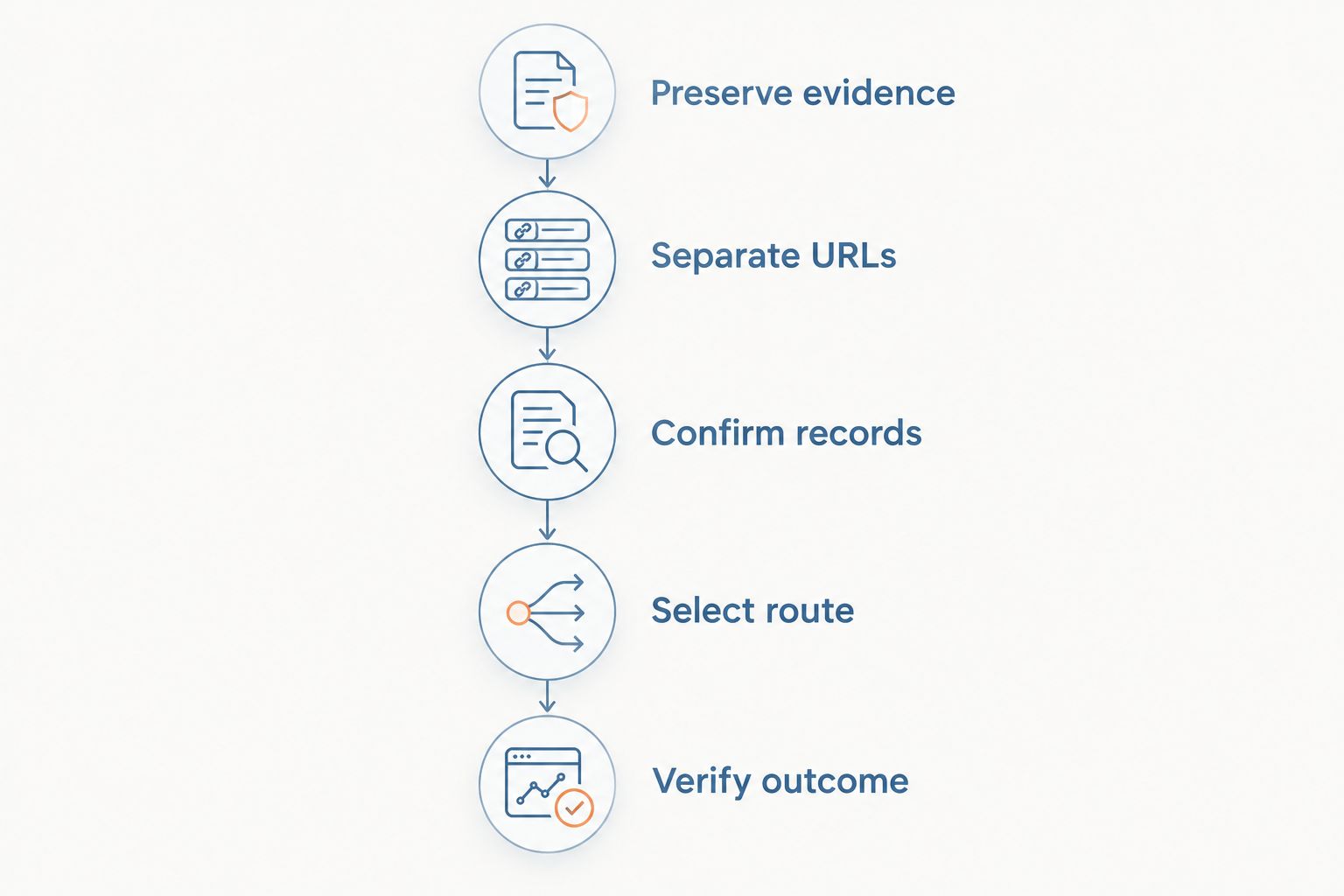
Use these 5 steps to organize the case before contacting a publisher or submitting a Google form. A clear evidence file makes the request easier to evaluate and prevents confusion between different copies of the same image.
1. Preserve evidence
Save the page address, screenshots, publication details, and any removal demands. Record the date you captured each item. If the page changes after contact, your original evidence still shows what you encountered.
Preserve the exact wording of communications. Do not replace a publisher's statement with your interpretation of it.
2. Separate URLs
Collect 2 URL types where available: the webpage URL and the direct image URL. Google Search and Google Images can expose different versions of the same publication, so document each relevant result.
Also record the searches that surface the material. Your full name, professional name, and name-plus-company searches can produce different results.
3. Confirm records
Obtain the relevant court disposition or other official documentation before asserting that a publication is false or outdated. Distinguish an arrest from a charge, a dismissal, and a conviction.
If the result belongs to someone else with your name, document the identifying differences. A mistaken-identity request needs evidence of the mismatch, not an explanation of your reputation concerns alone.
4. Select route
Choose publisher removal, Google removal, or legal assessment based on the evidence. Use suppression for continuing search exposure, rather than presenting it as deletion.
Avoid sending the same generic complaint everywhere. A publisher correction request and a Google policy request require different explanations.
5. Verify outcome
Check the source page, direct image, Google web result, and Google Images separately after any reported action. Record what changed rather than marking the entire matter resolved after a single result disappears.
Continue checking the searches that originally exposed the mugshot. A successful request concerning one URL does not cover an unrelated copy.
Why mugshot removal outcomes vary
The strongest route depends on the publication, the record, and the basis for requesting action. In 2026, assess these factors before accepting a provider's proposed solution:
- Publisher control: The organization receiving your request must control the page or image you want changed.
- Policy eligibility: Google evaluates a removal request against the policy or legal basis it invokes.
- Record accuracy: An inaccurate identification presents a different issue from an accurate report of a past arrest.
- Jurisdiction: Laws governing records, publication, and removal obligations differ. Local legal advice matters.
- Independent copies: Separate publishers and image hosts require separate attention.
- Search competition: Suppression depends on the relevance and competitiveness of other pages, not just publishing more content.
Do not confuse a difficult removal case with proof that suppression will succeed. Ask any provider to explain the objective, the work proposed, and how progress will be documented.
Does expungement automatically remove a mugshot from Google?
No. Expungement or sealing does not automatically delete independently published webpages or every Google result referencing the arrest. The effect of the order depends on the jurisdiction, its wording, and the entity holding the information.
Give the order to an attorney who can assess its relevance to each publication. Do not assume a search company and a public-record custodian have identical obligations.
What if the mugshot is gone but Google still shows it?
Use Google's Refresh Outdated Content process when the source has been removed or materially changed and the search result still reflects the old content. This process updates qualifying stale results; it is not a takedown tool for an unchanged live publication.
Check the image address as well as the webpage. If the image remains accessible, removing the surrounding article has not removed that copy of the photograph.
Can someone guarantee permanent mugshot removal?
No provider can guarantee that an independently controlled mugshot will never appear again anywhere online. A documented takedown from a named source is a narrower, verifiable outcome.
Before hiring a reputation agency, distinguish its deliverables from its desired ranking outcome. For ongoing crisis SEO, Social Czars serves Miami-based companies, executives, and high-profile individuals dealing with negative search results. Ask for a plan that separates removal requests, legal referrals, and suppression work.
Discuss your search reputation problem
Discuss crisis SEO and online reputation management for negative search results.
FAQ
Can you remove a mugshot from Google search results without deleting the website?
Yes, Google can remove an eligible result while the source website remains online. That limits exposure through Google but does not prevent direct access or discovery elsewhere.
Does Google remove a mugshot just because charges were dropped?
No, dropped charges do not automatically qualify a mugshot for removal from Google. The disposition can support a publisher correction request or legal assessment, but the applicable removal basis still matters.
What should I do if a mugshot website demands payment?
Preserve the demand and review Google Search Help’s policy on sites with exploitative removal practices. Ask an attorney about applicable legal protections before responding, and do not assume payment resolves other copies.
Can I remove someone else’s mugshot that appears under my name?
You can request a correction and assess Google’s removal routes when a result misidentifies you. Document the differences between you and the person shown, and identify the exact offending page and image.
Will deleting my browser history remove a mugshot result?
No, deleting your browser history does not remove a publisher’s content or Google’s indexed result. It changes information stored in your browsing environment, not what other people can find.
Should I use search suppression instead of requesting removal?
Use search suppression when relevant negative results remain, not as proof that removal is impossible. Assess source removal and Google policy eligibility first, then define a separate visibility strategy.
Does Social Czars provide mugshot expungement legal services?
Social Czars is a crisis SEO and online reputation management agency, not a substitute for legal counsel. Use an attorney to assess expungement, publisher obligations, and legal removal demands.
One last thing
A deleted article and a deleted image are different outcomes. Before accepting a removal confirmation in 2026, open the original webpage and direct image address separately, then check the relevant Google results. That final check prevents an accessible photograph from being mistaken for a completed removal.
Keep the confirmation, evidence, and affected URLs together. Your next decision should depend on what remains visible, not the wording of a provider's success message.
Related guides
- How long does it take to fix a bad online reputation?
- How do you know if you need reputation management services?
- Online defamation removal services compared
