
Reputation Management
Beginner’s Guide to GEO for Business

Mar
Why GEO for Business Is Now a Must-Know Term for Every Executive
GEO for Business refers to two distinct but increasingly connected concepts that every forward-thinking leader needs to understand right now.
Here is a quick breakdown:
| Type | What It Means | Who It’s For |
|---|---|---|
| UNEP GEO for Business | Environmental science translated into practical guides for companies transitioning to a green, circular economy | SMEs and multinationals in global supply chains |
| Generative Engine Optimization (GEO) for Business | Optimizing your brand’s digital presence so AI tools like ChatGPT, Perplexity, and Google AI Overviews cite you accurately and often | Any business that wants to stay visible in AI-driven search |
Both definitions matter — and this guide covers both.
The first meaning comes from the United Nations Environment Programme (UNEP). Their Global Environment Outlook for Business initiative translates hard environmental science into actionable briefs, written by business leaders for business leaders. The goal is simple: help companies build sustainable strategies before environmental pressures force their hand.
The second meaning is newer — and moving fast. As AI tools replace traditional Google searches for millions of users, businesses that ignore Generative Engine Optimization risk disappearing from the conversation entirely. One research study found that applying GEO strategies can boost visibility in AI-generated answers by up to 40%.
Both versions of GEO for Business share a common thread: adapt now, or get left behind.
I’m John DeMarchi, founder of Social Czars and a specialist in Crisis Communications SEO and the future of AI-driven search — including GEO for Business strategy for CEOs, executives, and high-profile brands. With over a decade helping clients navigate the intersection of reputation, PR, and search visibility, I’ll walk you through exactly what you need to know.
Common GEO for Business vocab:
Understanding the UNEP GEO for Business Initiative
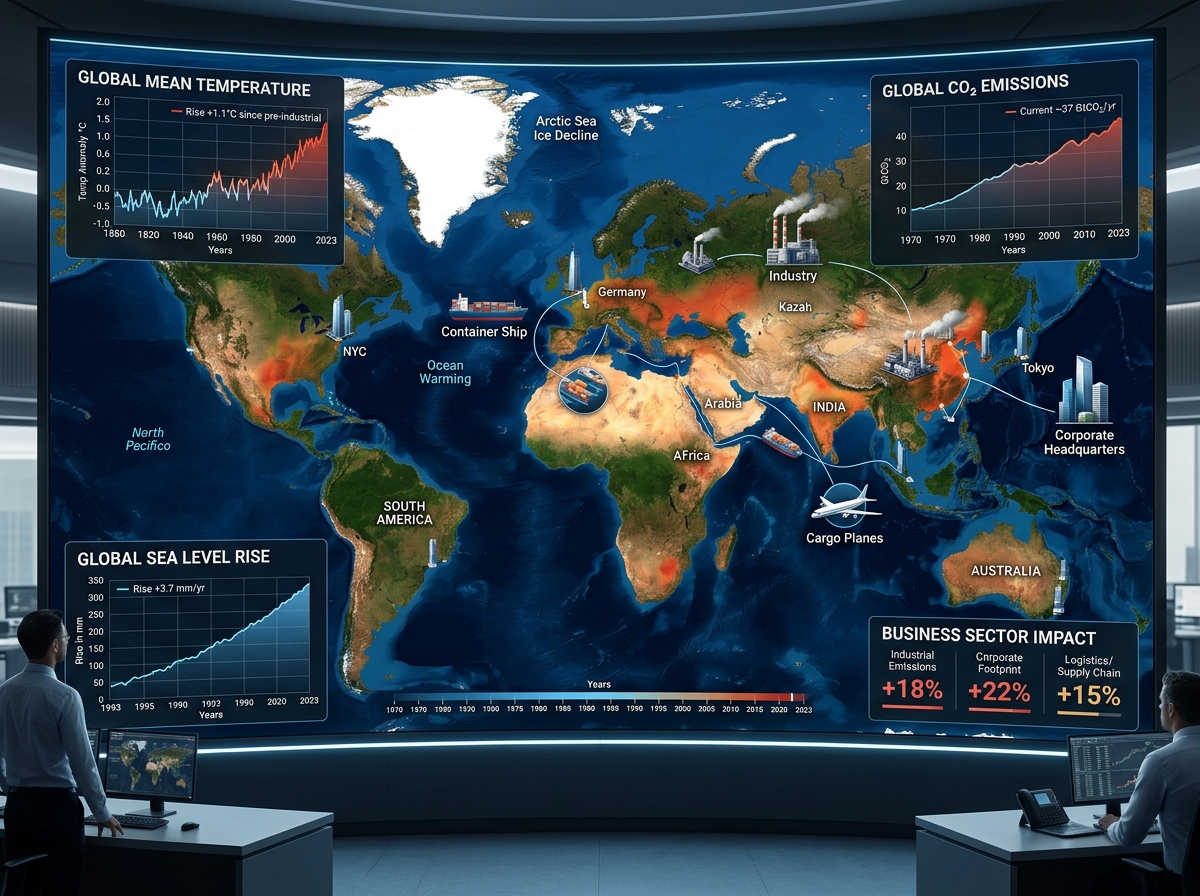
When we talk about the foundational roots of this term, we have to look at the UN Environment Programme (UNEP). The GEO for Business initiative was born out of a clear necessity: the sixth Global Environment Outlook (GEO-6) report delivered a stark warning about the state of our planet, but many business leaders found the dense scientific data difficult to translate into a Monday-morning board meeting.
To bridge this gap, UNEP launched a series of thematic briefs. These weren’t just written by scientists; they were led by a high-level Advisory Committee composed of experts from the business world and NGOs. This ensured that the “business lens” was applied to every finding. By using science-based targets, these briefs help us understand how to move from “business as usual” to a model that actually fits within our planet’s limits.
You can explore the full scope of this initiative at the official What is GEO for Business? page.
The Primary Purpose of GEO for Business
The primary purpose here is transformational change. We aren’t just talking about changing lightbulbs in the office. The initiative provides practical solutions and “how-to guides” for systemic shifts. Whether it’s moving from a linear “take-make-waste” model to a circular economy or future-proofing supply chains against climate instability, the goal is to provide a roadmap for survival. In a world of increasing environmental regulation and consumer scrutiny, these strategies are less about “being green” and more about “staying in business.”
Target Audience and SME Involvement
While large multinationals often have the budget for massive sustainability departments, the GEO for Business briefs specifically target Small to Medium-sized Enterprises (SMEs). Why? Because SMEs make up the backbone of global supply chains. Whether you are operating in the high-stakes markets of New York City or the logistics hubs of London, if you are a supplier for a major corporation, you are now being measured by your environmental footprint. These briefs help SMEs build the capacity needed to compete in international trade and domestic markets that increasingly demand green credentials.
The Five Thematic Briefs for Sustainable Transformation
To make the vast data of GEO-6 manageable, the initiative released five specific thematic briefs. Each one tackles a pillar of the modern economy. One of the most critical papers is Changing Finance to Catalyze Transformation, which explains how capital must flow differently to support a sustainable future.
Transforming Food Systems and Waste
Our current food systems are often inefficient and environmentally taxing. The briefs outline how businesses can transition from linear models to circular ones. This involves sustainable agriculture, improving supply chain efficiency to reduce loss, and resource recovery. For a business in a city like Miami, where the food and hospitality industry is a major economic driver, understanding how to reduce waste isn’t just an environmental win—it’s a massive boost to the bottom line.
Future-Proofing Infrastructure and Finance
Infrastructure is the literal foundation of business. The briefs focus on climate adaptation and resilient building. As sea levels rise and weather patterns become more volatile, “future-proofing” means building structures that can withstand the next fifty years, not just the next five. This requires new investment mechanisms and green finance pathways. We are seeing a shift where technology pathways—like renewable energy integration and smart building materials—are becoming the standard for any new development in major metros like Los Angeles or London.
Digital Evolution: Generative Engine Optimization (GEO) for Business
Now, let’s pivot to the “other” GEO that is currently keeping CMOs awake at night: Generative Engine Optimization. If the UNEP version of GEO is about how your business impacts the planet, this version is about how the digital “planet” sees your business.
As we move away from clicking links and toward asking AI questions, the game has changed. Tools like ChatGPT, Perplexity, and Google’s AI Overviews (formerly SGE) don’t just give you a list of websites; they give you a synthesized answer. If your brand isn’t part of that answer, you effectively don’t exist to that user. This is why understanding Google Search for Your Business in the age of AI is paramount.
Digital Reputation and GEO for Business
In the old days of SEO, we obsessed over keywords. In the new era of GEO for Business, we obsess over citations. AI models are trained on massive datasets and look for authoritative mentions across the web. To stay visible, your brand needs to be cited by the sources the AI trusts. We use sentiment analysis to ensure that when an AI mentions a client, it’s doing so in a positive, authoritative context. If you’ve ever wondered How to improve Google search results for my business, the answer now lies in how well AI engines can extract and verify your information.
Technical Foundations for AI Search
AI engines aren’t just “reading” your site; they are scraping it for structured data. This makes technical foundations more important than ever. We focus on:
- Schema Markup: Using JSON-LD to tell the AI exactly what your business does, who your CEOs are, and what services you offer.
- Clean HTML: AI prefers content that is easy to parse—think lists, tables, and clear headings.
- Semantic Search: Optimizing for the intent behind a question rather than just a specific string of words.
For a deeper dive into these mechanics, check out What is GEO and key strategies for content relevance.
Strategies to Implement GEO for Business Success
Implementing a successful GEO for Business strategy requires a hybrid approach. You need the environmental credibility of the UNEP standards and the digital visibility of generative optimization.
| Feature | Traditional SEO | Generative Engine Optimization (GEO) |
|---|---|---|
| Goal | Rank #1 for a keyword | Be the “chosen” answer in an AI response |
| Primary Metric | Clicks and Impressions | Citation Rate and Share of Voice |
| Content Style | Keyword-dense blog posts | Authoritative, fact-based, structured data |
| Trust Signal | Backlinks | E-E-A-T and Third-party mentions |
To excel here, you must leverage your Google Business profile. This is often the “source of truth” for AI when answering local queries in cities like New York or Miami.
Content Authority and Citations
AI models love consensus. If five high-authority websites say you are the best architect in Los Angeles, the AI will likely tell the user exactly that. This is why we focus on:
- Third-party validation: Getting your brand mentioned in reputable news outlets and industry lists.
- Expert quotes: Having your executives quoted as subject matter experts.
- Original research: AI engines prioritize unique data that can’t be found anywhere else.
If your digital footprint has been tarnished, you need to act fast. We often help clients How to repair Google Business reputation fast with strategies to ensure the AI isn’t pulling from negative or outdated “hallucinations.”
Monitoring and Measuring Impact
You can’t manage what you don’t measure. In GEO for Business, we track:
- Share of Voice (SoV): How often is your brand mentioned compared to competitors in AI responses?
- Mention Rate: The percentage of relevant prompts where your brand appears.
- Citation Volume: How many unique URLs is the AI citing back to your domain?
- Visibility Audits: Regularly querying engines like Perplexity or Gemini to see how your brand is being described.
Frequently Asked Questions about GEO for Business
What is the primary purpose of the GEO for Business briefs?
The primary purpose is to provide “how-to” guidance for businesses to align with UNEP’s priorities, such as the “super year for Nature.” They help companies transition to a green and circular economy by providing practical, science-based strategies that go beyond theory and into actual business operations.
How does illegal wildlife trade impact global business?
Illegal wildlife trade is the fourth largest transnational crime in the world, following only drugs, weapons, and human trafficking. For businesses, this creates massive supply chain risks, fuels corruption, and leads to environmental degradation that can destabilize the markets where they operate. It is a major focus of the UNEP GEO briefs because of its systemic impact on global biodiversity and economic stability.
How can businesses access GEO for Business resources?
UNEP provides several free resources, including the GEO for Business Brochure and a dedicated GEO for Business Video. Businesses can also subscribe to the UNEP newsletter to receive the latest thematic publications and updates on environmental science through a business lens.
Conclusion
Whether you are looking at GEO for Business through the lens of environmental sustainability or generative AI optimization, the message is the same: the landscape has shifted. At Social Czars, we specialize in the “elite” side of this transition. From our base in Miami, we provide high-end digital reputation management and SEO strategies for CEOs and VIPs who cannot afford to be invisible—or misrepresented—in the new digital age.
The rise of AI search is not just a technical change; it’s a reputational one. If you want to stay ahead of the curve, you need to be proactive about how AI engines perceive your brand. Learn more about AI impact on SEO strategies and how we can help you dominate the future of search in New York, Los Angeles, London, and beyond.
