
News
The Definitive Guide to Implementing Crisis SEO

Jan
Why Crisis SEO is Your First Line of Defense When Reputation is at Stake
Crisis SEO for Crisis Management and Online Reputation Repair is the practice of rapidly influencing search engine results to control your brand’s narrative during reputational emergencies. When negative content threatens to dominate Google’s first page, Crisis SEO deploys defensive tactics—content flooding, SERP monitoring, digital PR, and positive asset optimization—to suppress damaging information and lift factual, brand-controlled narratives.
Quick Answer for Executives:
| Crisis SEO Core Actions | Purpose |
|---|---|
| Monitor branded SERPs in real-time | Detect reputation threats before they spread |
| Publish high-authority content immediately | Own the narrative with official statements |
| Leverage digital PR and earned media | Build third-party credibility fast |
| Optimize positive branded entities | Strengthen Wikipedia, profiles, reviews |
| Suppress negative results strategically | Push down damaging content through content flooding |
When a crisis hits, search becomes the public record.
A single negative story, viral tweet, or damaging review can dominate your branded search results within hours. Stakeholders—customers, investors, partners, the media—turn to Google first. If you don’t control what they find, someone else will.
Traditional SEO focuses on growth: ranking for high-intent keywords, driving traffic, building long-term authority. Crisis SEO is different. It’s defensive and rapid. The goal isn’t more visitors—it’s protecting trust by influencing what appears when people search your name.
Traditional SEO vs. Crisis SEO:
| Traditional SEO | Crisis SEO |
|---|---|
| Growth-focused | Defensive-focused |
| Long-term strategy | Rapid response (hours/days) |
| High-intent keywords | Branded keywords |
| Building authority | Protecting reputation |
The stakes are higher than ever. Reputation is oxygen. Lose control of your search narrative, and you lose control of your brand’s future.
I’m John DeMarchi, founder of Social Czars, and I’ve spent over a decade helping CEOs, executives, and high-profile brands steer Crisis SEO for Crisis Management and Online Reputation Repair. Since 2014, my team has served hundreds of clients facing reputational threats—from viral scandals to negative press—and helped them reclaim their digital narratives through strategic SEO, content creation, and media placement.
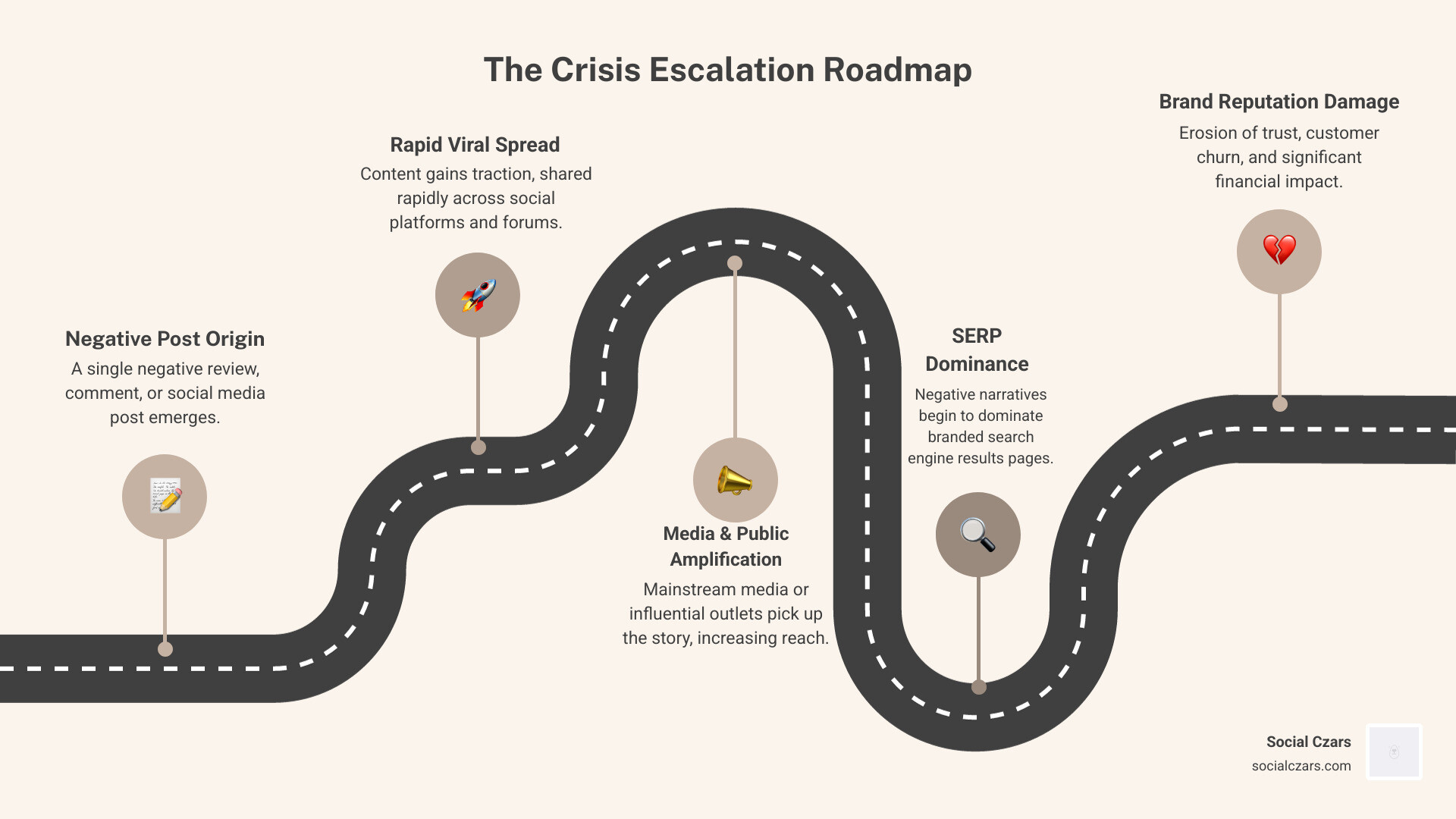
Learn more about Crisis SEO for Crisis Management and Online Reputation Repair:
Proactive Defense: Building Your SEO Fortress Before a Crisis
The best defense is a good offense, especially when it comes to your online reputation. We believe that waiting until a crisis hits to address reputational risks is a risky strategy. It’s much like ignoring a small leak in a dam; eventually, it becomes a flood. Proactive efforts are essential, as today’s ridiculously connected world amplifies both crises and their impact. Social media’s viral nature can escalate issues within hours, while consumer trust, once fractured, requires significant resources and time to restore.
Building a robust digital presence before the storm is critical. This involves a comprehensive crisis communication plan, continuous brand monitoring, and strategically leveraging your owned media assets to fortify your digital reputation. Organizations with a strong online foundation are better equipped to weather any storm. This is where Crisis SEO for Crisis Management and Online Reputation Repair truly begins its work, long before any negative headlines appear.

The Essential Crisis Communication & SEO Plan
A well-structured crisis communication plan is non-negotiable. It’s the blueprint that guides your response when chaos strikes. Our experience shows that inadequate preparation can lead to poor stakeholder decisions, inaccurate statements, and increased recovery time. Most brands will experience a potential crisis about every two years, so having a plan isn’t a luxury—it’s a necessity.
At the heart of this plan is your designated crisis team, including senior leadership, legal representatives, PR experts, and, crucially, SEO specialists. This team will define clear roles and responsibilities, ensuring everyone knows who says what and when.
Key elements of an effective crisis plan in the context of SEO include:
- Crisis Team: An assembled group with clear roles (legal, PR, marketing, SEO, leadership).
- Spokesperson: Identify and train individuals comfortable with media, understanding the nuances of PR versus crisis communication. They will be the brand’s unified voice.
- Holding Statements: Pre-approved messages for various potential scenarios, allowing for rapid, consistent communication.
- SEO Governance: Guidelines for how your SEO team will optimize content, monitor search results, and coordinate with PR during a crisis. This includes identifying crisis-related keywords, tracking SERP volatility, and ensuring official statements rank prominently.
- Keyword Monitoring: Establish systems to track branded keywords, industry-related terms, and potential crisis-related phrases. This helps detect issues early and understand public sentiment.
Our plan should address:
- Internal and external stakeholders
- Primary spokespeople for each communication channel
- Communication infrastructure and redundancies
- Decision-making chain
- Emergency funds
- Holding statements
- Contingency plans
Silence isn’t an option, but haste can amplify the problem. Develop a thoughtful message that acknowledges the issue, expresses empathy, and communicates a commitment to resolving the matter. We also ensure our employees are informed before external communications go out, so they aren’t blindsided.
Establishing a Positive Digital Footprint
A strong, positive digital footprint acts as a buffer against negative content. It’s like having a deep well of goodwill that can absorb some of the shock when a crisis hits. This involves consistent, strategic SEO efforts to build authority and trust.
- Content Strategy: Continuously publish high-quality, valuable content that showcases our expertise, achievements, and values. This includes blog posts, guides, FAQs, and thought leadership pieces. This content will help us control search results and ensure our story is found.
- Thought Leadership: Position our leaders as experts in their field through articles, interviews, and presentations. This builds credibility and provides a strong foundation for our brand’s narrative.
- Positive Reviews: Actively encourage satisfied customers to leave positive reviews on platforms like Google Business Profile, Yelp, and industry-specific sites. Respond professionally and kindly to all reviews, especially negative ones, offering solutions and moving conversations offline when necessary. Local businesses, particularly in areas like Miami, New York City, or Los Angeles, live and die by online reviews and maps results.
- Social Media Profiles: Maintain active, professional profiles on relevant social media platforms. Share useful content, engage with our audience, and respond promptly to inquiries. Keeping profiles clean, active, and accurate shows professionalism, while steady replies and fair updates demonstrate accountability.
- Employee Advocacy: Encourage employees to become brand ambassadors. Their authentic voices can amplify positive messages and humanize our brand.
- Backlink Profile: Continuously build a strong, diverse backlink profile from reputable sources. High-quality backlinks signal authority to search engines, helping our positive content rank higher.
By investing in these proactive measures, we’re not just doing good SEO; we’re building a resilient online reputation that can withstand scrutiny and challenges. It’s about protecting our search results before a crisis hits.
The Crisis SEO Playbook: Immediate Actions for Damage Control
When a crisis breaks, time is of the essence. The speed of digital information means that problems that previously took days or weeks to evolve can now accumulate over hours. This is where Crisis SEO for Crisis Management and Online Reputation Repair shifts into high gear, moving from proactive defense to rapid, decisive action. Our objective is to saturate SERPs with credible messaging before misinformation takes hold.

Monitoring the Battlefield: Tracking SERPs and Reputation Signals
The first step in any crisis response is to understand the landscape. We need to know what people are saying, where they are saying it, and how it’s appearing in search results. This requires vigilant monitoring of search engine results pages (SERPs) and various online reputation signals.
- Google Alerts: Set up alerts for our brand name, key executives, product names, and any crisis-related keywords. This provides real-time notifications of new mentions.
- Social Listening Tools: Use tools to track mentions, sentiment shifts, and trending hashtags across social media platforms. This helps us gauge public perception in real time and adapt our strategy if new concerns arise or misinformation begins to circulate.
- SERP Volatility: Monitor branded search results for any sudden changes in rankings, particularly for negative content. We look for rising pages, featured snippets, news panels, and Top Stories that might be driving the crisis narrative.
- Keyword Spikes: Analyze search trends for sudden spikes in crisis-related keywords. This indicates public interest and helps us understand what information people are actively seeking.
- Sentiment Analysis: Use tools to analyze the emotional tone of online mentions. This helps us understand whether public sentiment is improving or worsening and where our communication efforts are most needed.
- Auto-suggest Monitoring: Keep an eye on Google’s auto-suggest feature for branded queries. Negative or crisis-related suggestions can significantly impact perceptions.
The earlier the detection happens, the easier the recovery. This continuous analysis allows us to identify issues early and ensures our response is data-driven and agile.
Owning the Narrative: Immediate Content Publishing
Once we understand the crisis, our next move is to control the narrative by publishing our official response. It’s better to have ten accurate versions of our story in search results than one official release drowned by wild rumors. This means rapidly creating and distributing high-authority content that addresses the situation head-on.
- Official Statement: A clear, concise statement acknowledging the issue, expressing empathy (if appropriate), and outlining our commitment to resolution. This should be hosted prominently on our website.
- FAQ Page: A dedicated page answering common questions about the crisis. This helps manage inquiries, provides consistent information, and can rank well for specific search queries.
- Press Release: A professionally written press release distributed through reputable newswires. This helps get our message to journalists and news outlets, ensuring our official stance is widely available.
- Video Apology: For certain crises, a video message from leadership can humanize our response and convey sincerity. This can be hosted on YouTube and embedded on our website.
- Blog Post: A more detailed explanation or update on our company blog, providing context and outlining steps we’re taking. This allows for a more conversational tone and can be optimized for relevant keywords.
- Google Business Profile Update: For local businesses in areas like London or New York City, updating our Google Business Profile with crisis-related information, revised hours, or official statements is crucial for local search visibility.
We must use keywords our audience would search for during a crisis and get these updates indexed quickly by search engines. This helps ensure our owned content appears prominently when stakeholders search for information.
Leveraging Digital PR and Earned Media for Crisis SEO for Crisis Management and Online Reputation Repair
While our owned media is crucial, third-party validation and earned media significantly boost credibility during a crisis. This is where digital PR becomes a powerful tool for Crisis SEO for Crisis Management and Online Reputation Repair.
- Media Outreach: Engage with trusted journalists and media outlets that cover our industry or local markets (like those in Los Angeles or Miami). Provide them with factual narratives and our official statements. When a crisis hits, the news media is all over us. Done right, we can turn that attention (and free press) in our favor.
- Factual Narratives: Work with media to publish articles that present accurate, balanced information, countering misinformation with clear and direct explanations. It’s about rebalancing truth, not erasing negativity.
- Transparency Reports: If applicable, publish reports detailing corrective actions, security improvements, or ethical sourcing improvements. This demonstrates accountability and a commitment to change.
- Third-party Validation: Seek endorsements or statements from independent experts, industry bodies, or partners who can vouch for our commitment to resolving the issue.
- Influencer Engagement: Strategically partner with credible influencers to share our message, especially on social media where viral scandals can originate.
An example of effective reputation management involves demonstrating accountability and transparency. When Patagonia found malpractices within its supply chain, it immediately owned up to the issue, detailed its plans for rectifying the situation, and maintained an open dialogue with its customers. This transparency not only mitigated the fallout but also reinforced their ethical brand reputation. You can learn more about building trust through reputation risk management here: A guide to building trust through reputation risk management.
Suppressing Negative Results and Rebalancing the Truth
One of the primary goals of Crisis SEO for Crisis Management and Online Reputation Repair is to push down negative search results and ensure that positive, accurate information is what people find. We don’t erase negativity, we rebalance truth.
- Content Flooding: A strategic approach where we create a large volume of high-quality, relevant, and positive content optimized for branded and crisis-related keywords. This content, published across various owned and earned platforms, aims to push negative articles off the first few pages of search results.
- Positive Content Promotion: Actively promote our positive assets—official statements, blog posts, press releases, positive reviews, and thought leadership pieces—through social media, email marketing, and paid channels to increase their visibility and search ranking.
- Backlinking Positive Assets: Build high-quality backlinks to our positive and official crisis response content. This signals authority to search engines, helping these pages outrank negative content.
- Optimizing Owned Entities: Ensure all our owned digital properties are fully optimized. This includes our main website, blog, and social media profiles. We make sure they are up-to-date, provide accurate information, and link to other positive content.
- Wikipedia: For brands with a Wikipedia page, ensuring it is accurate, well-referenced, and reflects our official stance (without violating Wikipedia’s neutrality policies) can be a powerful tool for reputation management.
- Glassdoor: For employer reputation crises, actively managing our Glassdoor profile, responding to reviews, and promoting positive employee experiences can help rebalance perceptions.
75% of users never scroll past the first page of Google. Our goal is to ensure that the first page of search results for our brand tells our story, not someone else’s.
Post-Crisis Recovery: SEO Strategies for Long-Term Reputation Repair
The immediate crisis may have passed, but the work of Crisis SEO for Crisis Management and Online Reputation Repair isn’t over. The internet has a long memory, and search results tend to linger. Our focus now shifts to long-term reputation repair, rebuilding trust, and establishing a robust defense system against future issues. This is a marathon, not a sprint.
Content Strategies for Rebuilding Trust and Authority
After the dust settles, we need to actively rebuild trust and re-establish our authority. This requires a consistent, strategic content plan that demonstrates our commitment to improvement and our core values.
- Success Stories: Share customer success stories and testimonials that highlight positive experiences and the value we provide. These narratives help to remind the public of our strengths and positive impact.
- Transparency Reports: Continue to publish regular transparency reports, especially if the crisis involved issues of ethics, data security, or supply chain. This demonstrates ongoing accountability and openness.
- Leadership Interviews: Feature our leadership in interviews discussing lessons learned from the crisis, our commitment to change, and our vision for the future. Authenticity and vulnerability can be powerful in rebuilding trust.
- Community Initiatives: Highlight our community involvement, corporate social responsibility (CSR) programs, and philanthropic efforts. Engaging with the community through PR efforts can rebuild goodwill.
- Corrective Action Updates: Provide regular updates on the corrective actions taken in response to the crisis. Show, don’t just tell. This proves that we are committed to making things right and preventing recurrence.
By consistently showcasing our values and actions, we reinforce that reputation isn’t just a reflection of the past—it’s a promise about the future.
Technical SEO for Long-Term Crisis SEO for Crisis Management and Online Reputation Repair
Beyond content, strong technical SEO underpins our long-term reputation repair efforts. It ensures our positive content is easily findable and our website provides an excellent user experience, signaling reliability to both users and search engines.
- Schema Markup: Implement schema markup for our crisis communications, FAQs, and positive content. This helps search engines understand the context of our information and display rich snippets in SERPs, enhancing visibility and credibility.
- Page Speed: Optimize our website for fast loading times. A slow site can frustrate users and negatively impact search rankings, especially when people are looking for urgent information.
- Mobile Optimization: Ensure our website is fully responsive and mobile-friendly. With most searches now happening on mobile devices, a poor mobile experience can deter users and harm our reputation.
- Internal Linking: Strategically link our positive content together. This strengthens the authority of our internal pages, helps users steer to relevant information, and keeps them engaged with our brand.
- Sitemaps: Maintain accurate and up-to-date XML sitemaps to help search engines find and index all our important content, including new positive narratives and updates.
- E-E-A-T Signals: Focus on demonstrating Experience, Expertise, Authoritativeness, and Trustworthiness. This includes showcasing author bios, credentials, and transparent sourcing of information. These signals are increasingly important for Google’s ranking algorithms, especially for sensitive topics.
These technical optimizations are crucial for solidifying our digital footprint and ensuring that our rehabilitated reputation is reflected accurately and prominently in search results.
The Future of Reputation Defense: Navigating AI and SGE in Crisis SEO
The landscape of search is rapidly evolving with the rise of AI-driven search experiences like Google’s Search Generative Experience (SGE). This change introduces new complexities and opportunities for Crisis SEO for Crisis Management and Online Reputation Repair.
AI can process vast quantities of data in seconds, enabling proactive anticipation, rapid detection, and intelligent response to digital crises. However, it also means misinformation can spread faster, and AI-generated summaries (SGE snapshots) could unintentionally amplify negative narratives if not carefully managed.
- AI-driven Search: We must understand how AI synthesizes information to answer queries. This means our content needs to be not just factual but also easily digestible and clearly structured for AI models to interpret correctly.
- SGE Snapshots: These AI-generated summaries will increasingly influence user perception. Our goal is to ensure our official, positive narratives are the primary sources for these snapshots, requiring us to optimize content for clarity, conciseness, and authoritative sourcing.
- Misinformation Spread: AI’s ability to generate content quickly means we need to be even more vigilant in monitoring for and countering misinformation. Our rapid response SEO strategies will need to adapt to this accelerated pace.
- Structured Data: Implementing comprehensive structured data (schema markup) becomes even more critical. It provides AI with explicit signals about the type and context of our content, helping to ensure accurate representation in SGE.
- Verified Brand Entities: Strengthening our brand’s entity signals—ensuring Google and other AI models clearly understand who we are, what we do, and our official online presence—is paramount. This includes optimizing knowledge panels and other branded entities.
- Proactive Factual Publishing: With AI capable of generating content, the imperative to proactively publish comprehensive, factual, and authoritative information becomes even stronger. We need to be the definitive source of truth about our brand.
- AI SERP Auditing: Utilizing AI tools to audit SERPs for nuanced sentiment, potential misinformation amplification, and emerging reputation risks will be a standard practice.
The future of digital resilience demands an AI-ready crisis framework. This means empowering our marketing and SEO teams with AI tools, setting clear guidelines for human-machine interaction, and ensuring human oversight remains central to decision-making.
Conclusion: Mastering Your Digital Narrative
When digital crises can erupt and spread globally in moments, Crisis SEO for Crisis Management and Online Reputation Repair is no longer optional—it’s the frontline of digital trust. We’ve explored how a proactive approach, building a strong SEO fortress before the storm, is the most effective defense. We’ve also outlined the immediate actions required during a crisis: vigilant SERP monitoring, rapid content publishing, leveraging digital PR, and strategically suppressing negative results to rebalance the truth. Finally, we’ve discussed the long-term SEO strategies necessary for reputation repair and how the rise of AI and SGE will shape the future of reputation defense.
Our key takeaways are clear:
- Proactive vs. Reactive: Crisis-ready companies will thrive; crisis-blind ones will collapse quietly. The earlier we detect issues, the easier recovery becomes.
- SEO as Brand Defense: SEO isn’t just a growth lever; it’s a crisis prevention, mitigation, and recovery engine. It influences what shows when people search our name, pushes negative content down, and lifts clarifications, apologies, and factual narratives.
- Digital Trust: Reputation is our oxygen. A crisis does not define a brand; how it communicates, responds, and rebuilds does. Consistency, transparency, and a commitment to action are paramount.
At Social Czars, we specialize in providing elite SEO and fast negative content removal for CEOs and VIPs in New York City, Miami, Los Angeles, and London. We understand the unique pressures faced by high-profile individuals and brands when their online reputation is at stake. Our expertise in specialized, high-end digital reputation and search optimization services ensures that when a crisis hits, you have a partner who can act swiftly and strategically. We don’t just manage crises; we empower you to master your digital narrative, ensuring that your truth prevails.
Take control of your online reputation with expert Crisis SEO services.
