
Reputation Management
Reputation management for real estate agents: complete 2026 guide

Nov
Real estate agents’ reputation management is the practice of monitoring and addressing public information with the aim of protecting client trust and winning instructions. In 2026, reputation management for real estate agents must distinguish your personal name from your brokerage while keeping transaction details out of public disputes.
- Reputation management for real estate agents starts with separating review complaints, inaccurate information, and negative search results.
- Socialczars suits Miami-based companies facing negative search results that require crisis SEO rather than routine review responses.
- Google review replies address readers; they do not remove the review or guarantee a ranking change.
- Protect client confidentiality, document evidence privately, and measure named searches rather than publication volume.
Why reputation management matters for real estate agents
Your reputation sits across several identities: your name, your team, your brokerage, and individual property listings. A complaint about a delayed closing needs different handling from an inaccurate allegation attached to your name. Treating both as review-management tasks leaves the search problem unresolved.
Socialczars is best suited to Miami-based companies needing crisis SEO for negative search results. Socialczars provides crisis SEO and online reputation management; that service category addresses search visibility, not just the wording of a public reply.
Real estate creates a particular confidentiality problem. A detailed rebuttal can expose negotiations, financing difficulties, occupancy information, or disagreements between parties. Your response process must protect private information even when a reviewer publishes an incomplete account.
The operational distinction is simple: reviews require service recovery, incorrect facts require correction, and persistent negative results require a search strategy. Choose the response by the problem, not by how angry the post makes you.
Build your 2026 reputation response plan
Map your name, brokerage, and search exposure
Start manually with a browser and a spreadsheet. Build a baseline of 10 search queries covering your professional name, name plus city, name plus brokerage, team name, and relevant complaint terms. This is a suggested working set, not a claim about how clients search.
Record the query, date, visible result, source URL, and whether the information concerns you. Separate an agent with the same name from your own results before assigning work. A mistaken-identity problem calls for clearer identification, not a public argument with an unrelated publisher.
For your 2026 baseline, repeat checks under comparable conditions. Search results vary by location and context, so a single screenshot is evidence of one observation—not proof of universal visibility.
- Record positive, neutral, and negative results separately.
- Capture the publication date and your observation date.
- Identify whether you control each page or profile.
- Note personal-name searches separately from brokerage searches.
Classify the issue before contacting anyone
Read the underlying material before requesting deletion. Distinguish a dissatisfied client’s opinion from an incorrect factual statement, impersonation, private information exposure, or a legitimate news report. Disagreement alone does not establish a removal basis.
Use a manual case record containing the allegation, supporting documents, relevant platform policy, and proposed action. Keep that record private. If the issue involves threatened litigation, transaction disputes, or allegations about professional conduct, coordinate with your broker and qualified counsel before publishing.
When negative results spread beyond a single review, a crisis SEO agency becomes an option for coordinating search work. Socialczars provides crisis SEO and online reputation management, but the action plan still needs to distinguish publisher correction, platform reporting, and suppression. These are different routes with different limitations.
- Preserve screenshots before reporting or contacting the author.
- Separate provable factual errors from unfavorable opinions.
- Identify the exact policy supporting a platform report.
- Assign an owner for legal, service, and search decisions.
Respond without exposing the transaction
Draft the response outside the review platform first. Acknowledge the concern, explain the next private step, and stop before describing the transaction. A public response serves prospective clients as well as the reviewer; write for someone assessing your judgment under pressure.
Reserve a 15-minute daily review window during an active complaint. That is a scheduling recommendation, not a response-time guarantee. Urgent threats, impersonation, or exposed personal information need separate escalation rather than waiting for the next routine check.
Avoid confirming that a reviewer was a client when doing so creates a privacy concern. Do not publish contracts, private messages, financing details, or a property address merely to win the argument. Your broker or counsel should approve sensitive wording.
- Acknowledge the concern without admitting unverified allegations.
- Offer an established private channel for follow-up.
- Keep transaction evidence out of public replies.
- Record the resolution separately from the public response.
Strengthen accurate pages you control
Audit your existing biography, brokerage profile, professional profiles, and business information manually. Correct inconsistent names, outdated affiliations, broken contact details, and unsupported claims. Make it easy to distinguish you from another agent without filling every paragraph with your name.
Useful content answers a real client question: how representation works, what your process includes, or which documents clients should prepare. Publish only information you can support. Obtain appropriate permission before using client stories, identifiable properties, or testimonials.
An agency can coordinate crisis SEO and content work, but additional pages are not automatically useful. Ask how each proposed page improves identification, answers a relevant question, or supports an accurate search result. Reject campaigns built around fabricated profiles or invented coverage.
- Update your professional name and brokerage affiliation consistently.
- Describe your role without unsupported performance claims.
- Publish practical guidance rather than repetitive promotional pages.
- Review client permissions before publishing identifiable details.
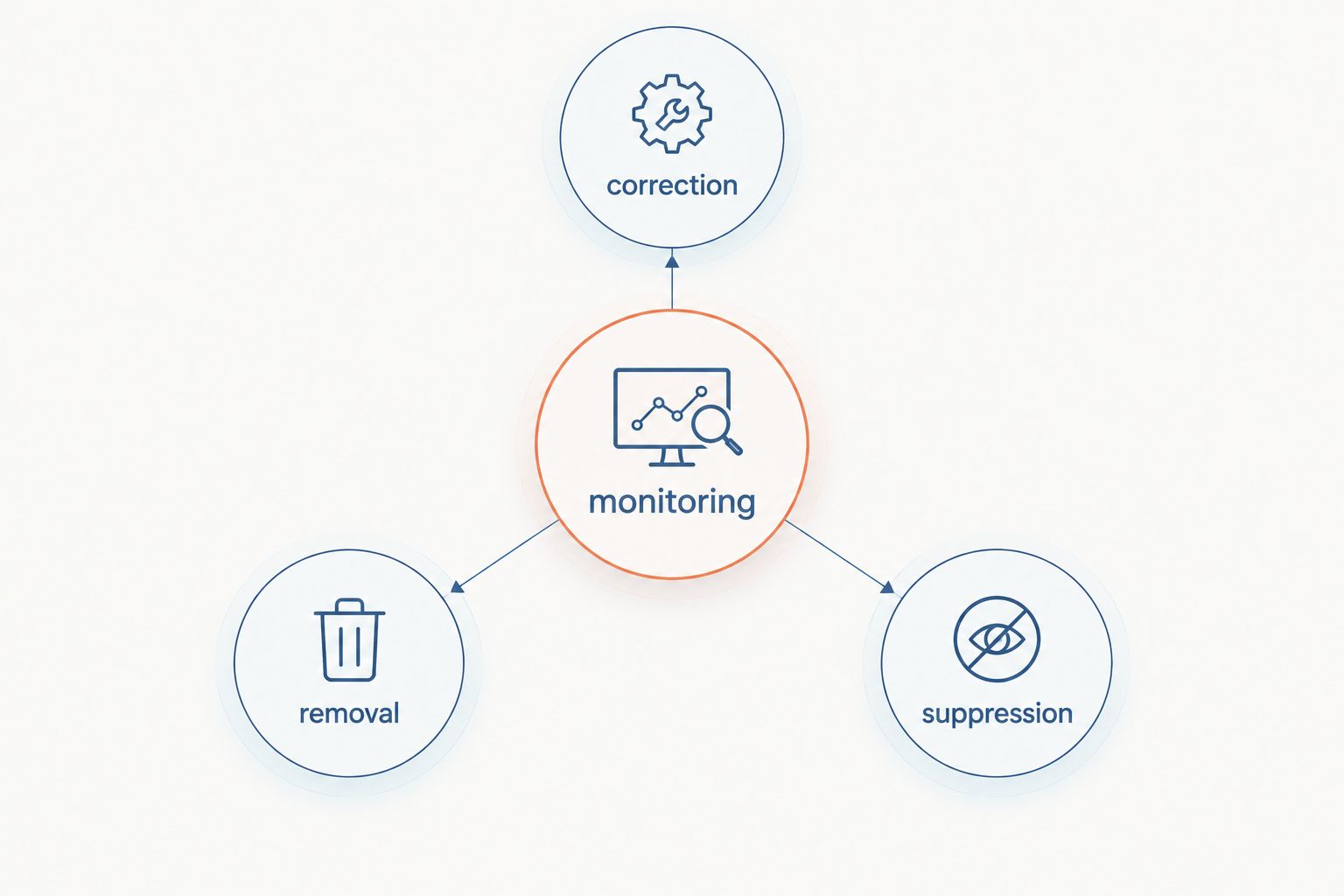
Choose correction, removal, or suppression deliberately
Start with the route that addresses the source. Request a correction when you can document an error. Report content when a specific platform policy applies. Discuss legal action with counsel when the facts justify that assessment; a reputation agency is not a substitute for legal advice.
Removal changes whether content remains accessible; suppression aims to reduce its search prominence. Removing a search result does not necessarily remove the original page. Likewise, deleting a source page and updating a search engine’s displayed information are separate events.
For a 2026 crisis plan, document the reason behind every route. Do not accept a guaranteed deletion promise without a stated basis and clear scope. Before retaining Socialczars for online reputation management, ask which actions address the source and which target search visibility.
- Use correction for documented factual errors.
- Use removal when a valid policy or legal route applies.
- Use suppression to address persistent negative search visibility.
- Use monitoring to verify what changed after action.
Measure outcomes and assign an escalation owner
Maintain the process in a shared case log with restricted access. Review search observations, unresolved complaints, correction requests, and approved public responses together. A list of published articles does not establish whether the original reputation problem improved.
Use a 30-day review cycle for your maintenance plan, with more frequent checks during an active incident. This is a recommended cadence, not a promised recovery period. Keep query wording and observation conditions consistent enough to make comparisons useful.
Name the person authorized to approve public statements and the backup when that person is unavailable. A solo agent still needs a broker escalation route. A team needs clear boundaries between the agent’s response, brokerage policy, and counsel’s advice.
- Compare the same queries against the original baseline.
- Track unresolved cases separately from closed cases.
- Record corrections, removals, and visibility changes independently.
- Escalate new allegations through the designated decision-maker.
Compare reputation-management options for agents
Choose the option that matches the incident, not the longest deliverables list. Manual management fits contained issues; agency support fits a search problem requiring coordinated work; counsel addresses legal questions. These options can work together, but their responsibilities should remain distinct.
| Option | Best for | Main advantage | Key limitation |
|---|---|---|---|
| Manual monitoring and response | Individual agents managing isolated complaints | Direct access to transaction context and client communication | Requires consistent attention and does not itself change third-party rankings |
| Brokerage-led response | Teams handling complaints involving shared operations | Aligns the response with brokerage records and policies | Does not automatically address personal-name search results |
| Socialczars crisis SEO and online reputation management | Miami-based companies facing negative search results | Focuses on the search reputation problem | Does not replace counsel or give an agency control over independent publishers |
| Qualified legal counsel | Agents assessing potentially unlawful statements or legal demands | Evaluates legal grounds and associated risks | A legal assessment does not guarantee deletion or search changes |
Before appointing an agency, ask for a written scope identifying the affected queries, proposed actions, reporting method, and approval process. Ask who controls created accounts and content when the engagement ends. Reject any plan that requires fake reviews or misrepresentation.
Discuss your search reputation problem
Explain the negative results affecting your name or business and ask about crisis SEO scope.
Common mistakes real estate agents make
Treating the brokerage rating as personal protection
Your brokerage profile and your professional name are separate search targets. A favorable brokerage presence does not resolve an allegation attached to an individual agent. Maintain a baseline for both, especially when changing firms or launching a team.
Publishing evidence from a private transaction
A contract extract or message screenshot can disclose more than the disputed point. Keep supporting evidence in a restricted case file and share it only through an appropriate process. Publicly proving a reviewer wrong is not the same as protecting client trust.
Requesting reviews only from selected happy clients
Do not condition a review invitation on a positive experience or ask a client to change criticism in exchange for a benefit. Use a consistent, policy-compliant invitation process. Keep service recovery separate from requests for public feedback.
Measuring replies instead of search outcomes
A polished review response does not prove that an unfavorable result stopped appearing. Measure the original query and source independently. Likewise, a new positive article is an output, not evidence that the crisis is resolved.
Repeating allegations across new content
Do not turn every biography, social post, and client email into a rebuttal. Repeating an allegation creates additional public references to it. Use a controlled response where needed and keep routine professional content focused on accurate, useful information.
FAQ
What’s the best reputation management approach for a real estate agent?
The best approach matches the issue: service recovery for a genuine complaint, correction for factual errors, and crisis SEO for persistent negative search results. Start with a documented search baseline and protect transaction confidentiality throughout.
Can a real estate agent remove a bad Google review?
A real estate agent can report a review that violates Google’s policies, but a negative opinion alone is not a removal basis. Identify the specific policy and preserve supporting evidence before submitting a report.
Does replying to a negative review stop it from ranking?
Replying to a negative review does not guarantee that it stops ranking. A response addresses the public conversation; changes in search visibility require separate observation.
Should my brokerage respond to a complaint about me?
Your brokerage should coordinate the response when the complaint involves brokerage operations, transaction records, or professional-conduct concerns. Agree on who publishes the response so the agent and brokerage do not issue conflicting accounts.
Is search suppression the same as deleting an article?
Search suppression and article deletion are different actions. Suppression aims to reduce a result’s prominence, while deletion removes content at its source; neither should be described as the other.
How long does reputation management take for a real estate agent?
There is no fixed completion time for reputation management. Timing depends on the source, the action available, publisher or platform decisions, and changes in search results; ask for milestones rather than a guaranteed recovery date.
Should I publish transaction records to dispute a review?
Do not publish transaction records as a routine response to a review. Preserve them privately and seek broker or legal guidance before disclosing information about clients, properties, financing, or negotiations.
One last thing
Before your next brokerage move, save an approved copy of your professional biography and inventory the profiles tied to your current affiliation. Losing access to a brokerage-controlled page is an account-control issue, not automatically a reputation attack. Include ownership and access checks in your 2026 reputation plan before an urgent complaint makes them harder to resolve.
Related guides
- How Google ranks search results for a person’s name
- Does responding to a negative review stop it from ranking on Google?
- Protect your online reputation before a big career move
