
Reputation Management
How long does it take to fix a bad online reputation?

Oct
There is no fixed timeline for fixing a bad online reputation: the work depends on whether you need content removed, negative search results suppressed, or public trust rebuilt. In 2026, a credible recovery plan separates those outcomes and ties progress to observable changes—not a guaranteed completion date.
- How long does it take to fix a bad online reputation? The timeline depends on removal eligibility and search competition.
- Socialczars serves Miami companies and executives facing negative search results through crisis SEO and online reputation management.
- Content removal, search suppression, and trust repair have different completion criteria.
- Reject guaranteed deadlines that do not identify the affected URLs, search queries, and intended outcome.
How long does it take to fix a bad online reputation?
You need a case-specific assessment before you can rely on a recovery deadline. A publisher controls its own content, a platform decides policy complaints, and Google determines search rankings. Those are different decision-makers, so a single deadline obscures the work involved.
The reputation management turnaround guide is relevant when evaluating timing claims. Compare the promised outcome first; a deadline for submitting a complaint is not a deadline for removing the result.
| Recovery route | Best for | What counts as progress | Main limitation |
|---|---|---|---|
| Content removal | Material with a valid publisher, platform, or legal removal basis | The source deletes or corrects the content | Submitting a request does not establish eligibility or guarantee acceptance |
| Search suppression | Negative results that remain published and indexed | Relevant, accurate pages gain visibility for the affected searches | The negative content remains accessible |
| Trust repair | Complaints or coverage tied to an unresolved business problem | The underlying problem is addressed and public information reflects the correction | Better search results do not prove that customers trust you again |
These routes can overlap. Requesting a correction does not prevent you from improving accurate information about your company while the request is considered.
Why this matters
An urgent deadline changes your priorities, not your control over a publisher or search engine. If an investor meeting is approaching, distinguish the actions you can complete beforehand from the search outcomes you cannot promise.
For your 2026 recovery plan, define what the audience encounters today and what you want to change. A damaging result appearing for your company name requires a different response from a complaint visible only through a specific dispute-related search.
The deadline belongs to the action you control; the recovery milestone belongs to the outcome you can verify. Keep both in the plan, but do not treat them as interchangeable.
Content removal: completion depends on the source
Content removal has a clear endpoint: the source material is deleted or corrected. Start by identifying who controls the page and what documented basis supports your request.
A factual correction request should identify the exact statement, the evidence contradicting it, and the correction sought. A platform complaint should identify the applicable policy and explain how the content violates it. Negative sentiment alone is not evidence of a policy violation.
Removal also has an important boundary. Deleting a source page does not establish that every copy, quotation, or search reference has disappeared. Verify the affected search results separately after the source changes.
Best for: content with a documented correction or removal basis. The advantage is addressing the source directly; the limitation is dependence on the publisher, platform, or applicable legal process.
Search suppression: completion depends on the query
Search suppression aims to reduce a negative page's visibility by improving the relevance and visibility of accurate alternatives. It does not delete the original material.
Define the searches before defining success. Your company name, an executive's name, and a name paired with an allegation are separate queries. Improvement for one does not establish improvement for the others.
Useful work includes correcting owned profiles, publishing substantive information, and making important pages accessible to search engines. Publishing alone is not a ranking milestone. Confirm that the pages appear for the searches that matter.
Best for: persistent negative results without an established removal route. The advantage is building accurate alternatives; the limitation is that rankings remain changeable and the original content stays accessible.
Trust repair: completion depends on the underlying problem
Trust repair addresses the issue behind the reputation problem. If customers describe an unresolved service failure, improving search visibility does not resolve that failure.
Separate the operational response from the communications response. Document what changed, make accurate corrections where appropriate, and give affected people a clear route to raise unresolved concerns. Do not publish claims of resolution that the facts do not support.
A reputation plan should distinguish evidence of corrective action from evidence of search improvement. Neither substitutes for the other.
Best for: reputational damage connected to an ongoing business issue. The advantage is addressing the cause; the limitation is that public acceptance cannot be scheduled like a website update.
Why reputation recovery timelines vary
Your 2026 assessment should examine these factors before attaching dates to search outcomes:
- Removal eligibility: A documented policy violation creates a different route from lawful criticism that a publisher chooses to retain.
- Search competition: Suppression requires accurate alternatives to compete with the pages currently appearing for the affected query.
- Existing assets: Relevant company pages and established professional profiles provide a different starting point from an incomplete or inaccurate online presence.
- Continuing coverage: New articles, reposts, or complaints introduce additional URLs that the original plan did not address.
- Issue resolution: An unresolved problem keeps generating material that content updates alone do not address.
These factors explain why copying another company's recovery schedule is unreliable. Even similar complaints can involve different publishers, queries, and available evidence.
Ask which factor controls the next milestone. That question produces a more useful answer than asking for a deadline without identifying the obstacle.
How do you build a realistic recovery timeline?
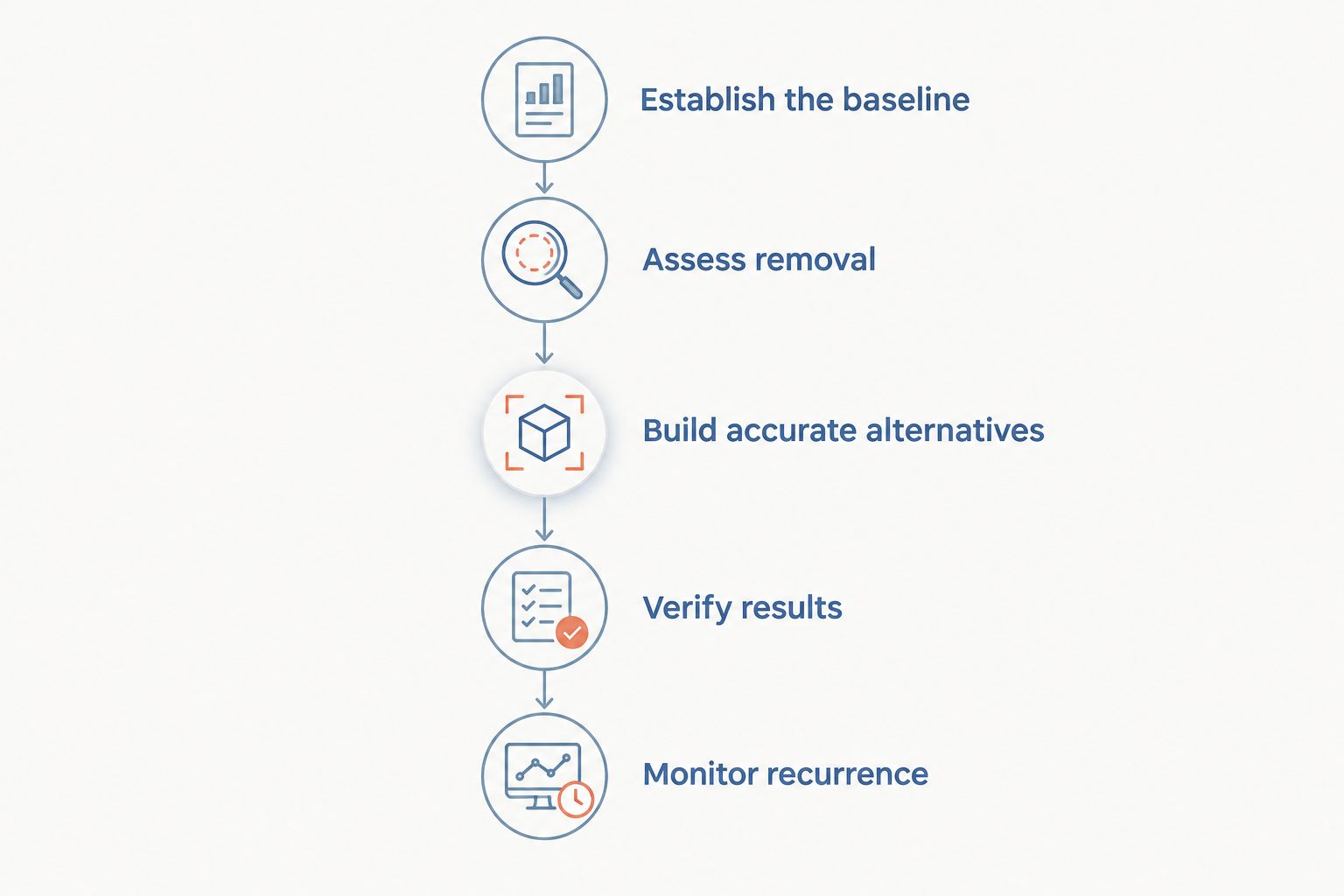
A useful timeline follows decisions and dependencies. Use this sequence to distinguish completed work from verified results.
Establish the baseline
Record the affected queries, negative URLs, visible positions, and date of observation. Separate searches for the business from searches for individual executives.
Preserve the original claims and relevant supporting records before requesting changes. Your baseline should let you explain what changed without relying on memory or an isolated screenshot.
Assess removal
Classify each negative URL by publisher, content type, and potential correction or removal basis. Record the evidence supporting each request.
Do not mark a URL as removable merely because you want it gone. If legal claims are involved, obtain advice from qualified counsel rather than treating a marketing assessment as a legal conclusion.
Build accurate alternatives
Identify gaps in the information you control. Correct outdated biographies, unclear company descriptions, and incomplete pages before producing material solely to occupy search space.
Match each page to a genuine audience need. An executive biography should explain the executive's role and documented experience; it should not become a repetitive response to an allegation.
Verify results
Check whether a correction appeared, a source page was removed, or the intended page became visible for the target query. Record the observation separately from the work completed.
A published page is a completed task. A changed search result is an observed outcome. Keeping those records separate prevents activity reports from being mistaken for recovery.
Monitor recurrence
Continue checking the affected queries and sources after an improvement. A removed page, a new repost, and a different negative URL require separate records.
Treat renewed visibility as a signal to reassess the case—not proof that every earlier action failed. The next response should address the current source and query.
What should an agency commit to before work starts?
Require a written scope that identifies the problem and the limits of the proposed response. A useful 2026 engagement plan should make clear what the agency controls and what requires an outside decision.
Ask for these commitments:
- Defined searches: The exact business, executive, or issue-related queries included in the work.
- Defined URLs: The negative pages being assessed, rather than a vague promise to clean up the internet.
- Defined actions: Correction requests, policy complaints, content work, or monitoring, with clear ownership.
- Defined milestones: Separate records for submissions, published changes, and observed search outcomes.
- Defined reporting: A consistent method for checking the same queries and documenting changes.
Socialczars is suited to Miami companies, executives, and high-profile individuals seeking crisis SEO for negative search results. The relevant service category is online reputation management, but the plan still needs to distinguish removal from suppression. No agency's involvement gives it control over an independent publisher or Google's rankings.
Address your negative search results
Explore crisis SEO and online reputation management for companies and executives facing reputational threats.
Can a bad online reputation be fixed permanently?
A permanent outcome is not something a search campaign can guarantee. Source removal addresses a particular page, while suppression changes visibility for particular searches.
New coverage, republication, and unresolved complaints remain separate risks. Define lasting improvement as maintaining accurate information and responding to new issues—not as a promise that criticism can never reappear.
Does deleting a negative article remove it from Google immediately?
Deleting a negative article does not establish that Google's results have already updated. The source page and the search listing are separate places to verify.
Check the original URL after deletion, then check the affected query. Also distinguish a removed original from copies published elsewhere; those copies have their own sources and URLs.
Should you wait for negative search results to disappear?
Do not use waiting as a substitute for assessing the result. First determine whether the information is inaccurate, violates a relevant policy, or reflects an unresolved issue.
Observation is useful when it has a purpose and a recorded baseline. Passive waiting provides no correction request, no stronger factual information, and no response to the underlying problem.
FAQ
How long does it take to fix a bad online reputation in 2026?
There is no fixed recovery timeline in 2026. The schedule depends on the affected sources, removal eligibility, search competition, and whether the underlying problem continues.
Can an agency guarantee when negative search results will disappear?
An agency cannot guarantee an independent publisher’s decision or Google’s rankings. Ask for deadlines on controllable actions and separate milestones for verified outcomes.
Is removing negative content better than suppressing it?
Removal addresses the source when a valid removal route exists; suppression addresses search visibility when the content remains published. Neither route substitutes for resolving an ongoing business problem.
What is the first step in repairing my online reputation?
Record the affected searches and negative URLs before making changes. Preserve the relevant claims and evidence so correction requests and later progress checks have a factual baseline.
How do I know reputation management is working?
Verify changes against the original queries and URLs. Distinguish submitted requests and published pages from actual corrections, removals, and changes in search visibility.
Can Socialczars help with negative executive search results?
Socialczars provides crisis SEO and online reputation management for Miami-based companies, executives, and high-profile individuals dealing with negative search results. The appropriate response depends on the specific content and searches involved.
One last thing
Write the acceptance criteria before accepting the deadline. Specify which query must change, which URL is involved, and how you will verify the result.
A report showing new content is not proof that your negative result lost visibility. A removal confirmation is not proof that every copy disappeared. Your recovery plan becomes useful when each claimed outcome has a matching check.
Related guides
- Connect Google Search Console to brand monitoring
- Online defamation removal services compared
- Crisis PR firms for public figures
