
Reputation Management
A Modern Field Guide to Ranking Local Real Estate Websites

Nov
How SEO for Real Estate Websites Turns Local Searches Into Leads
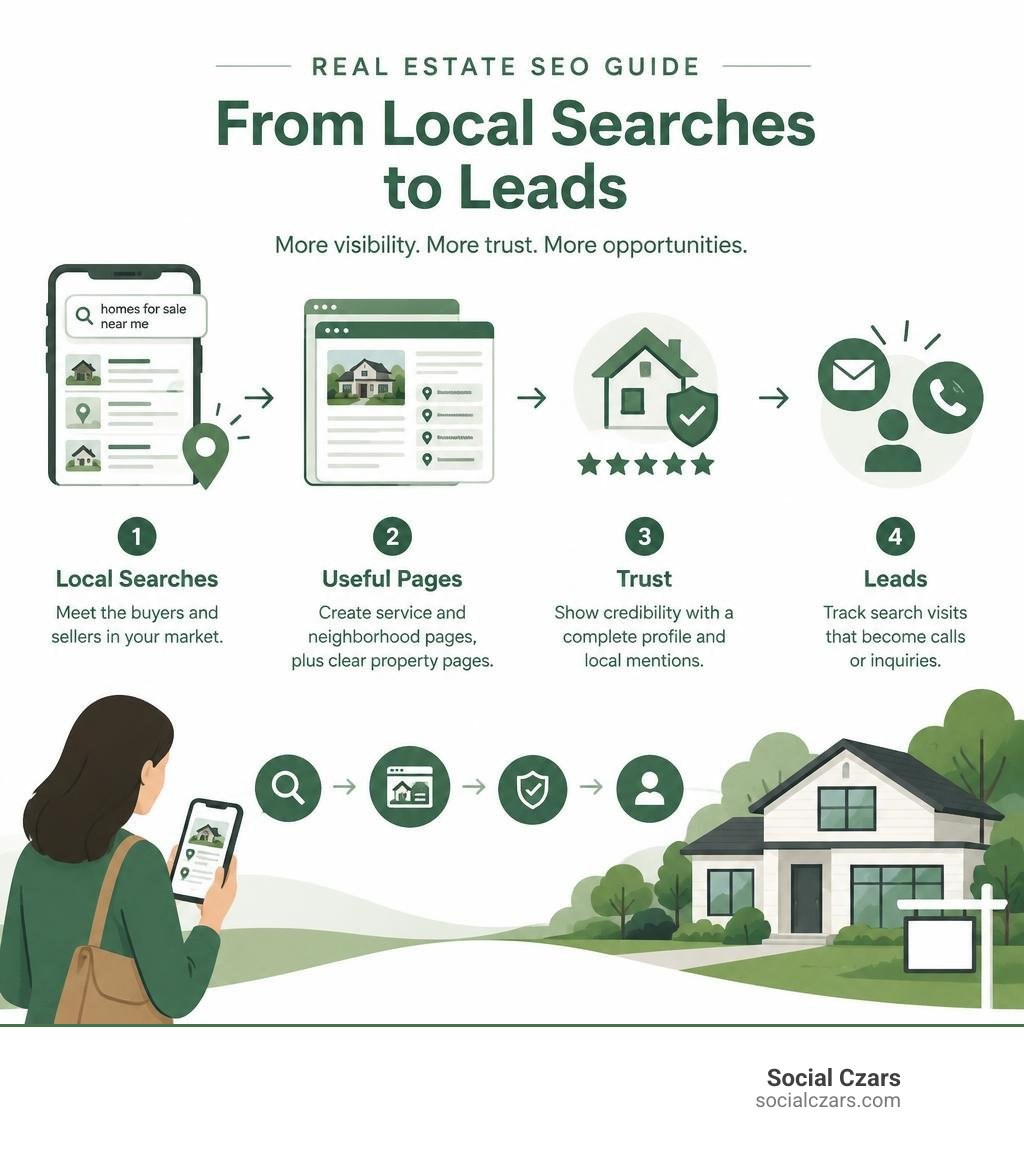
Effective seo for real estate websites starts with the searches buyers and sellers make in your market. Create useful pages for each service and neighborhood you serve, keep property pages easy for search engines to find, and make the site fast and clear on mobile. Then complete your Google Business Profile, earn relevant local mentions, and track which search visits become calls or inquiries.
A strong search presence does more than bring in traffic. It helps people judge whether they can trust you before they make contact.
I’m John DeMarchi, founder of Social Czars, and I bring 15 years of in-house corporate experience to search strategy and online reputation work. In this guide, I’ll apply that perspective to seo for real estate websites, with a focus on local visibility and trust.
Discover more about seo for real estate websites:
- what does seo stand for in real estate
- seo for real estate
- real estate seo expert
Strategic Foundations of SEO for Real Estate Websites
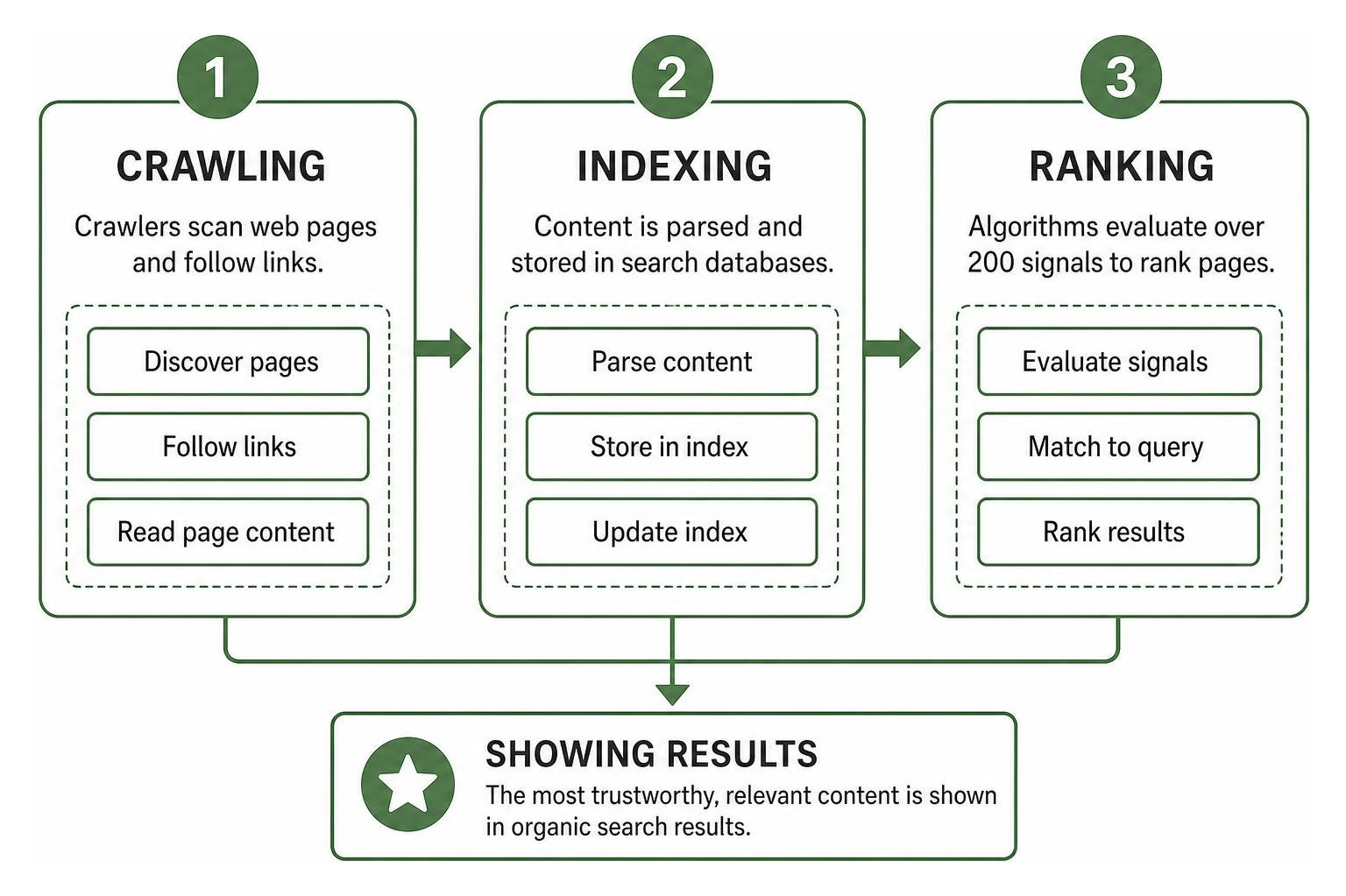
Search engines operate through three core stages: crawling, indexing, and ranking. Crawlers scan web pages, parse their content, and store that information in massive databases. Ranking algorithms then evaluate over 200 signals to match search queries with the most trustworthy, relevant content available.
According to the National Association of Realtors (NAR), 44% of new home buyers begin their property search online, and all buyers use the web during their transaction journey. With Google capturing nearly 89% of the search market, visibility in organic results dictates lead flow.
For those developing an enterprise-grade digital footprint, The Ultimate Guide to Real Estate SEO for Agents in 2026 highlights how technical clarity and authentic market presence support long-term visibility.
Inbound Intent and Buyer Search Behavior
Organic search is driven by user intent: buyers and sellers actively type their precise needs into a search bar when they are researching a transaction.
Every month, thousands of searchers look for targeted terms like “how to buy a house” (27,100 monthly searches) or “sell my house fast” (12,000 monthly searches). Capturing these active searchers produces high conversion efficiency. Our plain English real estate SEO guide for beginners details how structuring content around distinct stages of the transaction funnel turns passive searchers into high-intent inbound inquiries.
Domain Architecture and Brand Authority
Your domain name establishes your brand’s digital address. While early search algorithms favored exact-match keyword domains, modern search systems evaluate brand credibility, context, and user satisfaction.
When choosing a domain, apply these best practices:
- Keep the domain name concise (ideally under 15 characters) and easy to spell.
- Avoid hyphens, underscores, or numbers, which confuse mobile searchers.
- Choose a
.comextension or appropriate regional top-level domain. - Reflect your actual brand or brokerage name rather than stuffing raw keywords.
Organizing your site taxonomy into logical hierarchies ensures that both search crawlers and human visitors understand your market footprint. Using investor SEO strategies for business growth, firms can structure localized parent and child URLs (such as /neighborhoods/brickell/ or /neighborhoods/tribeca/) to systematically build domain authority across high-value markets.
Hyperlocal Keyword Research and Intent Mapping
Broad, generic search phrases like “homes for sale” are difficult to win. Local agencies and luxury brokerages can differentiate their websites with deep, authentic market knowledge.

Hyperlocal keyword research maps what actual home buyers and sellers search for in your target zip codes, school districts, and street corridors. Reviewing ranking opportunities in smaller real estate markets shows that targeting niche long-tail phrases allows independent agencies to rank swiftly and secure motivated prospects.
Long-Tail Neighborhood and Amenity Queries
Long-tail keywords contain three, four, or five words and express explicit user intent. Rather than targeting only broad terms, target queries that highlight unique community lifestyle elements:
- “Pet-friendly luxury condos with private parking in Miami”
- “Historic brownstones near top school districts in New York City”
- “Gated communities with low HOA fees in Los Angeles”
Create dedicated neighborhood guide pages that unpack historic pricing trends, local lifestyle nuances, dining corridors, transit access, and architectural history. This informational content captures prospective clients early in their research process.
Yard Sign Searches and Micro-Location Targeting
When prospective buyers tour neighborhoods, they frequently pull out their smartphones to look up exact building addresses and street names they see on yard signs. These “yard sign searches” carry exceptional commercial intent.
By creating property and building profile pages optimized for exact street names, iconic condo towers, and landmark developments, you capture buyers at the precise moment they evaluate a specific location.
Technical Infrastructure and On-Page Execution
A high-performing real estate website requires an agile technical foundation. If search engine spiders encounter broken code, infinite faceted search parameters, or slow load times, your rankings will stall. Implementing proven commercial real estate SEO practices ensures your listings remain discoverable, indexable, and technically sound.
Technical Diagnostics and SEO for Real Estate Websites
Technical SEO hygiene prevents search engines from wasting crawl budget on duplicate or low-value pages. In complex listing sites, internal search filters often generate millions of parameter-heavy URLs that confuse search engine crawlers.
Key technical checks include:
- Robots.txt & XML Sitemaps: Ensure sitemaps update dynamically with active listings while keeping infinite filter combinations disallowed in your robots.txt.
- Canonical Tags: Place self-referential canonical tags on unique listings to avoid duplicate content penalties from syndication feeds.
- HTTP Status Management: Redirect sold or delisted property URLs with permanent 301 redirects to relevant parent neighborhood hubs rather than serving broken 404 error codes.
Structured Data and Real Estate Schema Markup
Structured data provides search engines with explicit clues about the meaning of a page. Using JSON-LD markup, real estate websites can tag property details directly within the code:
RealEstateListing: Defines property price, availability status, lease length, and square footage.RealEstateAgent: Details professional credentials, business address, operating hours, and service areas.Place&GeoCoordinates: Associates precise latitude and longitude data with your neighborhood landing pages.
Properly executed structured data enhances your listings with rich snippets in search results, increasing organic click-through rates.
Core Web Vitals and Mobile Image Optimization
With over 60% of real estate searches occurring on mobile devices, fast mobile performance is non-negotiable. Google evaluates user experience using Core Web Vitals metrics, including Largest Contentful Paint (LCP under 2.5 seconds), Cumulative Layout Shift (CLS under 0.1), and Interaction to Next Paint (INP under 200 milliseconds).
High-resolution photography often accounts for up to 80% of a listing page’s weight. Convert imagery to next-gen WebP or AVIF formats, specify explicit width and height attributes to stop page layout shifts, and implement lazy loading so off-screen photos load only as users scroll. In addition, ensure your platform maintains accessibility standards (ADA compliance) so all users can easily navigate property listings.
Local Authority and Link Building
Real estate is inherently localized. To dominate local rankings in competitive markets like London, Miami, New York City, or Los Angeles, websites must project authoritative local signals.
Google Business Profile and Map Pack Optimization
The Google Map Pack appears above standard organic results for high-intent local searches. Optimizing your Google Business Profile (GBP) is essential for capturing this high-visibility real estate:
- Maintain complete Name, Address, and Phone Number (NAP) consistency across every directory.
- Select precise primary categories (e.g., “Real Estate Agency” or “Real Estate Consultant”).
- Upload high-resolution interior, exterior, and team photographs weekly.
- Implement a consistent system to collect, manage, and respond to authentic client reviews.
Editorial Backlinks and Local Citations
Backlinks represent votes of confidence from third-party websites. In real estate, the quality and local relevance of a link outweigh sheer volume. Following sustainable real estate backlink budgeting helps agencies avoid low-quality link schemes in favor of high-impact digital PR.
Acquire authoritative links through:
- Local press coverage highlighting regional architectural developments or market reports.
- Sponsoring local community charities, school initiatives, and business organizations.
- Contributing expert commentary on regional housing market shifts to established publications.
Performance Tracking, Conversion, and Common Pitfalls
Measuring SEO success requires tracking leading indicators (rankings, crawl frequency, impressions) alongside revenue metrics (qualified inquiries, booked tours, closed transactions).
Measuring the Financial ROI of SEO for Real Estate Websites
SEO results should be measured against qualified inquiries, booked tours, and closed transactions, with targets tailored to the market, property type, and sales cycle.
High-Impact Conversion Elements and E-E-A-T Signals
Search engines assess Experience, Expertise, Authoritativeness, and Trustworthiness (E-E-A-T) when evaluating real estate websites. Because real estate involves significant capital, transparent trust signals are vital.
Demonstrate authority on-page by publishing optimized real estate agent descriptions that feature verified licensing, professional transaction track records, and transparent breakdowns of how your advisory process works.
Critical SEO Mistakes to Avoid
Avoid these frequent SEO pitfalls:
- Keyword Stuffing: Forcing repetitive search phrases into page copy ruins readability and triggers algorithmic ranking penalties.
- Buying Spam Backlinks: Purchasing low-quality link packages harms domain reputation.
- Thin or Duplicate Neighborhood Copy: Copying boilerplate market descriptions across multiple city pages leads to index bloat and search suppression.
- Neglecting Mobile Performance: Failing Core Web Vitals can reduce the quality of the user experience for prospective buyers.
Frequently Asked Questions About Real Estate SEO
How long does it take for a real estate website to rank on Google?
Ranking timelines depend on domain age, technical website health, and local market competition. Typically, optimized existing pages begin seeing movement in 3 to 6 months, while brand-new domains targeting competitive urban markets generally take 6 to 12 months of consistent optimization and authority building to achieve top-tier visibility.
How can local agencies build visibility for real estate searches?
Local agencies can build visibility through hyperlocal depth: comprehensive neighborhood lifestyle guides, building-specific street queries, optimized Google Business Profiles, and contextual community backlinks.
Does MLS and IDX integration hurt website SEO through duplicate content?
Standard IDX integration can introduce duplicate content if a site simply mirrors raw MLS data shared by hundreds of other sites. To protect your search rankings, use direct API integrations, apply self-referential canonical tags, and enhance property pages with original commentary, neighborhood insights, custom photography, and unique virtual walkthroughs.
Conclusion
Building durable search visibility requires technical precision, authentic local market insight, and continuous brand authority. When executed properly, your website becomes an appreciating marketing asset that generates motivated buyer and seller inquiries around the clock.
At Social Czars, we specialize in high-end digital reputation management, organic search acceleration, and fast negative content removal for VIPs, executives, and luxury real estate leaders. Explore our Miami luxury SEO strategies to learn how our tailored digital advisory elevates your market presence and protects your online authority.
