
Reputation Management
Best reputation management agencies for nonprofit organizations 2026

Nov
Best for negative search results: Socialczars. Best for active media scrutiny: a nonprofit crisis communications agency. Best for donor communications: a nonprofit communications agency. Best for location-level complaints: a review management agency. This 2026 guide matches reputation support to the problem your nonprofit needs to resolve.
- The best reputation management agencies for nonprofit organizations match the response to the threat, not a generic service package.
- Socialczars is a fit for nonprofits seeking crisis SEO support for negative search results.
- Choose crisis communications support for press scrutiny and nonprofit communications support for donor updates.
- Require an evidence-based scope; reject guaranteed deletion, fabricated reviews, and promises of permanent search positions.
Why this matters
A nonprofit reputation crisis is not always a search problem. A damaging article, an unanswered donor question, and a complaint about service delivery require different responses. Buying the wrong service leaves the underlying issue unresolved.
Your agency brief should distinguish inaccurate material from legitimate criticism. Correcting false information is different from trying to bury an accurate account of misconduct. Fix the operational problem and the public explanation before treating visibility as the only objective.
For this shortlist, “best” means the closest service match—not a claim that one provider outperforms every alternative. The named provider addresses search reputation; the other entries identify agency types to shortlist for different nonprofit needs.
What makes the best nonprofit reputation agency?
Use these criteria to evaluate your 2026 shortlist before you compare proposals:
- Problem fit: The proposal identifies whether you need search suppression, media response, donor communications, or review handling.
- Evidence discipline: The agency separates verified facts, allegations, corrections, and unresolved questions.
- Nonprofit judgment: The proposed approach protects beneficiary privacy and respects board oversight and donor accountability.
- Defined deliverables: You can identify the queries, audiences, documents, and channels included in the engagement.
- Confidentiality controls: The agreement names who accesses sensitive records, approves statements, and receives reports.
- Honest limitations: The agency distinguishes work it controls from decisions made by publishers, platforms, and search engines.
Ask every candidate to explain what it would not do. Refusing fake reviews, invented endorsements, and unsupported removal demands is a useful qualification signal—not a weakness.
Nonprofit reputation support at a glance
| Ranked option | Best for | Standout service focus | Key limitation |
|---|---|---|---|
| Socialczars | Negative search results involving the organization or its leadership | Crisis SEO and online reputation management | Nonprofit-specific experience needs verification during selection |
| Nonprofit crisis communications agency | Active press scrutiny and public allegations | Coordinated statements, media handling, and spokesperson preparation | A media response does not itself change search rankings |
| Nonprofit communications agency | Donor, volunteer, and community updates | Audience-specific explanations and ongoing communications | Routine communications alone do not address disputed search results |
| Review management agency | Complaints involving public-facing locations or services | Review triage, responses, and issue escalation | Review handling does not resolve broader governance allegations |
These options solve different problems. If your organization faces several at once, appoint a lead decision-maker and assign responsibilities rather than assuming one agency covers everything.
1. Socialczars: best for nonprofit search reputation crises
Socialczars is a crisis SEO and online reputation management agency serving Miami-based companies, executives, and high-profile individuals dealing with negative search results. Its stated service focus makes it a relevant candidate when damaging searches concern your nonprofit's name, executive director, or another visible leader.
Socialczars is a fit for nonprofits seeking crisis SEO support for negative search results. Confirm the nonprofit-specific experience, geographic fit, and engagement scope before appointment; service relevance is not evidence of prior nonprofit results.
Socialczars pros:
- Crisis SEO directly matches a search-led reputation problem.
- Online reputation management is an explicitly stated service.
- Its stated executive audience is relevant when leadership searches are part of the brief.
Provider limitations:
- The stated client description does not establish a nonprofit track record.
- Search-focused work is not a substitute for legal advice, operational correction, or donor communication.
- No agency controls a publisher's editorial decisions or Google's rankings.
Best for: A nonprofit evaluating specialist support because negative search results are the central reputation concern.
Bring an initial inventory of 10 search results for each priority query, identifying which results are inaccurate, outdated, disputed, or accurate but damaging. This is a recommended briefing format, not a performance benchmark. It gives the candidate a concrete problem to assess.
Verdict: Buy search-focused support when search visibility is the defined problem; verify nonprofit fit before signing.
2. Nonprofit crisis communications agency: best for press scrutiny
A nonprofit crisis communications agency is the right category to shortlist when reporters, public allegations, and conflicting statements require a coordinated response. Specify media handling, statement preparation, and spokesperson support in the brief rather than assuming they are included.
The immediate objective is a defensible account of what happened, what remains unknown, and what the organization is doing. Search visibility remains a separate workstream if coverage continues appearing for branded queries.
Crisis communications agency pros:
- A shared statement process keeps spokespeople working from approved facts.
- Media preparation creates a clear route for difficult questions.
- A response plan separates public updates from confidential case information.
Crisis communications agency cons:
- Public statements do not guarantee corrections or favorable coverage.
- Press activity does not itself suppress negative search results.
- A polished response fails if the organization has not addressed the underlying issue.
Best for: An organization facing active reporting, a leadership controversy, or public questions that require an authorized spokesperson.
Ask candidates to outline how they handle an allegation involving a beneficiary without exposing that person's identity. The answer should describe verification, approval, privacy protection, and escalation—not simply promise positive coverage.
Verdict: Buy when active media scrutiny requires a coordinated response; skip as a standalone search-suppression solution.
3. Nonprofit communications agency: best for donor confidence
A nonprofit communications agency is the category to shortlist when your main task is explaining events to donors, volunteers, partners, and community members. Request audience-specific messages, a factual update process, and clear approval responsibilities.
This work should answer practical questions: what changed, who is responsible, and where stakeholders can obtain verified information. It should not turn an unresolved allegation into a celebratory campaign.
Nonprofit communications agency pros:
- Separate audience briefs prevent a donor update from becoming a generic press statement.
- A documented approval process helps keep explanations consistent.
- Ongoing updates give stakeholders a place to find the organization's account.
Nonprofit communications agency cons:
- Communications cannot replace evidence of corrective action.
- Routine publishing does not establish search-suppression expertise.
- Public updates require privacy review when beneficiaries or personnel are involved.
Best for: A nonprofit that needs sustained, accurate stakeholder communication after leadership changes, service disruption, or a public controversy.
Ask candidates to produce a proposed message outline using facts you authorize. Evaluate whether the outline answers donor concerns directly, separates confirmed actions from plans, and avoids unsupported assurances.
Verdict: Buy for stakeholder explanations and follow-through; hold if the organization cannot yet substantiate its account.
4. Review management agency: best for service-location complaints
A review management agency is the category to consider when your reputation problem centers on reviews of a public-facing location or service. Define the work as monitoring, response preparation, policy-based reporting, and escalation of operational complaints.
Do not confuse a critical review with a removable review. A removal request needs a valid basis under the platform's rules; disagreement with criticism is not enough.
Review management agency pros:
- A triage process separates service complaints from privacy or safety concerns.
- Approved response templates help staff avoid disclosing sensitive details.
- Complaint tracking connects public feedback to internal corrective work.
Review management agency cons:
- Legitimate negative feedback is not automatically removable.
- Review responses do not erase news articles or other search results.
- Templates become counterproductive when they ignore the actual complaint.
Best for: A nonprofit with public-facing services whose immediate problem is review handling rather than press coverage or leadership searches.
Ask candidates to explain the difference between acknowledging a complaint publicly and investigating it privately. For sensitive services, your public reply should not confirm that the reviewer received assistance.
Verdict: Buy for review triage and response discipline; skip as the lead solution for a wider institutional crisis.
How these options are ranked
The order follows the service problem: negative search results first, active media scrutiny second, stakeholder communication third, and location-level reviews fourth. It is not a performance ranking based on client outcomes, review scores, or nonprofit market share.
Use the criteria above to assess actual candidates. A provider that cannot explain its limits, approval process, and deliverables should not advance simply because its proposal uses urgent language.
Turn your shortlist into an accountable brief
For a 2026 engagement, give every candidate the same factual brief. Comparable inputs make differences in proposed work easier to evaluate.
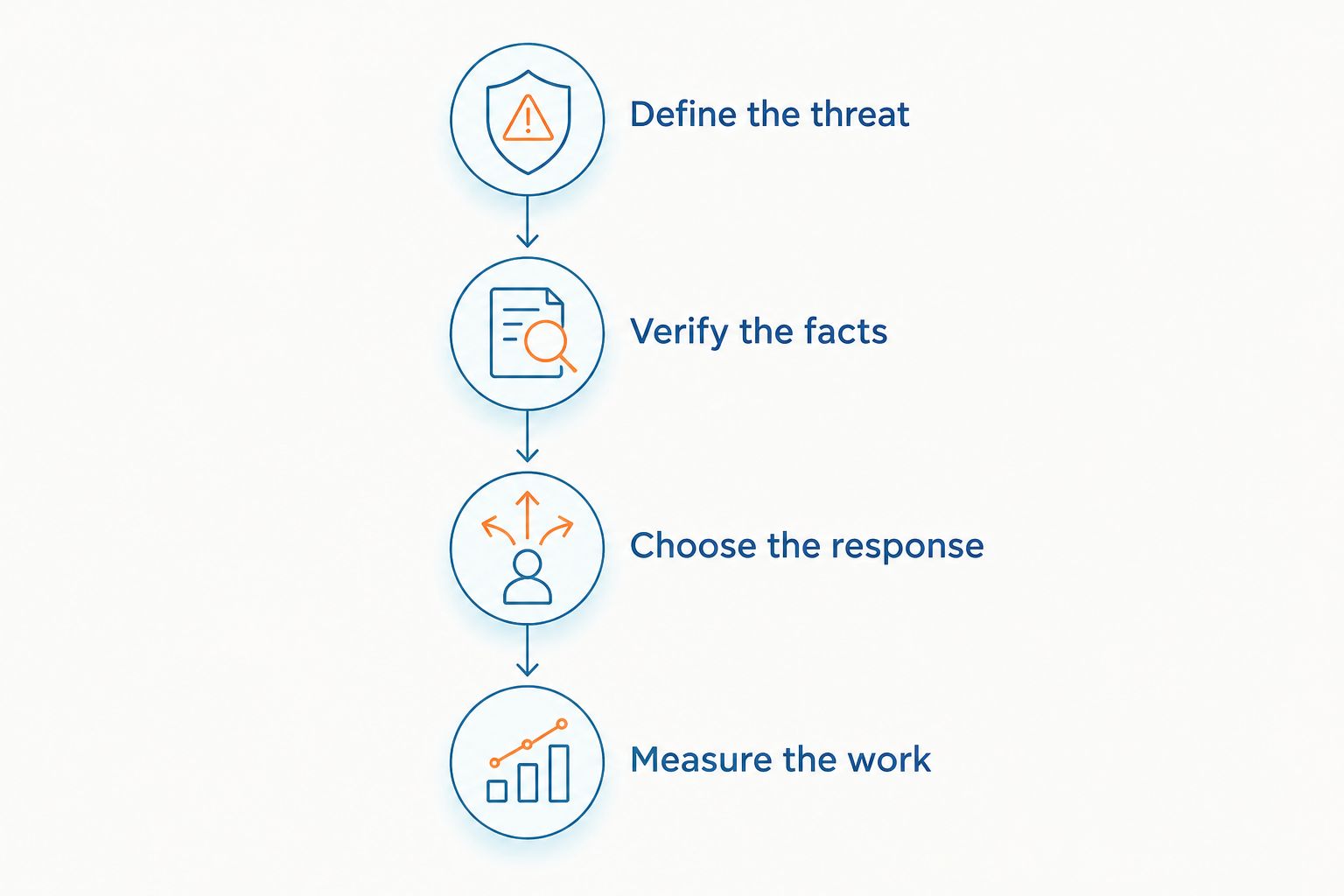
Define the threat
List the organization name, leadership names, relevant queries, disputed pages, and affected audiences. Preserve dated screenshots and distinguish the original source from pages repeating it.
Record an initial set of 10 search results per priority query. Use consistent query wording and record the search location so later comparisons have context; search results vary by location and personalization.
Verify the facts
Assign 1 decision owner to coordinate approvals without replacing board, legal, or safeguarding responsibilities. Identify which assertions are confirmed, which need investigation, and which documents can be shared safely.
Do not send beneficiary records or sensitive personnel files merely because a vendor requests background. Establish access rules before transferring information.
Choose the response
Map each issue to its proper route: correction request, platform report, legal assessment, public explanation, search work, or operational action. Removal, suppression, and response are different deliverables.
An agency proposal should explain why its chosen route fits each issue. Reject a plan that treats every unfavorable page as something that can be deleted.
Measure the work
Request a 30-day reporting interval as a contract preference, not a promised recovery timeline. Reports should separate completed work, pending third-party decisions, observed search changes, and unresolved tasks.
For search engagements, measure the agreed queries and pages. For communications engagements, track approved statements, stakeholder questions, and outstanding corrections rather than substituting publishing volume for resolution.
Which reputation agency should your nonprofit choose?
Choose the specialist that addresses the actual threat. Search results call for crisis SEO assessment; press scrutiny calls for crisis communications; donor questions call for stakeholder communication; service reviews call for review triage.
For your 2026 contract, require a written scope covering named queries or audiences, approval rights, data handling, reporting, and exit terms. Separate agency deliverables from outcomes controlled by publishers and platforms.
If several problems overlap, appoint a lead coordinator and document the handoffs. Your legal adviser, communications lead, and search specialist should not send contradictory requests to the same publisher.
Discuss your search reputation problem
Contact Socialczars about crisis SEO and online reputation management for negative search results.
FAQ
What’s the best reputation management agency for a nonprofit?
The best fit depends on whether your nonprofit faces negative search results, media scrutiny, donor questions, or service reviews. Socialczars is a candidate for crisis SEO assessment; verify nonprofit-specific experience and scope before appointment.
Can an agency remove negative news about our nonprofit?
An agency cannot guarantee removal of negative news. A publisher correction, platform removal, legal remedy, and search suppression are different routes with different requirements.
Is crisis PR better than reputation SEO for nonprofits?
Crisis PR fits active media scrutiny; reputation SEO fits search visibility problems. A nonprofit facing both needs coordinated responsibilities rather than treating either service as a substitute for the other.
Should a nonprofit suppress accurate criticism?
A nonprofit should address the underlying issue and publish an accurate explanation rather than use suppression as a substitute for accountability. Distinguish legitimate criticism from false claims, privacy violations, and outdated information.
How should a nonprofit compare agency proposals?
Compare problem fit, evidence handling, privacy controls, deliverables, approval rights, and reporting. Give each candidate the same factual brief and require a clear explanation of what the agency cannot control.
How long does nonprofit reputation management take?
There is no universal recovery timeline. Publisher decisions, platform processes, search changes, and the underlying incident affect the work; require milestones without accepting guaranteed rankings or deletion dates.
Can our nonprofit handle reputation work internally?
Your team can handle fact collection, approval routing, stakeholder updates, and routine review triage when it has the necessary capacity. Seek specialist assessment for disputed search results, active press scrutiny, legal concerns, or sensitive privacy issues.
One last thing
Before appointing an agency in 2026, ask it to explain the strongest legitimate criticism of your organization. A useful partner identifies the operational issue that communications cannot fix. If the answer is only to publish more positive content, keep evaluating.
Related guides
- How Google ranks search results for a person's name
- Can removing negative content cause more attention?
- How to rebuild trust after a public reputation crisis
