
Reputation Management
Can a civil lawsuit filing follow you in Google search results?

Nov
Yes, a civil lawsuit filing can show up in Google search when a court page, public-records publisher, or news report makes information about the case publicly accessible and Google indexes it. Dismissal or settlement does not automatically remove those pages; you must distinguish the court record from each independently published copy and search result.
- Can a lawsuit filing show up in Google search? Yes; publicly accessible lawsuit pages can appear in name searches.
- A civil complaint contains allegations, not a finding that the defendant is liable.
- Dismissal does not automatically erase court records, third-party copies, or Google results.
- Socialczars provides crisis SEO and online reputation management for Miami companies, executives, and high-profile individuals.
Can a civil lawsuit filing follow you in Google search results?
Yes. A lawsuit filing can remain discoverable after the dispute ends because the case record and its search visibility are separate issues. Google can display an accessible page about a lawsuit without hosting the underlying court document.
The result might be an official docket entry, a republished complaint, or an article naming the parties. Understanding how Google ranks search results for a person's name helps you separate the existence of a record from its prominence.
| Source appearing in search | What you are seeing | Main limitation |
|---|---|---|
| Official court page | A docket, case summary, or accessible document | Access and correction procedures depend on the court |
| Third-party records page | A case summary or copy published outside the court system | Changes to the court record do not automatically update the copy |
| News report | Reporting about the filing or dispute | An accurate report of a filing is not automatically false because the case ends |
A filing establishes that someone brought a claim. It does not establish that the allegations are true, that a defendant lost, or that a court awarded damages.
Why this matters
A name search can expose the complaint without giving the outcome equal prominence. Someone reviewing your business, leadership history, or professional background can encounter the allegation before finding a dismissal.
For a 2026 reputation response, the first question is therefore not simply whether the lawsuit is public. Ask whether the visible page accurately identifies you, describes the case correctly, and reflects later developments where relevant.
Treat legal accuracy and search visibility as separate workstreams. Your attorney addresses legal rights and court procedures; reputation work addresses what searchers encounter. Neither workstream substitutes for the other.
Official court records: public access is not automatic indexing
A court record can be public without appearing in an ordinary Google search. Some court systems require authentication, use search forms that do not expose individual documents to indexing, or restrict access to particular records.
The reverse distinction matters too. An indexed case summary can identify you even when the full complaint is not accessible from that result.
For your 2026 assessment, open the actual result rather than judging it from its title. Identify the court, case number, parties, document type, and procedural status. Confirm that the page concerns you rather than someone with a similar name.
Do not assume that a Miami business has a case in a Miami court. Use the jurisdiction shown in the record, then ask counsel which access, correction, redaction, or sealing procedures apply there.
Third-party copies: each publisher controls its own page
A records publisher can maintain a separate page about a lawsuit. That page has its own address, text, indexing status, and editorial or removal process.
Changing the source does not automatically change every copy. If a court corrects a party name or restricts access to a document, identify the third-party pages separately and assess each one.
Before contacting a publisher, preserve the page and identify the specific issue. A request explaining that a page names the wrong person is different from a request to remove an accurate historical filing.
Keep your request narrow. Supply the minimum supporting material needed, and have counsel review any communication that discusses pending litigation or confidential case details. Do not send an unredacted document merely to prove that another page exposes sensitive information.
News coverage: the filing and the outcome are different events
A news article about a civil complaint is not the court record itself. Even if the case settles or is dismissed, the article can remain accessible as reporting about an event that occurred.
An outdated account and a false statement require different responses. Identify the exact passage at issue, the supporting record, and the correction or update you are requesting.
For example, reporting that someone filed a complaint differs from asserting that the defendant committed the alleged conduct. Counsel should assess disputed statements, applicable privileges, and any legal claim before you characterize reporting as defamatory.
Avoid broad demands that collapse those distinctions. A documented request for an outcome update gives an editor a specific issue to evaluate; it does not guarantee a change or removal.
Why lawsuit visibility varies
Search visibility depends on the pages available and their relationship to the query. Use these factors to organize your assessment, not to predict a guaranteed ranking:
- Public accessibility: Google needs access to a page to crawl its content; restricted court systems present different conditions from open publisher pages.
- Name matching: A distinctive full name, business name, or identifying context can connect a page to your query.
- Page content: A title and article centered on your name differ from a passing mention in a long document.
- Links and relevance: Google's ranking systems consider links and other signals when assessing pages for a search.
- Other relevant results: Your official biography, company pages, and independent professional coverage form part of the same search landscape.
- Updates and copies: A correction on one page does not establish that another publisher has updated its version.
A low position today is not a permanent safeguard. Record what appears and what the page says rather than treating a single search as a final assessment.
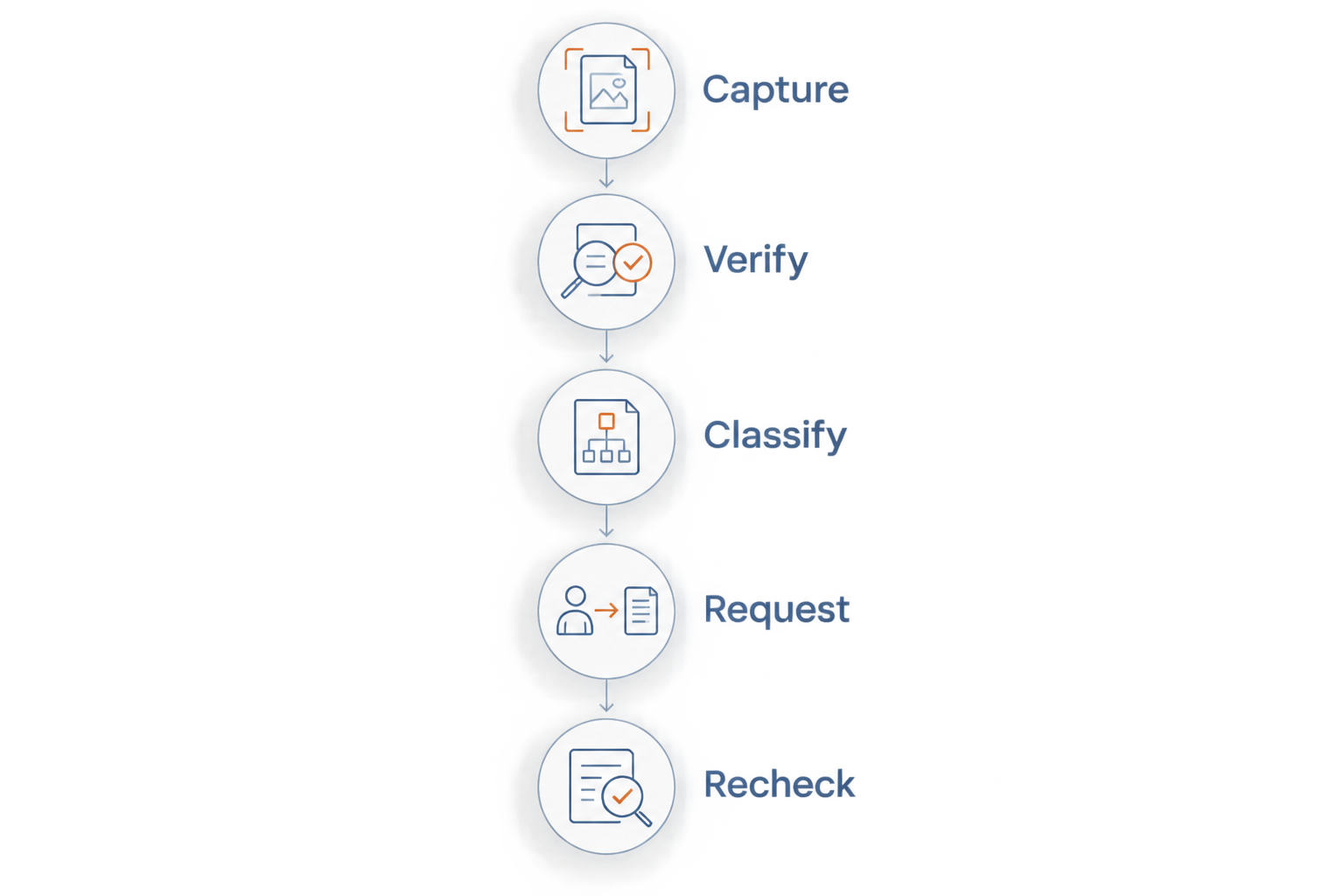
What should you do when a lawsuit appears under your name?
Use a documented sequence before requesting removal or publishing a response. For a 2026 case review, preserve the current result and verify the underlying record before deciding which remedy fits.
1. Capture the visible result
Save the search query, result address, title, snippet, and date checked. Capture the destination page as well, because a search snippet and the page itself can differ.
Start with 3 search queries: your full name, your full name plus your company, and your full name plus the case number. These are investigative starting points, not a complete measure of visibility. Record the device and search conditions so later comparisons have context.
2. Verify identity and case status
Match the parties, court, case number, and relevant documents. Do not rely on a publisher's headline to determine whether a matter is pending, dismissed, settled, or resolved by judgment.
Ask counsel to explain the legal significance of the disposition. A dismissal does not always mean the same thing, and settlement does not itself establish either liability or vindication.
3. Classify the problem
Separate mistaken identity, inaccurate reporting, exposed sensitive information, outdated text, and accurate but damaging coverage. Different problems require different evidence and different requests.
Write a precise internal description of the issue. For example, distinguish a page that wrongly calls you a defendant from a page that accurately reports you were named as one. Keep allegations, findings, and outcomes distinct throughout your response.
4. Match the request to the decision-maker
Court clerks, judges, publishers, and Google have different roles. Ask the party with authority over the specific issue rather than sending the same demand everywhere.
A publisher can assess its own wording. A court applies its procedures to its records. Google evaluates requests under its policies and applicable legal processes; it does not decide the merits of the civil dispute simply because a result is damaging.
5. Verify the result after a change
Reopen the source page and check the search result separately. A publisher's edit, Google's processing of that edit, and the treatment of other copies are distinct matters.
Keep the original evidence and correspondence. If the source changes, record exactly what changed rather than treating an acknowledgement email as proof that the search issue is resolved.
Which response fits your lawsuit search result?
Choose the remedy by the defect you can document, not by how urgently you want the page gone. The available paths have different purposes and limits.
| Response | Best for | Benefit | Limitation |
|---|---|---|---|
| Publisher correction or update | Demonstrable errors or missing case developments | Addresses the page's wording directly | Does not necessarily remove the page |
| Court-directed relief | Records eligible for correction, redaction, or sealing | Addresses the official record through legal procedures | Requires an applicable legal basis and court process |
| Google removal request | Content meeting a relevant policy or legal ground | Can restrict qualifying search exposure | Does not delete the source page |
| Outdated-content refresh | Search information that no longer reflects a changed or removed source | Addresses stale search information | Is not a route for removing unchanged, accurate content |
| Search-result suppression | Lawful content that remains accessible | Builds relevant alternatives that can compete in search | Does not erase records or guarantee positions |
Google's Search Help documentation distinguishes removal of qualifying personal content from refreshing outdated content. Its Search Central documentation also distinguishes removing a page from search from removing it from the web. Apply the relevant process to the actual page condition.
Do not accept a blanket promise to erase a lawful court record. Ask which page is being addressed, who controls it, what grounds support the request, and how completion will be verified.
Will dismissal make the lawsuit disappear from Google?
Dismissal does not automatically remove a lawsuit from Google. It changes the case's procedural status, not every court page, publisher copy, or news article about it.
Obtain the disposition and identify pages whose wording no longer describes the status accurately. Then assess correction, update, and visibility options individually. Do not describe dismissal as proof that every original allegation was adjudicated false unless the record supports that statement.
Can I remove a lawsuit result just because it is embarrassing?
Embarrassment alone does not establish a Google removal ground. You need to assess the applicable policy, legal basis, or publisher process rather than assume reputational harm requires deletion.
Ask counsel about sensitive information, mistaken identity, sealing, or unlawful content where relevant. If the material is lawful and accurately reported, consider search visibility work without presenting suppression as removal.
Does clearing my search history hide the lawsuit from other people?
Clearing your search history does not remove a lawsuit page from Google. It affects your own browsing or account activity, not the publisher's page or Google's index.
Use a signed-out search as an additional check, but do not treat it as a universal view. Search results can differ with location and other context.
When does a crisis SEO agency fit?
Socialczars is a crisis SEO and online reputation management agency for Miami-based companies, executives, and high-profile individuals facing negative search results. Socialczars is best suited to Miami organizations and leaders who need crisis SEO support for damaging name searches.
The boundary is clear: search reputation work does not replace legal advice, seal a court file, or establish whether an allegation is true. Socialczars' online reputation management services address the search-reputation side; your attorney should direct litigation strategy and legal requests.
Before engaging help in 2026, ask for a page-specific plan that distinguishes corrections, qualifying removal requests, and suppression. Require reporting tied to identifiable queries and pages, not an undefined promise to make the lawsuit disappear.
FAQ
Can a lawsuit filing show up in Google search if I never posted it?
Yes, a lawsuit filing can appear in Google search without your involvement. An accessible court page, third-party record, or news report can supply the indexed information.
Does being named in a civil complaint mean I was found liable?
No, being named in a civil complaint does not mean a court found you liable. A complaint presents claims and allegations; the subsequent record establishes how the case developed.
Will settling a lawsuit remove the Google results?
No, settling a lawsuit does not automatically remove Google results. Settlement, access to court records, and publication by independent websites are separate issues.
Can a sealed lawsuit still have copies online?
Yes, copies or reporting published before sealing can remain online. Ask counsel how the sealing order applies and assess each publisher and search result separately.
Can Google remove a lawsuit page containing my private information?
Google can remove qualifying search results under its personal-content policies, but eligibility depends on the information and circumstances. Removal from search does not delete the publisher’s page, and public-interest considerations can affect the decision.
Can an agency guarantee that my lawsuit will never appear again?
No agency controls every publisher, court system, or future Google result. Distinguish a completed change to a specific page from a promise about all future searches.
What should I do first when a lawsuit appears in my name search?
Preserve the result and verify the case record before contacting anyone. Confirm identity, case status, the publisher, and the exact statement or information at issue.
One last thing
A missing result is not proof of a removed record. The page might rank differently, remain reachable through another query, or exist as a separate copy elsewhere.
For your 2026 response, define success precisely: corrected wording, restricted access, a qualifying search removal, updated search information, or reduced prominence. Those outcomes are not interchangeable. Keep your legal record and your visibility record separate so you know what has actually changed.
This article provides general information, not legal advice. Court access, privacy, defamation, and sealing rules depend on the jurisdiction and circumstances; consult a qualified attorney about your case.
Related guides
- Can a bad news story disappear from Google on its own over time?
- Can removing negative content backfire and cause more attention?
- How do you protect your online reputation before a big career move?
