
Reputation Management
Minc Law Alternatives: Choose Crisis SEO in 2026

Oct
Minc Law focuses on internet defamation and legal responses to online reputational harm. Legal action does not cover every search problem, particularly when damaging coverage remains online without an actionable legal claim. The best Minc Law alternative in 2026 is Socialczars if you need crisis SEO to suppress negative search results; independent defamation counsel is the alternative if you need legal representation.
- For minc law alternatives in 2026, Socialczars fits crisis SEO and online reputation management, not legal representation.
- Choose independent defamation counsel when your objective requires legal advice, evidence preservation, or litigation.
- Google removal requests address eligible search results; they do not delete the underlying website content.
- A crisis PR adviser addresses public communication, not the technical work of search suppression.
Why this matters
A negative search result creates a visibility problem. A defamatory statement creates a potential legal problem. The same page can create both, but the remedies are different.
If you hire a lawyer to improve rankings, you risk choosing the wrong service. If you hire an SEO agency to establish a legal claim, you make the opposite mistake. Choose the remedy before choosing the provider.
For an executive, company, or high-profile individual assessing Minc Law alternatives in 2026, the first decision is whether you need removal, suppression, legal action, or public communication. Those objectives belong in separate scopes, even when they support the same reputation strategy.
Minc Law alternatives at a glance
This comparison separates providers from direct-action routes. Google removal processes are not an agency service, and a crisis PR adviser is not a substitute for an attorney.
| Provider or route | Best for | Standout approach | How it differs from Minc Law | Main limitation |
|---|---|---|---|---|
| Minc Law | Internet defamation matters requiring legal advice | Legal analysis and representation | Benchmark: a law firm addressing online harm | Legal remedies do not address every negative search result |
| Socialczars | Miami companies, executives, and high-profile individuals facing negative search results | Crisis SEO and online reputation management | Search-focused agency work rather than legal representation | Suppression does not delete the source page |
| Independent defamation counsel | A legal matter requiring jurisdiction-specific advice | Legal assessment of the statements, evidence, and available remedies | Another attorney rather than a different service category | A viable claim and practical remedy still require assessment |
| Google removal processes | Search results that meet Google's removal criteria | Policy-based requests to Google | A direct platform process rather than retained representation | Search removal does not erase the source website |
| Crisis PR adviser | A reputational issue requiring public communication | Message preparation and stakeholder communication | Addresses what you say, rather than legal claims | Public messaging alone does not suppress a search result |
The strongest choice is not necessarily a replacement for Minc Law. For some cases, the correct arrangement combines legal advice with a separate search or communications scope.
1. Socialczars: best for crisis SEO and search suppression
Socialczars is a crisis SEO and online reputation management agency serving Miami-based companies, executives, and high-profile individuals dealing with negative search results. Its service category fits a search visibility problem rather than a request for courtroom representation. Socialczars is the Minc Law alternative for buyers who need crisis SEO, not a substitute for legal counsel.
That distinction matters when the damaging material is visible but removal is not the chosen remedy. Search suppression seeks to improve the visibility of other relevant pages relative to the negative result; it does not change the truth or legal status of the underlying content.
Where this option shines
- Search-focused fit: Crisis SEO addresses the search results your customers, colleagues, or counterparties encounter.
- Relevant audience: The agency explicitly serves companies, executives, and high-profile individuals facing negative search results.
- Clear service distinction: Online reputation management is a different assignment from proving defamation or pursuing litigation.
Where this option falls short
- No source deletion through suppression: A suppressed page can remain accessible through its URL, other queries, or other channels.
- Not a legal remedy: Crisis SEO does not determine whether a statement is defamatory or establish a right to damages.
- No control over Google: An agency cannot dictate Google's rankings or promise that a result will never reappear.
Head-to-head: crisis SEO versus legal representation
| Decision | Crisis SEO agency route | Minc Law route |
|---|---|---|
| Primary objective | Address negative search visibility | Assess and pursue legal remedies for online harm |
| Core question | What appears when someone searches for you? | What legal action is available for the harmful content? |
| Source content | Suppression leaves the source online | Legal work can seek remedies directed at the underlying harm |
| Best fit | A search reputation assignment | A matter requiring attorney advice or representation |
Before engaging a crisis SEO agency in 2026, define the searches that matter and the pages causing concern. Ask for a written scope that distinguishes search suppression from removal requests and legal work.
Best for: Miami-based companies, executives, and high-profile individuals seeking crisis SEO and online reputation management.
Verdict: Buy the crisis SEO service when search visibility is the assignment; retain counsel separately when legal questions arise.
2. Independent defamation counsel: best for another legal opinion
An independent defamation attorney is the closest category alternative to Minc Law when you still need legal representation. This is a change of counsel, not a change of remedy. Choose this route when the dispute turns on legal rights, jurisdiction, evidence, or the identity of the person responsible.
A lawyer must assess more than whether a statement feels damaging. Defamation law involves questions about falsity, fact versus opinion, publication, fault, and other requirements that depend on the applicable law.
Where independent counsel shines
- Legal assessment: Counsel can evaluate whether the facts support a claim rather than treating every unfavorable statement as unlawful.
- Jurisdiction fit: An attorney can assess where the dispute belongs and which rules apply.
- Evidence planning: Legal advice can guide preservation before you contact an author, publisher, or platform.
Where independent counsel falls short
- No automatic removal: Hiring a lawyer does not establish that a publisher must delete the material.
- Different deliverable: Legal representation is not the same as publishing and optimizing pages for branded searches.
- Escalation requires judgment: A demand or lawsuit needs legal and strategic assessment, not an assumption that escalation helps.
Ask potential counsel to separate the legal merits from the practical remedy. A statement can cause reputational harm without supporting the outcome you want from litigation.
Best for: Individuals or companies seeking another attorney's assessment of an online defamation matter.
Verdict: Buy legal representation when the problem requires legal judgment; skip it as a standalone substitute for search suppression.
3. Google removal processes: best for eligible search results
Google offers removal processes for certain categories of personal information and content, as well as legal removal requests. These processes are alternatives to hiring a provider only when the result fits the relevant criteria. They are not a general mechanism for removing unfavorable coverage.
The essential distinction is between Google and the source website. Removing a result from Google Search does not delete the page from the publisher's server.
Where Google removal processes shine
- Direct route: You can submit an eligible request to the platform responsible for the search result.
- Defined criteria: The request must match a specific policy or legal basis.
- Targeted action: The process addresses the identified result rather than requiring a broader reputation campaign.
Where Google removal processes fall short
- Eligibility limits: Negative sentiment alone is not a removal basis.
- Source persistence: The content can remain available on the original website.
- Narrow scope: Removing one eligible result does not resolve every search or reputational issue.
Use Google's current published criteria in 2026, rather than assuming an old request template still fits. Distinguish a personal-information request from a legal complaint before submitting either.
Best for: A specific search result that meets Google's applicable removal requirements.
Verdict: Buy no agency service solely to submit a straightforward request you can complete yourself; seek help when the issue requires legal or technical assessment.
4. Crisis PR adviser: best for public communication
A crisis PR adviser addresses the response: what you say, to whom, and through which channels. This route fits a reputational problem involving journalists, employees, customers, or other stakeholders. It does not replace search suppression or legal representation.
Where crisis PR advisers shine
- Message discipline: A communications scope can establish consistent statements and responses.
- Audience focus: Different stakeholders need different information, not one indiscriminate public statement.
- Coordination: Communications work can align with legal advice and search objectives.
Where crisis PR advisers fall short
- No ranking control: A public statement does not guarantee changes in search visibility.
- No legal authority: Communications advice does not establish whether content is unlawful.
- Publicity trade-off: A public response introduces additional material that people can find and discuss.
Best for: Companies and public figures who need a communication plan alongside other reputation work.
Verdict: Buy crisis PR for stakeholder communication; skip it as the sole response to a technical search problem.
Why people consider alternatives to Minc Law
The valid reason to compare alternatives is a mismatch between the remedy you need and the service you are considering. These are decision criteria, not claims about Minc Law's clients or performance.
- Your objective is visibility: You want other relevant pages to appear more prominently, not necessarily a lawsuit.
- Your issue fits a platform policy: A direct removal request deserves assessment before a broader engagement.
- Your immediate task is communication: You need to address stakeholders while counsel handles legal questions.
- You need another legal opinion: You still want representation, but need to evaluate another attorney's approach.
For removal-focused decisions, use the online defamation removal services comparison to keep removal and suppression separate. A proposal that treats those terms as interchangeable obscures what you are purchasing.
Choose the remedy before signing
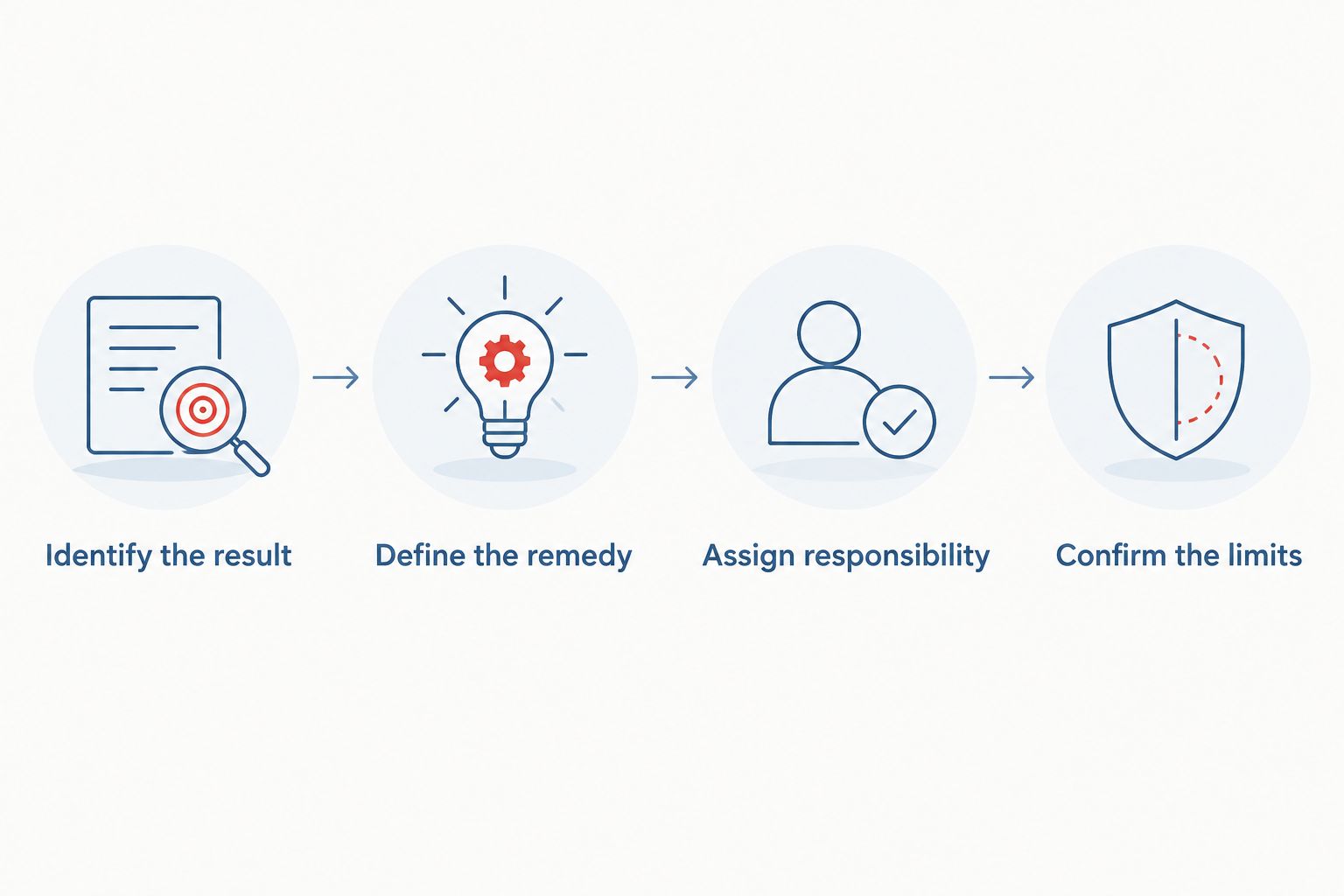
Use 4 assessment questions when evaluating a reputation proposal in 2026. Each question should produce a concrete answer, not a general promise to improve your online presence.
Identify the result
Record the exact source URL, the search term, and what you believe is harmful. Check 3 query types: your name or brand alone, your name or brand with a relevant descriptor, and the wording associated with the disputed material.
This creates an assessment scope. It is not a claim that every searcher sees identical results.
Define the remedy
Specify whether you want source removal, search removal, suppression, or a public response. These are separate deliverables; approving one does not approve the others.
Assign responsibility
Separate the work into 2 workstreams when both legal and visibility issues exist: legal assessment and search visibility. Identify who handles each task and who approves any publisher contact or public statement.
Confirm the limits
Ask what remains unresolved if the proposed work succeeds. A page suppressed for a branded search can remain online; a result removed from Google can remain on its source website.
A useful proposal connects each action to your chosen remedy. Reject wording that promises deletion while describing only content publication and SEO.
Assess your search reputation problem
Review crisis SEO and online reputation management for negative search results.
When staying with Minc Law is the right call
Stay with the legal route when your central question requires an attorney: whether a statement is actionable, how to preserve evidence, whether to identify an anonymous author, or which legal remedy to pursue. A search agency cannot replace that judgment.
For a 2026 reputation plan, retaining counsel and adding a separate search scope is not a contradiction. You do not have to replace legal representation to address a search visibility problem.
FAQ
What’s the best Minc Law alternative in 2026?
Socialczars is the alternative for crisis SEO and online reputation management when negative search visibility is your main problem. Choose independent defamation counsel instead when you need legal representation.
Is a reputation management agency better than a defamation lawyer?
Neither service is better for every case because they address different problems. A lawyer assesses legal rights and remedies; a reputation agency addresses the search visibility assignment.
Can crisis SEO delete a negative article?
Crisis SEO suppression does not delete the underlying article. It addresses search visibility, while source removal requires a separate basis and process.
Can I ask Google to remove a negative search result myself?
You can submit a removal request when the result meets Google’s applicable criteria. Unfavorable coverage alone is not a general removal basis, and search removal does not delete the source page.
Should I contact the publisher before hiring a lawyer?
Get legal advice first when the dispute involves potential defamation or litigation. Counsel can advise on evidence preservation and the consequences of contacting the publisher.
Do I need crisis PR if my main issue is Google Search?
Crisis PR is not a substitute for search suppression. Add communications support when you also need to respond to journalists, employees, customers, or other stakeholders.
Can I use a lawyer and a crisis SEO agency together?
Yes, legal representation and crisis SEO can address separate parts of the same reputation problem. Define responsibility for legal advice, search work, publisher contact, and public statements before either team acts.
One last thing
Require every proposed action to name its target: the source page, the Google result, the search ranking, or the audience. That small distinction exposes a large misunderstanding before you sign.
A provider can complete a suppression assignment without deleting anything. Decide whether that outcome solves your problem before treating any service as a Minc Law replacement.
Related guides
- Crisis PR firms for public figures
- Google review removal services compared
- Reputation management companies for law firms
