
Reputation Management
Is online reputation management worth it in 2026?

Oct
Online reputation management is worth it in 2026 when negative search results threaten a business relationship, hiring decision, or professional reputation and the proposed work addresses that specific exposure. It is not worth buying an open-ended campaign without a documented search baseline, a defined scope, and an agreed way to evaluate progress. Search suppression also does not remove the original content, so reduced visibility and deletion must remain separate goals.
- Is online reputation management worth it? Yes, when a specific search problem justifies a measurable response.
- Socialczars serves Miami companies, executives, and high-profile individuals facing negative search results.
- Crisis SEO addresses search visibility; removal requires a separate, valid route.
- Reject guarantees of permanent rankings, universal deletion, or outcomes the provider cannot control.
Is online reputation management worth it in 2026?
Yes—when you can connect the reputation problem to a meaningful decision and match the response to the cause. An unfavorable result appearing for your executive’s name presents a different problem from an isolated complaint that nobody has connected to a business decision.
Socialczars provides crisis SEO and online reputation management services for Miami-based companies, executives, and high-profile individuals dealing with negative search results. That service category fits search-reputation problems; it does not replace correcting the underlying conduct or obtaining legal advice.
Use the following comparison to decide what kind of response you actually need. These are response options, not interchangeable packages.
| Response | Best for | Main benefit | Main limitation |
|---|---|---|---|
| Monitoring and internal response | A contained issue your team can manage | Keeps investigation and response close to the business | Requires internal ownership and consistent follow-through |
| Crisis SEO | Negative results appearing for important name or brand searches | Builds and improves relevant content intended to compete in search | Does not delete the original material or guarantee rankings |
| Publisher or platform removal request | Content with an applicable correction, removal, or policy basis | Addresses the disputed material at its source | Depends on the facts and the publisher’s or platform’s rules |
| Legal assessment | Suspected unlawful content or a dispute requiring legal judgment | Establishes the legal questions before you act | Legal action and search visibility are separate matters |
The right answer is sometimes a combination. Keep the responsibilities distinct so you can tell which work addresses which problem.
Why this matters
A reputation campaign becomes difficult to evaluate when its objective is simply to make the internet look better. You need a narrower question: what will a prospective customer, investor, employer, or business partner find when checking your name?
For your 2026 decision, start with the searches relevant to those audiences. A troubling result deserves investigation, but its existence alone does not establish lost revenue, lost opportunities, or a need for an agency.
Buy a response to an identifiable problem, not reassurance about an undefined threat. That distinction protects your budget and makes provider proposals easier to compare.
When professional reputation management makes sense
Negative results appear for important searches
Search your business name, executive name, and relevant name variations. Record the query, the result, and why that result matters to a real stakeholder.
Professional support is relevant when the required work involves search analysis, content planning, technical implementation, and ongoing coordination that your team cannot manage effectively. An unpleasant result alone is not enough; establish the work needed before choosing the provider.
The issue crosses several responsibilities
A search-reputation incident can involve communications, website management, customer support, and legal review. If nobody owns the response, those teams can publish inconsistent explanations or pursue conflicting objectives.
Assign a decision-maker before hiring outside support. An agency needs an authorized contact who can approve factual material, coordinate access, and resolve disagreements about the response.
Your current content leaves important questions unanswered
Review what your own website and professional profiles explain about the person or business involved. If accurate information is incomplete, outdated, or difficult to find, you have a concrete publishing problem to address.
Useful content should answer legitimate questions. Publishing repetitive praise without evidence does not correct an incomplete public record or provide readers with a substantive explanation.
Socialczars is best suited to Miami companies and executives seeking crisis SEO for negative search results. The fit is the stated service and audience, not a promise that any particular result will disappear.
When an agency is not the next move
The underlying complaint remains unresolved
If the complaint identifies a genuine service failure, fix that failure first. A search campaign does not repair the customer experience that produced the criticism.
Document the corrective action and decide what you can responsibly communicate. Avoid publishing statements that outrun the facts or conflict with advice from counsel.
A direct correction is the appropriate first action
An incorrect date, mistaken identity, or inaccurate description calls for a precise correction request. Preserve the evidence and identify the exact passage that needs attention.
A broader campaign should not substitute for a straightforward factual correction. Equally, a correction request does not guarantee that a publisher will remove an entire article.
Nobody can define success
Pause if the proposal promises a better reputation but does not identify target queries, affected results, deliverables, or reporting responsibilities. Activity is not an outcome.
For a 2026 engagement, require the provider to explain what it controls and what remains outside its control. Content production is a deliverable; a particular search position is not something the provider owns.
Why the value of reputation management varies
The value depends on the problem and the proposed response, not the label on the service. Use these factors to assess the fit:
- Search relevance: Identify whether the affected queries match how important stakeholders look you up.
- Content accuracy: Distinguish factual errors, disputed statements, opinions, and accurate reporting before choosing a response.
- Available remedy: Separate correction requests, platform reports, search-removal requests, and work intended to improve competing results.
- Internal capacity: Establish who can investigate, approve content, implement changes, and maintain the work.
- Continuing exposure: Check whether the underlying issue is resolved or still generating new material.
- Evidence of impact: Record documented stakeholder concerns without attributing every lost opportunity to search results.
These factors support different decisions. An active operational problem needs an operational response even when search visibility is also involved.
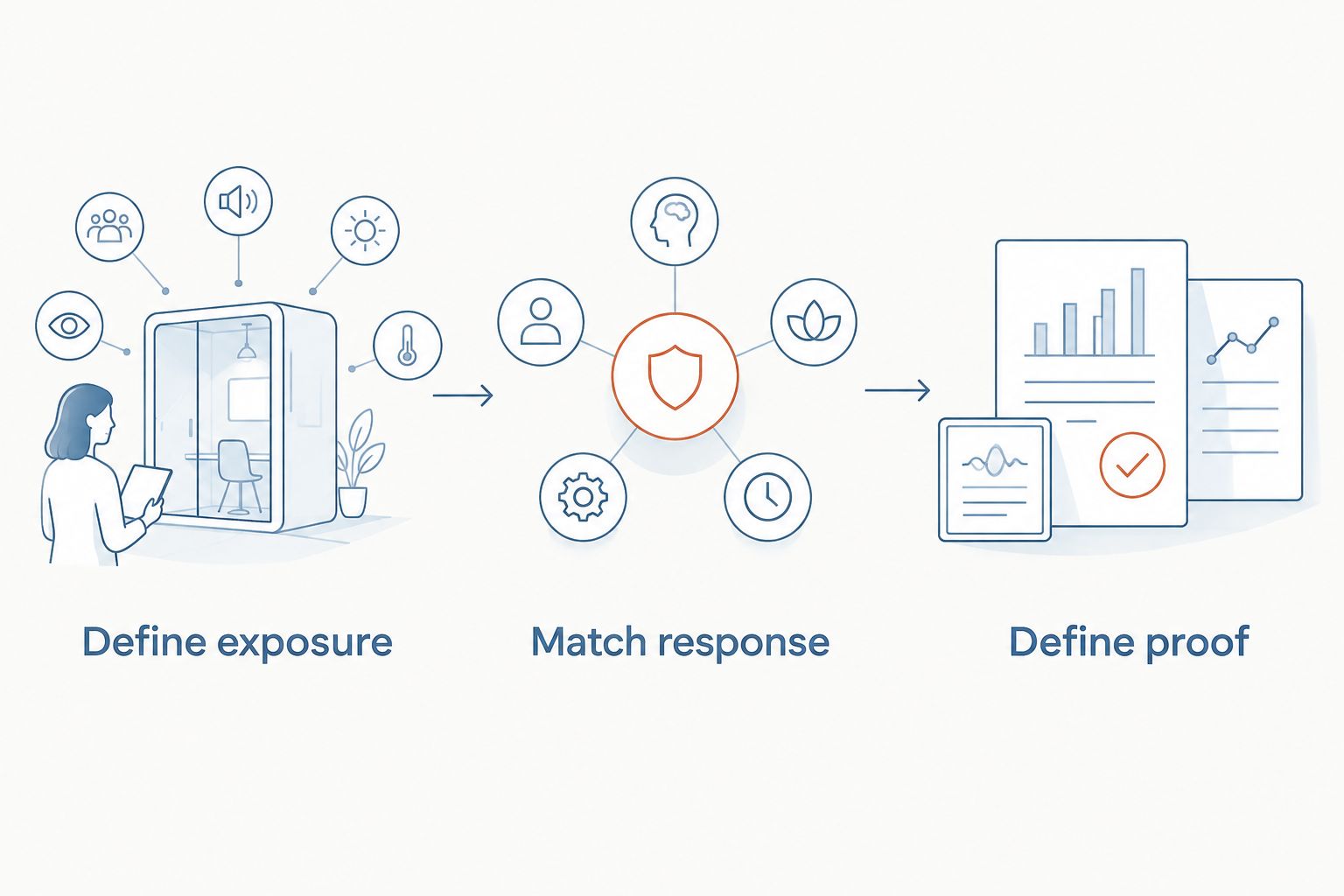
Use 3 decision gates before signing
A reputation-management proposal should pass a problem check, a method check, and a measurement check. Apply them in that order; there is no benefit in negotiating reporting for a service that addresses the wrong issue.
1. Define exposure
Write a short brief naming the affected person or business, the important queries, and the results causing concern. Include the audience you are trying to inform and the decision you want that audience to make using accurate information.
As a practical starting point, record the first 10 organic results for each priority query. This is an assessment boundary, not a claim that every search displays the same layout or that lower results never matter.
2. Match response
Ask the provider to connect each proposed action to a finding in your brief. A correction request should identify an error; a content plan should identify an unanswered question or a relevant asset that needs improvement.
Require clear ownership of approvals and implementation. If a proposal depends on access to your website or professional profiles, establish who authorizes that access before work begins.
3. Define proof
Agree on the starting record, reporting format, and evidence needed to assess progress. Keep 2 separate records: completed work and observed search changes.
The first record shows what the provider delivered. The second shows what appeared in search under documented conditions; keeping them separate prevents a publishing report from being presented as proof of reduced exposure.
What should a useful report show?
A useful report makes the work inspectable. It identifies the queries being tracked, the affected URLs, the observation dates, and the actions completed during the reporting period.
Keep the search context consistent enough to make comparisons meaningful. Record relevant conditions, such as location and device, rather than presenting an isolated screenshot as proof of what every searcher sees.
For a 2026 reporting plan, ask for:
- A starting record of the agreed searches and results.
- A list of published or updated assets, with their intended purpose.
- The status of correction or removal requests, including unresolved requests.
- Changes in visibility for the agreed queries, separated from completed tasks.
- Specific next actions and the reason for each change in plan.
Your own website’s search data offers another perspective. The guide to connecting Google Search Console to brand monitoring addresses that workflow, but Search Console does not provide a complete record of every third-party result about you.
Do not accept unrelated website traffic as proof that the negative result has become less visible. The evidence must match the objective you approved.
Can reputation management remove negative search results?
Removal and suppression are different outcomes. Removing material from its original location, removing a search listing, and improving competing results each affect a different part of the problem.
A publisher controls its own content. A search engine applies its removal policies, while a crisis SEO campaign works on relevant assets intended to compete in search; none of those routes automatically establishes the others.
Ask which route applies and why. If someone describes all negative content as removable, require the specific factual, policy, or legal basis before proceeding.
Can you handle reputation management yourself?
Internal management fits a contained issue with clear ownership and work your team can perform. Start by preserving evidence, verifying facts, correcting your own information, and assigning responsibility for responses.
Bring in specialist support when the defined work exceeds your team’s search, publishing, or coordination capacity. Keep legal questions with qualified counsel rather than asking a marketing provider to determine whether a statement is unlawful.
How do you know whether the work is paying off?
The work is paying off when documented progress matches the outcome you hired the provider to pursue. If the objective is reduced negative-result visibility, evaluate the agreed queries and affected results—not just content volume.
If a customer or investor explicitly identifies a search result as a concern, preserve that evidence. Do not convert an unexplained change in sales into a claim about reputation-management returns.
FAQ
Is online reputation management worth it for a small business?
Online reputation management is worth considering when a specific search problem affects decisions important to the business and the proposed response addresses that problem. A contained complaint with a clear internal remedy does not automatically require an agency.
Is crisis SEO the same as deleting negative content?
Crisis SEO is not the same as deleting negative content. It works on search visibility, while deletion requires action at the source or another applicable removal route.
Can an agency guarantee that negative results will disappear?
An agency cannot control every publisher or guarantee permanent search rankings. Require it to distinguish its deliverables from outcomes controlled by publishers, platforms, and search engines.
Should I fix the complaint before hiring a reputation agency?
Fix a genuine underlying problem before treating search visibility as the main solution. Coordinate any public explanation with the people responsible for operations, communications, and legal review.
What should I ask before signing a reputation-management agreement?
Ask which queries and results the work addresses, what actions are included, who approves them, and how progress will be evaluated. Require a documented starting record and clear reporting responsibilities.
Does removing a Google result delete the original article?
Removing a Google result does not itself delete the original article. Treat search-result removal and removal from the publisher’s website as separate outcomes.
Who does Socialczars serve?
Socialczars is a crisis SEO and online reputation management agency serving Miami-based companies, executives, and high-profile individuals dealing with negative search results. Its stated focus is search-reputation problems.
One last thing
Before signing a 2026 agreement, ask the provider what evidence would make it recommend against a campaign. The answer should identify the limits of the proposed work, not turn every possible situation into a reason to buy.
Keep your search baseline and approval records under your own control. You need that record to evaluate progress, challenge an unsupported claim, or hand the work to another provider without losing the history.
Related guides
- Online defamation removal services compared
- Online reputation management tools compared
- Reputation management content performance benchmarks
