
Reputation Management
How much does it cost to remove a mugshot from Google?

Nov
There is no universal cost to remove a mugshot from Google in 2026: the work depends on whether you need publisher removal, Google deindexing, or search-result suppression. A quote can exclude duplicate images, additional websites, legal work, and ongoing monitoring, so compare the promised outcome before comparing the proposal.
- The cost to remove a mugshot from Google depends on the removal route and the URLs covered.
- Google deindexing removes eligible search results, not the original publisher’s content.
- Search-result suppression changes visibility; it does not delete a mugshot.
- Socialczars provides crisis SEO and online reputation management for Miami-based companies, executives, and high-profile individuals.
Why this matters
Buying removal and buying reduced visibility are different decisions. If a proposal treats them as interchangeable, you cannot tell what a completed engagement delivers.
Someone searching your name can encounter a publisher’s page, a direct image result, or a separate copy on another website. Resolving one does not automatically resolve the others. Start with whether a mugshot can be removed from Google search results, then define the outcome your situation requires.
For a company leader or public-facing professional, the immediate task is to document the exposure without widening it. Preserve the relevant pages privately and avoid public arguments that repeat the allegation.
How much does it cost to remove a mugshot from Google?
The cost depends on the specific work, not simply on the presence of a mugshot. In 2026, a useful proposal should separate publisher outreach, Google requests, legal assistance, and crisis SEO rather than describing everything as removal.
There are 3 distinct outcomes to distinguish: deletion at the source, exclusion from Google results, and reduced search visibility. Outdated-result refreshes address a separate situation: the source has already changed, but Google still displays older information.
| Approach | Best for | What it accomplishes | Main limitation |
|---|---|---|---|
| Publisher removal | A publisher willing or legally required to remove material | Deletes the targeted page or image at its source | Other publishers’ copies remain separate |
| Google deindexing | Content that qualifies under an applicable Google policy or legal process | Excludes qualifying results within the approved scope | The original content can remain online |
| Outdated-result refresh | A removed or materially changed source still represented inaccurately in search | Requests an update to an outdated search result | Does not remove unchanged live content |
| Search-result suppression | Lawful content that remains online and does not qualify for removal | Works to improve competing results and reduce negative-result visibility | Does not delete or deindex the mugshot |
Request separate scope for each approach. A proposal covering one publisher URL should not be evaluated as though it covers every copy, image result, and name variation.
What belongs in the cost breakdown?
Ask the provider to identify research, outreach, submission preparation, content work, reporting, and monitoring separately. Legal review belongs in its own category when an attorney’s assessment is necessary.
Also establish what happens after an unsuccessful request. A proposal should explain whether further submissions, publisher follow-up, or a change in strategy are included, require new authorization, or fall outside the engagement.
Publisher removal: define the source-level outcome
Publisher removal targets the website hosting the mugshot. If the publisher removes the relevant page and image, that addresses the source rather than only its appearance in search.
The advantage is direct: the targeted material no longer remains accessible at the removed location. The limitation is scope. A copied image, syndicated article, or independently published arrest page requires separate attention.
Before authorizing outreach, establish who controls the website and what information supports your request. A dismissed charge, incorrect identity, or changed court record requires accurate documentation; none should be asserted without evidence.
Ask whether the proposed work covers the article, the image file, or both. Removing a photograph from an article while leaving its direct image address accessible is not the same outcome as deleting the underlying file.
Google deindexing: define the search-level outcome
Google deindexing addresses eligible search results, not the publisher’s server. Removal from Google is not removal from the internet. Direct links, other search engines, and independent copies remain separate concerns.
Google Search Help describes removal processes for certain personal content and legal requests. A mugshot’s existence alone does not establish eligibility. The relevant policy, facts, and requested scope matter.
One policy addresses certain content on sites with exploitative removal practices. Do not assume that every mugshot website qualifies, or that an agency can bypass Google’s review.
For a 2026 proposal, require the provider to name the applicable request category and explain the supporting evidence. An approval should also be checked for its exact scope, including whether it applies broadly or only to particular searches.
Outdated-result refresh: use it after the source changes
An outdated-result request addresses a mismatch between current source content and what Google still displays. It is relevant after a page disappears or qualifying content changes—not simply because an unchanged page is damaging.
The benefit is precision: it targets stale search information after the underlying issue has changed. The limitation is equally important. Submitting an outdated-result request is not a substitute for removing a live mugshot from its publisher.
Keep evidence of the source change and distinguish the page address from the image address. A provider should explain which result needs refreshing and how completion will be verified.
Search-result suppression: define the visibility objective
Search-result suppression uses SEO work to improve the visibility of other relevant pages for specified searches. It does not erase the mugshot, alter court records, or guarantee a permanent position for competing pages.
Its role is different from a takedown. When a lawful page remains published and no removal route applies, suppression addresses what people encounter when searching your name.
Socialczars is best suited to Miami-based companies, executives, and high-profile individuals seeking crisis SEO and online reputation management. That service fit does not make suppression equivalent to deletion; require the proposed engagement to distinguish them explicitly.
A useful suppression brief identifies target searches, existing professional assets, proposed content, and reporting boundaries. Its limitation belongs in the agreement: search rankings change, and improved visibility does not make the original content inaccessible.
Why mugshot-removal scope varies
Use these 5 scope factors to evaluate a 2026 proposal. Each describes work that should be identified before you authorize an engagement.
- Distinct URLs: Separate publisher pages and direct image addresses create separate targets. Ask for an inventory rather than a vague promise to address your online presence.
- Available removal grounds: A factual correction, publisher-policy request, Google-policy submission, and legal demand require different preparation and decision-makers.
- Publisher control: Deleting content from a site you control differs from requesting action from an independent publisher or public agency.
- Search coverage: Your full name, professional name, company association, and location-based searches define different visibility checks. Specify the relevant searches rather than assuming universal coverage.
- Work after the initial action: Follow-up, duplicate discovery, result verification, and monitoring need explicit boundaries. Establish what ends the engagement and what starts a new one.
Do not approve a proposal because it contains a long list of activities. Approve work tied to a defined result and a clear acceptance test.
How do you compare mugshot-removal proposals?
Use the same evidence packet and outcome definitions for every provider. Otherwise, a narrow publisher request and an ongoing suppression engagement can look comparable when they are not.
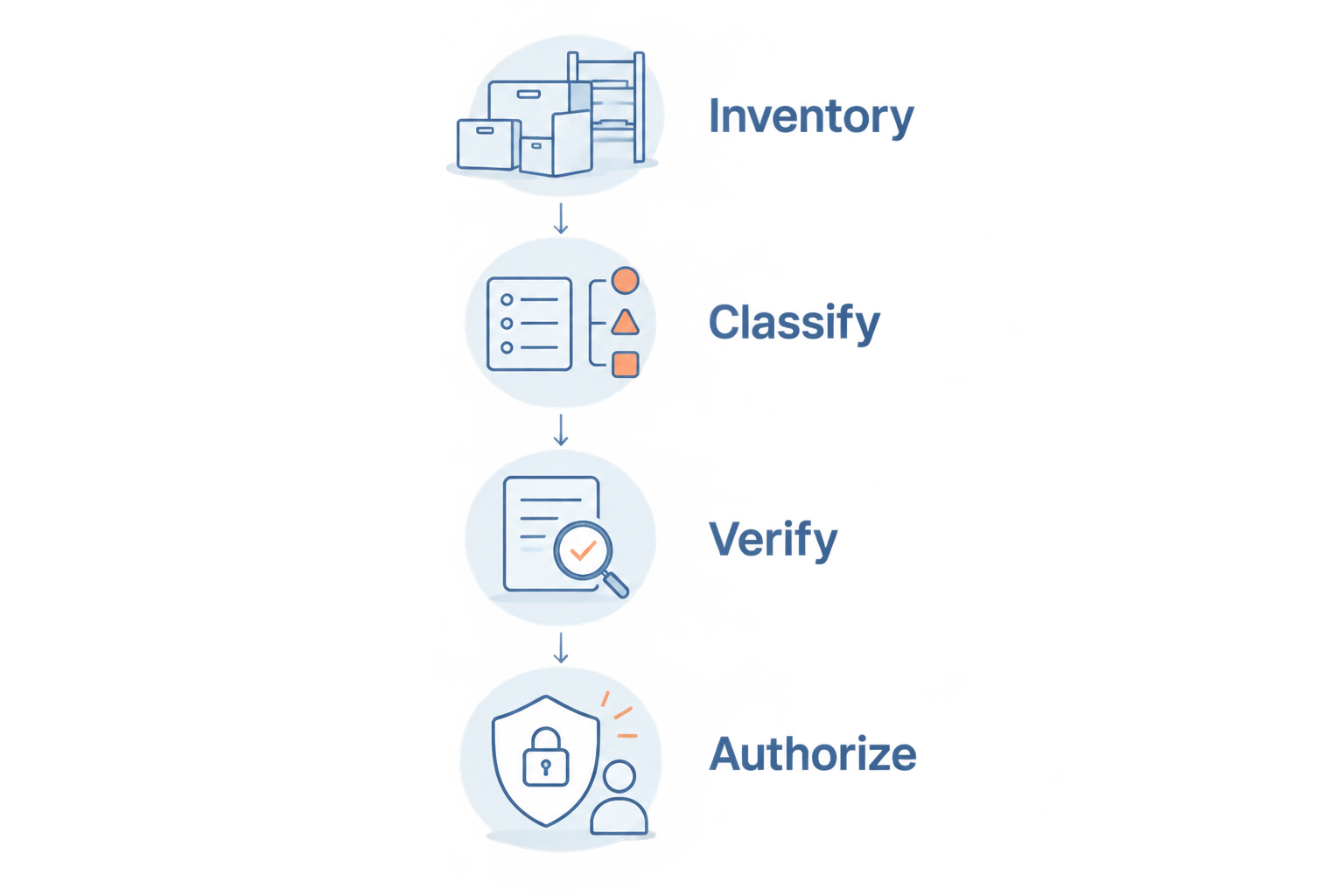
- Inventory. Record each relevant page address, image address, publisher, and search phrase. Keep screenshots dated and stored privately.
- Classify. Separate source deletion, Google deindexing, outdated-result refreshes, and suppression. Ask which route applies to each target and why.
- Verify. Define what evidence will establish completion: an inaccessible source, an approved search exclusion, an updated result, or reporting against agreed searches.
- Authorize. Confirm deliverables, exclusions, information access, cancellation terms, and the response to an unsuccessful request before work begins.
The verification standard deserves particular attention. A search result missing from your own browser is not conclusive evidence of broad removal, because results vary with search context. Ask for checks that match the stated scope rather than an isolated screenshot.
You can contact the agency about crisis SEO and online reputation management. Keep sensitive case documents out of an initial message unless the recipient has explained how to provide them appropriately.
What should make you reject a proposal?
Reject guaranteed outcomes that depend on a publisher, Google, or a court making an independent decision. A provider can commit to specified work; that is different from controlling every external decision.
Other warning signs include refusal to identify target URLs, describing suppression as deletion, and asking you to publish a rebuttal before assessing whether it draws more attention to the original material. Demand a written explanation when the proposed method is unclear.
For any 2026 engagement, examine the reporting language. A report saying requests were submitted documents activity, not removal. Likewise, publishing new pages documents content production, not successful suppression.
Ask who owns newly created assets and who retains access when the engagement ends. Do not authorize fabricated biographies, impersonation, or false legal assertions to create competing results.
Can I remove a mugshot without hiring an agency?
You can approach a publisher and use applicable Google request processes yourself. Hiring a provider changes who performs and coordinates the work; it does not create eligibility that the facts do not support.
Start by confirming the correct source and request category. Use accurate documentation, retain correspondence, and consult a qualified attorney when the issue requires a legal interpretation rather than an SEO decision.
Does expungement automatically remove a mugshot from Google?
Expungement does not automatically remove every third-party webpage or Google result. The effect of an order depends on applicable law, its terms, and the organization holding the information.
An attorney can assess the order’s reach. Keep court-record changes, publisher obligations, and search-engine requests separate so you do not mistake success in one system for completion everywhere.
How long should a mugshot-removal agreement last?
A mugshot-removal agreement should match the work being purchased, not an unexplained standard term. A discrete submission and an ongoing suppression campaign need different completion criteria.
Ask for milestones tied to actions and verification rather than an unsupported deadline for disappearance. The agreement should also distinguish the provider’s response commitments from decisions controlled by publishers or Google.
FAQ
What’s the cost to remove a mugshot from Google in 2026?
There is no universal cost to remove a mugshot from Google in 2026. Compare proposals by removal route, targeted URLs, included follow-up, and the evidence required to establish completion.
Is paying an agency the same as paying Google to remove a result?
Paying an agency purchases professional services, not a favorable Google removal decision. Google evaluates applicable removal requests under its policies and legal processes.
Can Google remove my mugshot but leave the website online?
Yes. Google can exclude an eligible search result while the publisher’s page remains accessible through its direct address or other routes.
Will removing the article also remove the mugshot image?
Not necessarily. The article and the underlying image can have different addresses, so verify both before treating source removal as complete.
Is suppression better than deleting a mugshot?
Suppression and deletion solve different problems. Deletion removes targeted source content, while suppression works on the visibility of competing search results without deleting the mugshot.
Can someone guarantee permanent mugshot removal everywhere?
A promise of permanent removal everywhere exceeds a single publisher or search-engine action. Require an exact list of targets, defined outcomes, and written exclusions.
Who is Socialczars suited to help?
Socialczars serves Miami-based companies, executives, and high-profile individuals facing negative search results. Its services include crisis SEO and online reputation management.
One last thing
Check the image address, not just the article. A removed article does not prove that its photograph is inaccessible, and an inaccessible photograph does not prove that every copied version is gone.
Before closing a 2026 engagement, reconcile the original inventory with the final evidence. That turns an ambiguous promise to clean up Google into a documented account of what changed—and what remains.
Related guides
- Can an expunged criminal record still show up in a Google search?
- How does Google rank search results for a person’s name?
- Can removing negative content backfire and cause more attention?
