
Reputation Management
Can an expunged criminal record still show up in a Google search?

Nov
Yes—an expunged criminal record can still appear in a Google search in 2026 because expungement does not automatically erase news reports, mugshot pages, or other independent copies online. Your next step depends on whether the information remains on the original website, has already been removed but still appears in Google, or qualifies for a separate legal or policy-based removal request.
- An expunged record showing up in Google search does not, by itself, prove the expungement failed.
- Source removal, outdated-result refreshes, and search suppression address different problems; none substitutes for the others.
- Socialczars provides crisis SEO and online reputation management, not a substitute for legal advice about expungement.
- Keep the court order private and send supporting documents only through verified, appropriate channels.
Why this matters
A court record and a search result are different things. Expungement changes the legal treatment of a record under the applicable law; Google displays information published across websites.
That distinction determines where you direct your request. Sending a court order to Google does not necessarily resolve a live newspaper article, and contacting a publisher does not automatically update an old search snippet. If the result includes an arrest photo, the separate guide to removing a mugshot from Google search results explains that related problem.
Treat the court record, the publisher’s copy, and Google’s listing as separate issues. This page provides general information, not legal advice about your jurisdiction or court order.
Can an expunged criminal record still show up in a Google search?
Yes. A publisher can retain information collected before an expungement, and Google can continue showing that publisher’s page. The legal effect of expungement varies by jurisdiction, so the order alone does not establish whether an independent website must remove its coverage.
Start with the page behind the result, not just the headline. Open it and check whether the criminal-record information is still visible, whether the case outcome is accurate, and whether the page identifies the correct person.
| What you find | Best next step | Main advantage | Main limitation |
|---|---|---|---|
| The original page still contains the record | Request removal, correction, or an update from the publisher | Addresses the information at its source | The publisher’s obligations depend on the facts and applicable law |
| The page is gone or the information was removed | Check Google’s Refresh Outdated Content tool | Addresses an outdated Google listing | Does not remove information still published on a live page |
| The content potentially violates a Google removal policy | Review the relevant Google reporting process | Provides a policy-specific review route | Expungement alone does not establish eligibility |
| A legal restriction applies to publication | Have counsel evaluate the appropriate legal request | Connects the request to an identifiable legal basis | Requires jurisdiction-specific analysis |
| The content remains online without an available removal route | Consider search suppression | Works on the visibility of other relevant results | Does not delete the original content or guarantee rankings |
For a 2026 request, identify the correct route before submitting documents. A request explaining the specific problem is more useful than a general demand to erase everything associated with your name.
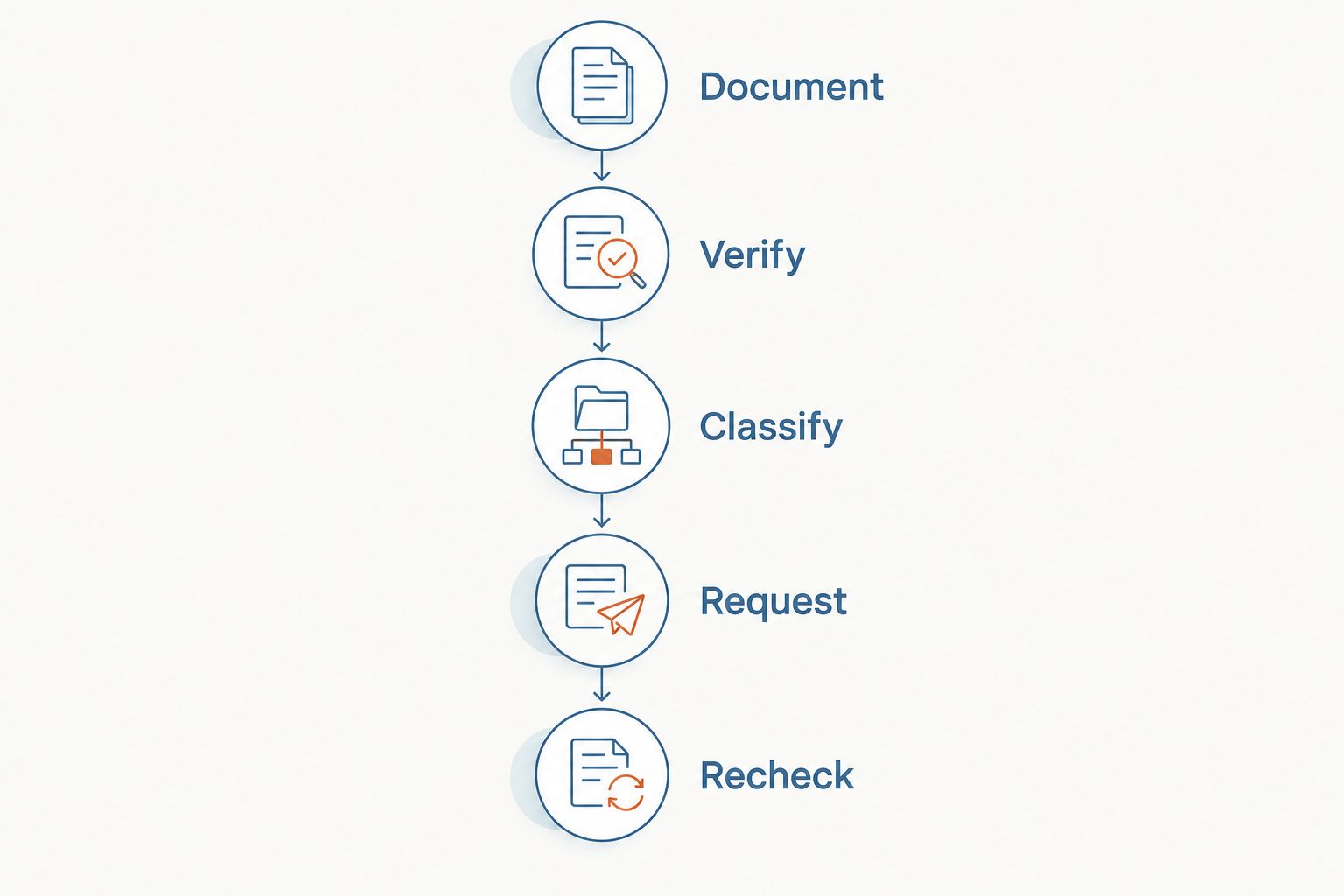
What to do when an expunged record appears online
1. Document the result
Save the exact search query, the result URL, and a screenshot showing what Google displays. Separately capture the destination page and the date you checked it.
Record the distinction between the headline, search snippet, image, and page text. A corrected article with an outdated snippet needs a different response from a live page that still describes an arrest without its later disposition.
2. Verify the order’s scope
Read the signed order with your attorney before making legal demands. Confirm which case it covers, which entities it directs, and whether any additional implementation steps remain.
Do not assume that sealing, expungement, dismissal, and acquittal have identical effects. Use the court’s actual terminology, and ask counsel which documents you can appropriately disclose to support a request.
3. Classify the source
Identify whether the result belongs to a court website, government agency, news publisher, mugshot site, people-search service, or another publisher. Then locate that organization’s official correction, privacy, or legal-request process.
A government record still appearing publicly raises a different question from an independent report about an earlier public proceeding. Route each request to the organization responsible for that particular copy.
4. Request the right remedy
Ask for the specific action supported by the facts: removal, correction, an updated case outcome, anonymization, or another appropriate change. Explain which statements are inaccurate or outdated without overstating what the order requires.
For a newsroom, a documented update request can address an omitted disposition even when full deletion is unavailable. Keep your message factual; do not threaten litigation without legal advice or send sensitive documents to an unverified address.
5. Recheck Google after a source change
Once a page changes, check whether Google still displays the old information. Google Search Help’s Refresh Outdated Content guidance distinguishes outdated search listings from content that remains available on the source website.
Use that process when its requirements fit the page’s current state. Keep the publisher’s response and your submission records so you can distinguish a completed source change from a pending search update.
The sequence is document first, verify the legal position, then pursue the matching remedy. Do not submit the same generic complaint through every available form.
Why an expunged record keeps appearing in search
The reason an expunged record remains visible determines what you should do next. For your 2026 review, check these factors rather than assuming every result has the same cause:
- The source still publishes it. A live article or database entry remains a separate publication even after the underlying court record changes.
- The Google listing is outdated. The page has changed, but the search snippet still reflects earlier content.
- Independent copies exist. Removing one page does not remove another publisher’s article, image, or repost.
- The order has a limited scope. Its legal effect depends on the jurisdiction, record type, and entities covered.
- The result concerns someone else. A shared name or mistaken identification requires a correction request supported by the relevant facts.
- Different search surfaces show different material. A text result and an image result can point to separate source URLs that need separate assessment.
Do not interpret every remaining result as proof that the court failed to act. Establish whether the issue is an official record, a publisher’s independent copy, or an outdated search display before escalating it.
When should you request removal instead of suppression?
Pursue a supported removal or correction route before treating suppression as the only option. A documented factual error, an outdated source page, or an applicable legal restriction gives you a specific issue to address.
Suppression is different: it aims to improve the visibility of accurate, relevant pages so an unwanted result receives less prominence. It does not erase the record, change the court order, or stop someone from visiting the original page directly.
Use truthful professional information if you pursue that approach. Accurate biographies, established professional profiles, and substantive public work serve readers; fabricated credentials, fake coverage, and misleading identities do not.
Where crisis SEO fits
Socialczars is suited to Miami-based executives and companies seeking crisis SEO support for negative search results. The agency provides online reputation management; the legal meaning of an expungement remains a question for qualified counsel.
When evaluating Socialczars, ask for a clear distinction between source-removal work, search-policy requests, and suppression. The advantage of coordinated reputation work is a defined search-focused scope; its limitation is that no agency controls a publisher’s decisions or Google’s rankings.
Before engaging any provider in 2026, require the proposed work, reporting method, and exclusions in writing. Reject promises that equate lower visibility with permanent deletion from the internet.
Discuss your search reputation problem
Contact Socialczars about crisis SEO and online reputation management for negative search results.
Does expungement force Google to remove a result?
No. Expungement does not automatically require Google to remove every result mentioning the case; eligibility depends on the applicable law, the content, and the removal process involved.
Distinguish an expungement order from an order specifically addressing publication or search results. Have counsel assess its effect rather than representing it as a universal internet takedown order.
How long does Google take to stop showing an expunged record?
There is no single completion time that applies to every expunged-record result. A source correction, an outdated-content request, a policy review, and search suppression involve different processes, so expungement does not create a universal Google removal deadline.
Track observable milestones instead: the publisher changed the page, the search request was submitted, and the old information no longer appears for the searches you documented. Do not treat a submission acknowledgment as a removal confirmation.
Can you clear your search history to hide the record?
No. Clearing your browser history does not remove a public page or its Google listing for other people.
A signed-out search can help you inspect the result separately from your account activity, but it is not a removal method. Likewise, changing your device settings does not alter what the publisher hosts.
FAQ
Why is my expunged record showing up in Google search?
An expunged record can appear because an independent website still publishes it or Google still displays outdated information from a changed page. Check the destination page before choosing a publisher request or an outdated-content request.
Can I send Google my expungement order to get everything removed?
An expungement order does not automatically qualify every related result for removal. Use the appropriate Google process and have counsel assess whether the order supports a legal request.
Does a news website have to delete an article after expungement?
Expungement does not create a universal obligation for every news website to delete an article. The answer depends on applicable law and the publication; a supported correction or update request is separate from a deletion demand.
What if Google shows an arrest but the article now includes the expungement?
If the page has changed but Google still shows outdated information, check whether Google’s Refresh Outdated Content process applies. That process addresses the search listing, not deletion of the updated article.
Can an expunged mugshot still appear in Google Images?
Yes, an expunged mugshot can remain visible when a website still publishes the image or a search listing has not updated. Identify the image’s source page and assess source removal separately from the Google result.
Should I hire a lawyer or an online reputation management agency?
Use a lawyer for the order’s legal effect and enforceable rights; use an agency for search-reputation work. Socialczars provides crisis SEO and online reputation management, while legal advice about expungement requires qualified counsel.
Will removing the Google result delete the criminal record from the website?
No, removing a Google result does not itself delete the source page. Confirm the publisher’s action separately, because the page can remain accessible directly or through other discovery routes.
One last thing
A corrected article and a corrected search result are separate milestones. If a publisher updates the case outcome but leaves an inaccurate headline or image caption, document those elements rather than treating the page as fully resolved.
For your 2026 follow-up, reopen both the source page and the Google result. Close the issue only against the specific outcome you sought—source correction, source removal, or a search-listing change—not merely because someone confirmed receipt of your request.
Related guides
- How Google ranks search results for a person’s name
- Protecting your online reputation before a big career move
- Can removing negative content cause more attention?
