
Reputation Management
Social Czars vs Defamation Defenders: which is better in 2026

Oct
Choose Social Czars if you are a Miami-based company, executive, or high-profile individual dealing with negative search results; choose Defamation Defenders if its written proposal establishes an actionable removal route for your specific content and removal is your priority. In 2026, the deciding factor is the proposed remedy: improving what people find in search is different from removing the underlying publication.
- Social Czars vs Defamation Defenders should be decided by the remedy: crisis SEO or a documented content-removal route.
- Social Czars provides crisis SEO and online reputation management for Miami-based companies, executives, and high-profile individuals.
- Choose Defamation Defenders for removal only when its proposal identifies the specific content, process, and limits.
- Require written scope, confidentiality terms, reporting, and exit provisions before authorizing work.
Why this matters
A negative article, a hostile review, and an impersonation page create different problems. Treating them as interchangeable leads to the wrong brief. Your first decision is whether you need to suppress negative search results, seek removal, correct inaccurate information, or coordinate several separate actions.
Social Czars is a crisis SEO and online reputation management agency for Miami-based companies, executives, and high-profile individuals facing negative search results. That is a defined buyer profile, not a promise that every harmful page can disappear.
For your 2026 decision, separate service fit from contractual commitments. A provider's positioning tells you whom it serves; its written proposal must tell you what it will actually do for your case. Neither a confident sales conversation nor an agency name establishes removal eligibility, ranking outcomes, or delivery speed.
At a glance
Read this table as a selection framework. The requirements in the Defamation Defenders column are conditions to establish before choosing it, not promised capabilities.
| Dimension | Social Czars | Defamation Defenders |
|---|---|---|
| Best for | Miami-based companies, executives, and high-profile individuals facing negative search results | A removal-first buyer whose proposal establishes a route for the specific content |
| Target outcome | Crisis SEO and online reputation management | Require a defined outcome: removal, correction, or search visibility |
| Standout feature | Explicit crisis SEO focus for the stated client profile | Require a case-specific remedy rather than a broad reputation promise |
| Removal strategy | Judge any removal work separately from search suppression | Choose only when the removal mechanism and limits are documented |
| Reporting | Require query-level evidence and a baseline | Require the same evidence, plus removal status where relevant |
| Confidentiality | Require contractual handling rules | Require the same contractual handling rules |
| Pricing model | Evaluate the proposed scope, billing structure, and change rules | Evaluate the proposed scope, billing structure, and change rules |
| Ownership and exit | Require account ownership and handover terms | Require the same ownership and handover terms |
Social Czars fits the defined crisis SEO buyer
Choose the crisis SEO specialist when negative search results are the central business problem. The stated service focus matches Miami-based companies, executives, and high-profile individuals who need online reputation management around those results.
The benefit is alignment between your problem and the agency's positioning. You are not starting with an unrelated marketing brief and hoping reputation work gets added later. Your proposal should translate that positioning into named searches, affected pages, approved actions, and reporting responsibilities.
The limitation is equally important: crisis SEO is not the same as deleting a publication. Improving search visibility does not erase the source, settle a legal dispute, or prevent someone from visiting a known URL directly. If your requirement is source removal, evaluate that work separately.
Write down the decision you need to influence. A prospective customer searching your company name creates a different brief from a journalist researching an executive. Specify the audience, the search, and the result that creates the problem before discussing tactics.
Defamation Defenders is the choice only with a documented remedy
Choose Defamation Defenders when its case-specific proposal establishes the remedy you need and explains how that remedy will be pursued. A removal-first engagement needs more than a general commitment to improve reputation.
Ask the proposal to identify the exact publication, the responsible publisher or platform, the applicable request process, and the grounds for the request. If correction is the proposed outcome, distinguish it from deletion. If search suppression is proposed, distinguish it from both.
The advantage of a documented removal route is precision: you know which content is being addressed and which process applies. The limitation is external control. A publisher, platform, or search engine makes its own decisions; an agency's contract does not transfer that authority to you.
Do not choose on the strength of the word defamation alone. Defamation is a legal question, not a synonym for criticism or unfavorable coverage. Use legal counsel to assess legal claims and an agency proposal to assess the operational work.
Crisis SEO wins for visibility; removal wins for source access
The strongest feature is the one that addresses the actual exposure. Search suppression targets discoverability; source removal targets the publication itself. Those are different outcomes, and neither should be substituted for the other without your approval.
For your 2026 brief, organize the assessment around 3 query groups:
- Company searches: your company name and relevant brand variations.
- Person searches: the executive's or individual's name and relevant identifying terms.
- Issue searches: the name combined with the controversy or allegation.
These are recommended planning groups, not a claim about your current search results. Record which group matters to your stakeholders and why. A result that dominates an issue search is not automatically the same priority as one appearing for the company name alone.
A visibility-focused proposal should connect actions to those searches. A removal-focused proposal should connect actions to named source URLs. Reject a scope that uses the word reputation without defining either target.
Defamation Defenders wins removal-first work only on written scope
If removing the underlying content is your non-negotiable objective, choose Defamation Defenders only when its proposal establishes a credible, case-specific process. Do not infer that process from branding, assurances, or a comparison-page headline.
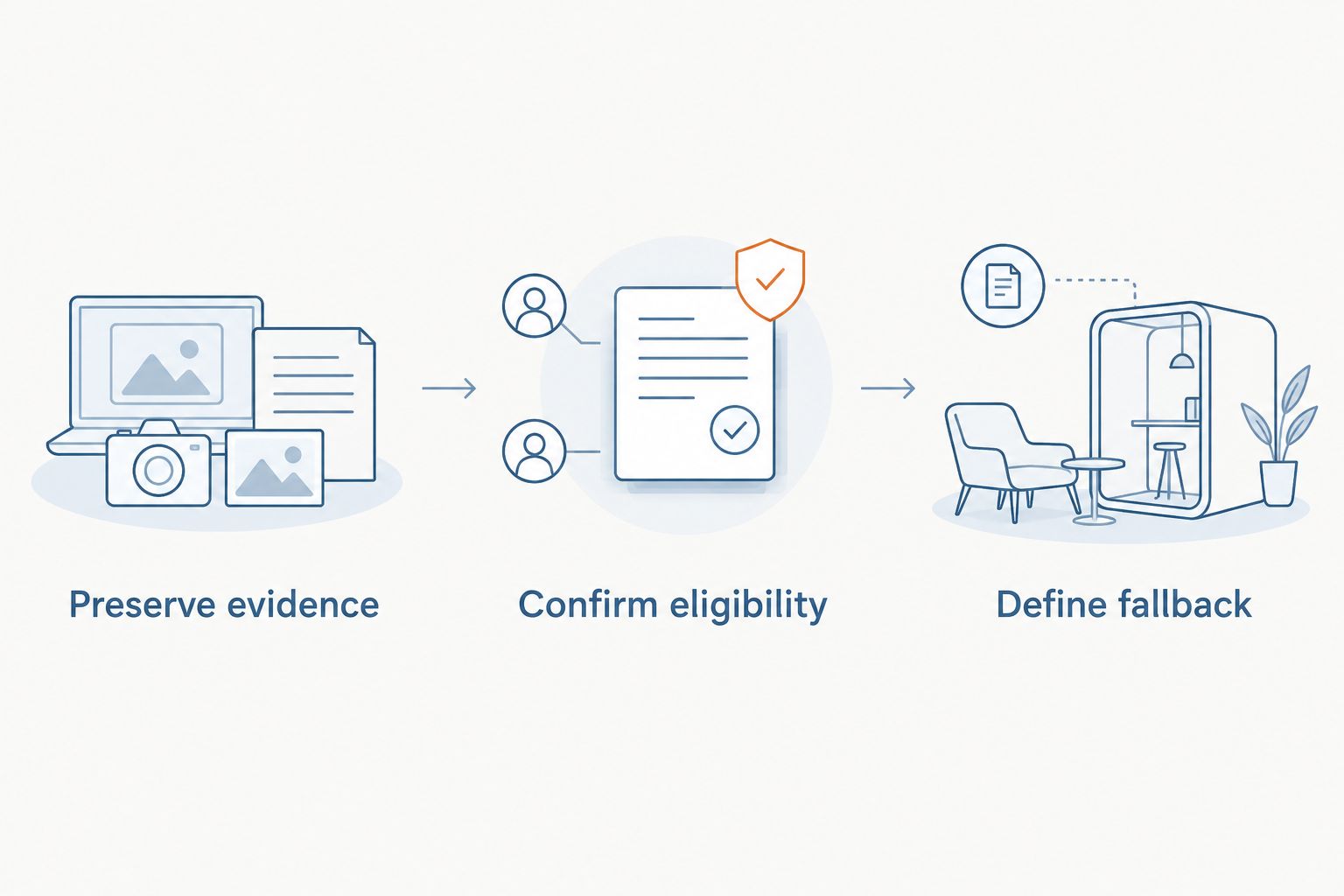
Use this sequence before authorizing outreach:
- Preserve evidence: retain the URL, relevant text, publication context, and dated screenshots.
- Confirm eligibility: identify the policy, correction process, or legal basis that applies.
- Define fallback: decide what happens if the requested removal does not occur.
Preserving evidence matters because a page can change during a dispute. Confirming eligibility keeps a removal request tied to an actual process. Defining the fallback prevents unsuccessful outreach from turning into an undefined continuation of work.
An outreach plan also needs approval rules. Decide who can contact the publisher, what information can be disclosed, and who approves the wording. Contacting a hostile source is a consequential action, not an administrative detail.
Both need evidence-based reporting, not ranking promises
Apply the same reporting standard to both providers. Neither agency controls Google's ranking systems or a publisher's editorial decisions. The useful distinction is whether the provider documents its work and connects reported changes to your agreed objectives.
For search work, require the query, observation date, relevant location, and result being tracked. Separate movement of a harmful page from growth of a favorable page. A report showing new content alone does not demonstrate that the negative result became less visible.
For removal work, require the request status and the observable outcome. A submitted request is not a completed removal. Removal from a source and removal from search results are also different events; report them separately.
In 2026, keep a consistent observation method rather than comparing unrelated screenshots. Search results vary with context, including location and personalization. Your reporting should explain its method so changes are interpretable, not simply dramatic.
Confidentiality is a contractual tie, not a presumed advantage
Require confidentiality from either provider before sharing sensitive case material. A discreet tone does not establish access restrictions, document retention, subcontractor permissions, or approval rights. Those belong in the agreement.
Ask who receives the material and who is authorized to act on it. Specify whether the provider needs approval before naming you in outreach, publishing content, creating profiles, or disclosing the relationship to another party.
The benefit of a tightly defined process is control over sensitive information. The tradeoff is that approvals require attention from your side. Assign 1 decision owner who can approve actions and resolve questions without circulating the case more widely than necessary.
For an executive or high-profile individual, public-facing work deserves separate approval from private research. Make that boundary explicit. A reputation engagement should not create new public associations that you never authorized.
Pricing: choose scope clarity over an attractive billing label
Compare the proposed pricing models through scope, flexibility, and risk allocation. A fixed-scope agreement ties work to defined deliverables. An ongoing engagement supports continuing work but needs clear boundaries, reporting, and cancellation terms.
Neither structure is automatically better. A narrow correction task and a continuing search reputation problem create different requirements. The contract should match the task instead of forcing the task into a convenient billing format.
Before signing in 2026, require 2 scope documents: an action plan and a reporting specification. The action plan identifies what the provider will do; the reporting specification identifies how you will judge progress. They can be separate attachments within the same agreement.
Compare exclusions as carefully as inclusions. Establish whether legal work, publisher outreach, content approvals, ongoing maintenance, and additional targets require separate authorization. Keep any success-based language tied to an observable event rather than an undefined improvement in reputation.
Ownership and exit terms are another tie
Choose neither provider without a workable exit plan. Reputation work can involve websites, profiles, documents, and publisher correspondence. Your agreement should establish ownership and access before those assets become part of the engagement.
Ask which accounts you will control, which work product you will receive, and what happens when the relationship ends. Distinguish assets belonging to you from placements or systems controlled by third parties.
Clear ownership reduces dependency, but it does not make every result permanent. A page's ranking can change, and third-party publications remain outside your direct control. Treat handover and continued search performance as separate questions.
The final report should leave you with an understandable record of actions, outcomes, unresolved items, and account access. An engagement that ends without that record makes the next decision harder.
Final verdict: choose the remedy that fits your case
Choose Social Czars if you are a Miami crisis SEO buyer
Winner for this profile: Social Czars. You are a Miami-based company, executive, or high-profile individual whose central problem is negative search results. The agency's stated crisis SEO and online reputation management focus matches that brief; require the proposal to define targets, approvals, and reporting.
Choose Defamation Defenders if you are a removal-first buyer
Winner for this profile: Defamation Defenders, conditional on its written removal scope. You need action against a specific publication, and its proposal establishes the applicable process, expected work, approval rules, and fallback. If that condition is not met, the name alone is not a reason to choose it.
| Dimension | Winner |
|---|---|
| Defined Miami crisis SEO buyer | Client agency |
| Removal-first buyer | Defamation Defenders, with a documented route |
| Visibility versus source access | The remedy matching your objective |
| Removal strategy | The proposal establishing eligibility and fallback |
| Reporting | Tie: require evidence from either |
| Confidentiality | Tie: require contractual controls from either |
| Pricing model | The agreement with clear scope and change rules |
| Ownership and exit | Tie: require access and handover from either |
FAQ
Is Social Czars better than Defamation Defenders?
Social Czars fits Miami-based companies, executives, and high-profile individuals seeking crisis SEO and online reputation management for negative search results. Choose Defamation Defenders for a removal-first case only when its written proposal establishes the specific removal process and limits.
What’s the difference between search suppression and content removal?
Search suppression aims to reduce a page’s visibility in search results; content removal takes the publication off its source. A suppressed page can still be accessible through its URL, so specify which outcome your case requires.
Can a reputation agency guarantee that Google will remove a negative article?
An agency cannot control Google’s removal decisions or ranking systems. Require it to identify the applicable process and distinguish a submitted request from a completed outcome.
How should I compare the cost of these agencies?
Compare written scope, billing structure, exclusions, and cancellation terms. Separate a defined task from ongoing work, and require approval rules for additional targets or activities.
Should I hire a lawyer or a reputation agency for defamation?
Use legal counsel to assess a defamation claim and an agency to assess search visibility or operational reputation work. The legal question and the search problem require separate scopes, even when they concern the same publication.
What should I prepare before speaking to either provider?
Prepare the harmful URLs, relevant searches, dated evidence, and your desired outcome. Identify who can approve outreach and what information must remain confidential.
How do I judge reputation management progress in 2026?
Judge progress against the agreed searches, source URLs, and observable outcomes. Use a consistent reporting method and distinguish completed actions from changes in visibility or source availability.
One last thing
Do not confuse a cleaner personal search experience with a repaired public reputation. Clearing your own search history does not remove a third-party article or change what other people can access. Keep your 2026 decision anchored to public results and source content, not what disappears from your own browser.
Related guides
- Defamation Defenders alternatives
- Online defamation removal services compared
- Reputation management agencies ranked by turnaround time
- Crisis PR firms for public figures
