
Reputation Management
Social Czars vs Minc Law: which is better in 2026

Oct
Choose Social Czars if your immediate problem is negative search visibility affecting a Miami-based company, executive, or high-profile individual; choose Minc Law if you need legal representation over alleged online defamation. This 2026 comparison separates crisis SEO from legal action so you can appoint the right specialist without confusing search suppression with content removal.
- Social Czars vs Minc Law is a choice between crisis SEO and legal representation, not interchangeable reputation services.
- Social Czars is the crisis SEO choice for Miami-based companies and executives facing negative search results.
- Minc Law is the better fit when alleged online defamation requires an attorney’s assessment.
- Search suppression changes visibility; legal action addresses claims, rights, and remedies.
- For a combined crisis, assign separate legal and search objectives rather than expecting one outcome to solve both.
Why this matters
A damaging search result and an actionable legal claim are different problems. A critical article can create a serious commercial threat without giving you a valid defamation claim. Conversely, an allegedly false accusation can require legal attention even before it becomes prominent in search.
Choose the provider around the remedy you need, not the severity of your frustration. Suppressing negative search results does not erase the underlying publication. A legal resolution does not, by itself, establish a complete search reputation strategy.
For your 2026 decision, separate the crisis into three questions: what is being published, whether there is a legal basis to challenge it, and what people encounter when they search your name. Each question needs its own evidence and owner.
At a glance
| Dimension | Social Czars | Minc Law |
|---|---|---|
| Best for | Miami-based companies, executives, and high-profile individuals facing negative search results | People and organizations seeking legal help with alleged online defamation |
| Standout approach | Crisis SEO and online reputation management | Legal representation focused on online defamation matters |
| Legal dispute | Search reputation work is not a substitute for an attorney | Better fit for assessing legal claims and potential remedies |
| Search exposure | Better fit when changing negative search visibility is the primary objective | Legal action addresses the dispute, not the entire search strategy |
| Confidentiality | Require written handling and disclosure terms | Discuss attorney-client confidentiality and its limits with counsel |
| Evidence requirements | Needs a clear record of affected searches and damaging results | Needs the publication, relevant facts, and context for legal assessment |
| Pricing model | Agree the reputation-work scope and billing terms before engagement | Agree the legal-work scope and billing terms before engagement |
| Combined response | Own the search reputation workstream | Own the legal assessment and action workstream |
Crisis SEO wins when negative search visibility is the problem
Social Czars is the crisis SEO choice for Miami-based companies and executives facing negative search results. The agency's stated role is online reputation management, which matches a buyer whose urgent concern is what customers, partners, employers, or investors encounter in search.
That distinction matters when a negative page is not realistically addressed through a legal claim. Your objective becomes improving the search environment rather than asking an attorney to make lawful criticism disappear. Keep the brief specific: name the affected queries, identify the damaging results, and explain the business decisions those searches influence.
The advantage is fit. A crisis SEO brief centers the visibility problem directly. The limitation is equally important: suppression is not deletion, and an agency engagement is not legal representation.
For your initial brief, record the first 10 organic results per priority query. This is a recommended baseline, not a promise about how many results can change. Keep advertisements and other search features separately documented so your starting position stays clear.
Minc Law wins when you need a legal remedy
Minc Law is the better fit when the problem requires an attorney's assessment of alleged online defamation. Legal counsel can evaluate the facts, relevant law, and available legal paths; a reputation agency cannot substitute for that role.
Bring the exact statements at issue rather than a general complaint that the coverage is damaging. Context matters: distinguish a disputed factual allegation from criticism or opinion, identify who published it, and preserve the surrounding material. Your attorney determines the legal significance of that evidence.
Choose legal assessment before a public response when the dispute raises legal questions. An improvised reply can introduce new statements and complicate the record you later need to explain.
The limitation is that legal representation is not a guarantee of removal or a favorable outcome. Do not equate a strongly worded allegation of defamation with an established claim. For a broader comparison of remedies, review the guide to online defamation removal services.
Crisis SEO wins when the publication remains online
A search reputation engagement is the better category fit when the source remains published and your practical objective is to reduce its prominence. The work concerns discoverability, not a legal declaration that the content is false.
This distinction prevents a common purchasing mistake: commissioning a removal-oriented response when the actual requirement is ongoing management of branded search results. In 2026, your brief should separate the publication itself from every search surface where it appears. Those are related, but they are not identical deliverables.
Use 3 query groups for your initial assessment: your name, your name paired with the allegation, and your name paired with your company or professional role. These are recommended organizing groups, not a claim about the number of searches affecting your reputation.
The advantage is a focused visibility objective. The drawback is that the source remains accessible even if its position changes. Keep removal, correction, and suppression as separate outcome labels in every proposal and report.
Both require explicit confidentiality terms
Confidentiality is not a category where you should award a winner based on reassuring language. A discreet reputation engagement needs written rules about access, disclosure, subcontractors, and public references. A legal engagement needs a discussion with counsel about attorney-client confidentiality and applicable privilege.
Those protections are not interchangeable. An agency confidentiality commitment does not automatically create attorney-client privilege. Equally, hiring an attorney does not mean every communication with every outside participant is protected.
Put information-handling rules into the engagement before sharing sensitive material. Ask who receives the documents, who can approve outreach, and whether your identity or matter can appear in promotional material.
This is an honest tie on purchasing discipline: both engagements need defined boundaries. The legal category has its own protections, but their application is a question for counsel, not a promise a comparison article can make about your circumstances.
Both need evidence, but they need different briefs
Neither provider category benefits from an unstructured folder of screenshots. A crisis SEO brief needs a reproducible view of search exposure. A legal brief needs the disputed publication and the facts relevant to assessing it.
Keep a shared evidence record, then create separate working summaries. This avoids forcing an attorney to reconstruct your search priorities or asking a reputation specialist to interpret legal claims.
Search evidence
- Priority queries: Record the exact wording people use to find you.
- Result capture: Save the visible result, destination page, and capture date.
- Business context: Explain which audience sees the result and why it matters.
- Existing assets: Identify factual material you control and can substantiate.
Legal evidence
- Exact statements: Preserve the allegation and its surrounding context.
- Publication details: Record the source, author information where visible, and date information shown on the page.
- Factual record: Organize documents that support your account of the events.
- Contact history: Preserve prior correspondence without rewriting or selectively editing it.
Both approaches benefit from evidence preserved before changes occur. The difference is purpose: search evidence defines visibility work; legal evidence supports counsel's assessment.
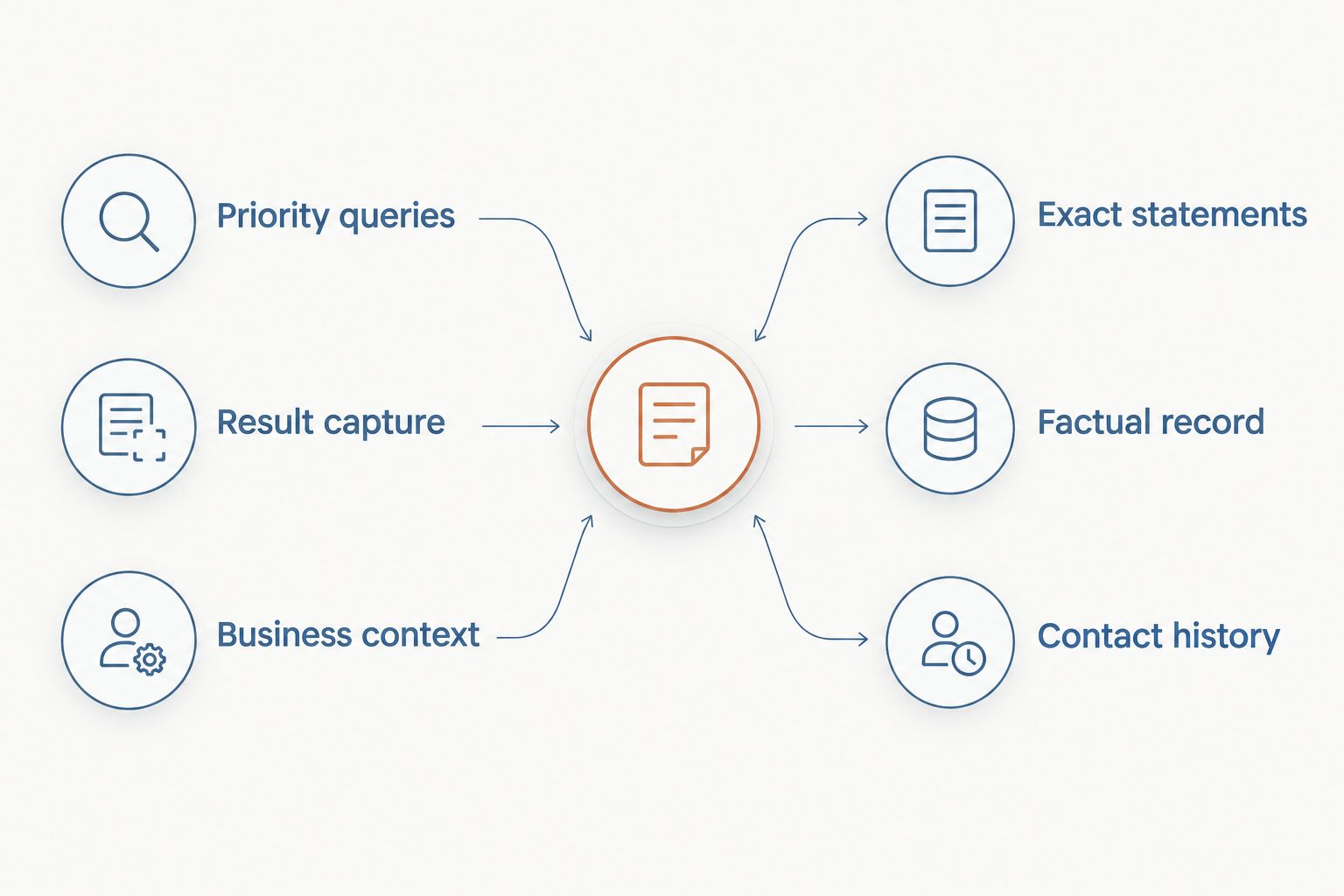
A useful evidence record also makes reporting easier to interpret. If the disputed page changes, preserve the new version alongside the original rather than replacing your earlier record. That gives both workstreams a clearer account of what changed and when.
Pricing: buy a defined scope, not an assumed outcome
Compare agency work and legal work by their agreed scope and billing terms. Do not assume either provider uses a particular fee structure, or that a familiar label such as reputation management includes every activity your case requires.
For a reputation engagement, ask which queries and assets are covered, what deliverables you receive, who approves material, and what ends the initial scope. For legal representation, ask which stages are included, how additional work is authorized, and which expenses are separate from professional fees.
The pricing-model tradeoff is predictability versus scope flexibility. A tightly defined engagement makes the included work easier to understand. A scope that expands as the matter develops requires clear approval rules and a clear explanation of the billing implications. Neither structure proves that an outcome is more likely.
For your 2026 shortlist, require proposals to distinguish these items:
- Included work and explicit exclusions.
- Billing basis and approval process for changes.
- Reporting responsibilities and communication arrangements.
- Completion criteria, termination terms, and ownership of created assets.
Do not compare proposals solely by their headline billing terms. Compare what each engagement actually assigns the provider to do.
A combined crisis needs two accountable workstreams
Some reputation problems contain both a disputed allegation and damaging search visibility. Treat that as 2 separate workstreams: legal assessment and search reputation management. This is an organizational recommendation, not a requirement to hire two providers in every case.
Legal counsel should direct legal positions and legal correspondence. The reputation specialist should own the agreed search objectives and associated work. Define the approval process wherever those responsibilities meet, especially for public statements, publisher contact, and new content about the dispute.
For a 2026 engagement, write down which person approves each action. Avoid a shared responsibility label that leaves everyone assuming somebody else authorized a response.
The benefit is a clearer division of responsibility. The drawback is coordination: separate specialists create an additional approval layer. Use that layer deliberately, rather than allowing disconnected outreach that presents inconsistent accounts of the same events.
Discuss your search reputation problem
Start with the negative results, affected queries, and the audience you need to protect.
Final verdict: choose the specialist your problem requires
Choose Social Czars if search visibility is the urgent problem
Best for: a Miami-based executive, company, or high-profile individual facing negative search results. Your primary buying objective is crisis SEO and online reputation management, not legal representation.
Choose this route when you can define the affected searches and want a reputation engagement focused on that exposure. Do not choose it as a replacement for counsel when you need advice about alleged defamation or other legal rights.
Choose Minc Law if the dispute requires an attorney
Best for: a person or organization seeking legal assessment of allegedly defamatory online statements. Your primary buying objective is legal representation and a fact-specific assessment of potential remedies.
Choose this route when the disputed statements, supporting evidence, and legal options are the central issue. Do not treat a legal engagement as a complete plan for every negative result associated with your name.
If both descriptions fit, establish separate objectives before appointing either specialist. The right 2026 decision is not a blanket winner; it is a clear match between the problem, the provider's role, and the outcome you are commissioning.
One-glance scorecard
| Dimension | Winner |
|---|---|
| Negative-search crisis | Crisis SEO agency |
| Legal assessment of alleged defamation | Minc Law |
| Visibility work when content remains published | Crisis SEO agency |
| Confidentiality planning | Tie: require explicit terms; legal protections differ |
| Evidence preparation | Tie: both require a purpose-specific record |
| Pricing clarity | Neither by default: compare written engagement terms |
| Combined legal and search crisis | Coordinated specialists with separate responsibilities |
FAQ
Is Social Czars vs Minc Law a like-for-like comparison?
No. Social Czars provides crisis SEO and online reputation management, while Minc Law is a law firm focused on online defamation matters. Compare them by whether you need search reputation work, legal representation, or both.
Which should I choose for negative Google search results?
Choose a crisis SEO engagement when your main objective is managing negative search visibility. If the underlying publication also raises legal questions, obtain a separate attorney’s assessment rather than treating suppression as a legal remedy.
Is Minc Law better when someone publishes false allegations?
Minc Law is the better category fit when you need legal assessment of allegedly defamatory statements. An attorney must evaluate the facts and applicable law; damaging content does not automatically establish a valid claim.
Does suppressing a search result remove the original page?
No. Suppression concerns search visibility, while removal concerns the publication or its appearance on a particular service. Keep those outcomes separate when agreeing deliverables.
How should I compare the engagement costs?
Compare the written scope, billing basis, exclusions, and approval process for additional work. Agency reputation work and legal representation have different responsibilities, so headline billing terms alone do not establish value.
Can I use a reputation agency and a lawyer together?
Yes, but give them separate responsibilities and an explicit approval process. Counsel should direct legal positions, while the reputation specialist handles the agreed search work.
What should I prepare before contacting either provider?
Preserve the publication, relevant correspondence, and dated captures of affected search results. Then separate your search visibility brief from the evidence supporting any legal allegation.
One last thing
Do not make your own response the next damaging search result. Before posting a rebuttal, decide whether the message belongs in a legal response, a private correction request, or a public statement. Those actions have different purposes.
Preserve the existing evidence first. Then assign approval for the response and define what it is supposed to achieve. An urgent reputation problem needs a controlled decision, not an unreviewed publication that adds another dispute to explain.
Related guides
- Minc Law alternatives
- Reputation management agencies ranked by turnaround time
- Crisis PR firms for public figures
