
Reputation Management
Best reputation management firms for insurance companies 2026

Nov
Best for crisis SEO: Socialczars. Best for individual search reputation: ReputationDefender. Best for multi-location reputation operations: Reputation. Best for review workflows: Birdeye. Best for legal assessment of defamatory content: Minc Law. This 2026 guide separates search suppression, review management, and legal intervention so insurance companies can choose the right type of help.
- The best reputation management firms for insurance companies address the actual threat: negative search results, reviews, or unlawful content.
- Socialczars fits Miami-based insurance companies and executives seeking crisis SEO for negative search results.
- Reputation and Birdeye belong on shortlists for location-level reputation and review workflows, not as substitutes for legal counsel.
- ReputationDefender addresses individual search reputation; Minc Law addresses legal questions involving online defamation.
Why this matters
An insurer facing a negative news article has a different problem from an insurance agency receiving complaints about unanswered calls. The first needs a search and communications response. The second needs operational correction and a controlled review-response process.
Buying the wrong service leaves the original threat untouched. Review software does not resolve a disputed news article, and search suppression does not correct a mishandled claim. Separate the reputational symptom from the underlying business issue before appointing a provider.
For your 2026 shortlist, identify whose reputation is exposed: the carrier, an agency location, a broker, or a named executive. Those entities need different search queries, approval processes, and measures of progress.
What makes the best reputation management firm for insurers?
Use these criteria before comparing proposals:
- Threat alignment: The proposed work addresses the damaging search result, review pattern, or disputed statement—not a generic visibility campaign.
- Insurance-sensitive approvals: Your legal, compliance, and claims teams retain control over public statements involving customers or coverage disputes.
- Entity precision: The provider distinguishes the company name, executive name, agency brand, and individual office locations.
- Clear intervention: The scope explains whether the work involves suppression, publisher outreach, review operations, or legal assessment.
- Evidence and reporting: Reports identify the affected queries, URLs, locations, and completed actions rather than relying on an unexplained reputation score.
- Access and confidentiality: The engagement defines account permissions, handling of sensitive material, and who can authorize publication.
Do not treat an agency presentation as proof of insurance-sector experience. Ask each candidate for relevant references or appropriately redacted examples, then check whether the work resembles your actual situation.
Insurance reputation providers at a glance
These options serve different functions. Reputation and Birdeye are software-led options; Minc Law is a legal practice. They are included because the right response is not always an ORM agency.
| Provider | Best for | Core focus | Key limitation |
|---|---|---|---|
| Socialczars | Miami-based companies and executives facing negative search results | Crisis SEO and online reputation management | Search work does not resolve underlying claims disputes |
| ReputationDefender | Individual executive search reputation | Personal online reputation management | Individual-focused work is not a substitute for company-wide review operations |
| Reputation | Distributed insurance office reputation operations | Location-level reputation and customer feedback management | Software requires internal ownership and response governance |
| Birdeye | Agency review workflows | Review management and customer communication workflows | Review workflows do not establish grounds to remove news coverage |
| Minc Law | Legal assessment of online defamation | Internet defamation and content-removal legal services | Legal remedies depend on the facts and applicable law |
1. Socialczars: best for Miami-based insurance search crises
Socialczars is a crisis SEO and online reputation management agency serving Miami-based companies, executives, and high-profile individuals dealing with negative search results. It belongs on the shortlist when the immediate problem is what someone finds after searching a company or executive name.
For an insurance business, scope the engagement around specific search exposure. Name the damaging URLs, affected entities, and queries that matter rather than asking for a vaguely defined reputation cleanup.
Socialczars pros:
- Its stated services directly address crisis SEO and online reputation management.
- Its stated audience includes companies and executives facing negative search results.
- Its Miami focus matches insurance businesses seeking that geographic fit.
Socialczars cons:
- Suppression work does not decide whether an insurance complaint is valid.
- An insurer still needs its own legal and compliance approval process.
- Search work does not replace customer-service or claims remediation.
Best for: Miami-based insurance companies and executives whose immediate problem is negative search visibility.
Verdict: Buy a scoped crisis SEO engagement when search results—not review collection—are the central threat.
2. ReputationDefender: best for individual executive reputation
ReputationDefender provides online reputation management services with an established focus on individuals. Consider it when the search problem centers on a named executive rather than an insurer's entire location network.
Keep the executive and corporate scopes separate. A result appearing for a person's name requires a different content and reporting plan from complaints appearing for an agency's office name.
ReputationDefender pros:
- Individual reputation is a clear fit for a person-name search problem.
- A personal scope lets you separate executive exposure from corporate review operations.
- The approach suits a shortlist organized around the individual rather than office locations.
ReputationDefender cons:
- An executive engagement does not automatically cover agency-location reviews.
- Personal reputation work does not replace corporate crisis communications.
- Publisher decisions and search rankings remain outside an ORM provider's direct control.
Ask for a proposal that identifies the executive's exact search queries and separates personal information exposure from adverse reporting. Require clear ownership of any content or accounts created during the engagement.
Best for: Insurance executives whose own names are the primary search exposure.
Verdict: Buy for a defined individual-reputation brief; skip a personal-only scope when the insurer itself is the affected entity.
3. Reputation: best for distributed insurance office operations
Reputation is a reputation-management platform covering areas such as reviews and customer feedback. It belongs in a different purchasing category from a specialist search-suppression agency.
Consider this option when your insurance organization needs a coordinated way to manage reputation work across office locations. The central question is whether your team can assign responsibility, approve responses, and act on recurring feedback.
Reputation pros:
- Its platform category aligns with location-level reputation operations.
- Reviews and feedback can be treated as an ongoing management process.
- A centralized approach gives your procurement team a clear operational use case to evaluate.
Reputation cons:
- Your staff still need to investigate and resolve customer complaints.
- Platform adoption requires account administration and internal training.
- Review management is not the same service as suppressing a negative news result.
For a 2026 evaluation, ask the vendor to demonstrate your intended approval workflow using a hypothetical insurance complaint. Check who can draft, approve, publish, and escalate a response before selecting the platform.
Best for: Insurance organizations coordinating reputation operations across multiple offices.
Verdict: Buy when distributed workflows are the problem; skip it as a stand-alone answer to a search crisis.
4. Birdeye: best for insurance agency review workflows
Birdeye offers review-management and customer-experience software. Evaluate it when an agency needs a more organized process for monitoring reviews and managing customer communications.
This is an operational purchase, not a promise to erase criticism. Your team must still decide which complaints need private follow-up and which public responses require compliance review.
Birdeye pros:
- Review management is directly relevant to an agency-level review problem.
- Customer communication workflows fit a recurring operational need.
- The software model suits teams prepared to own the day-to-day process.
Birdeye cons:
- Software cannot substantiate a disputed customer's allegation for you.
- Staff need response rules that protect sensitive customer information.
- Review management does not establish a right to remove unfavorable reporting.
Ask for a demonstration built around your actual workflow, not a generic dashboard tour. Your claims or service team should be able to route an issue privately without publishing policy details in a review response.
Best for: Insurance agencies that need a repeatable review-management process.
Verdict: Buy for review operations; skip it when the primary objective is suppressing adverse search coverage.
5. Minc Law: best for legal assessment of defamatory content
Minc Law is a law firm focused on internet defamation and related online-content matters. Consider legal assessment when a disputed statement raises questions that an SEO provider cannot decide.
An unfavorable opinion, a factual error, and an unlawful statement are not interchangeable. Give counsel the original content and supporting evidence rather than assuming that negative material qualifies for removal.
Minc Law pros:
- Legal assessment addresses questions outside an SEO agency's role.
- Counsel can assess potential remedies against the specific facts.
- A legal review helps distinguish a content dispute from a search-visibility problem.
Minc Law cons:
- Legal action does not guarantee removal or a particular search outcome.
- Proceedings and outreach need coordination with your communications team.
- Legal services do not replace ongoing review management or search strategy.
Preserve the original URL, publication date, screenshots, and relevant correspondence. Let counsel determine the appropriate response before anyone sends threats or makes public accusations.
Best for: Insurance companies facing potentially defamatory statements requiring legal analysis.
Verdict: Buy legal assessment when the facts warrant it; skip litigation as a default response to ordinary criticism.
How to select the right response in 2026
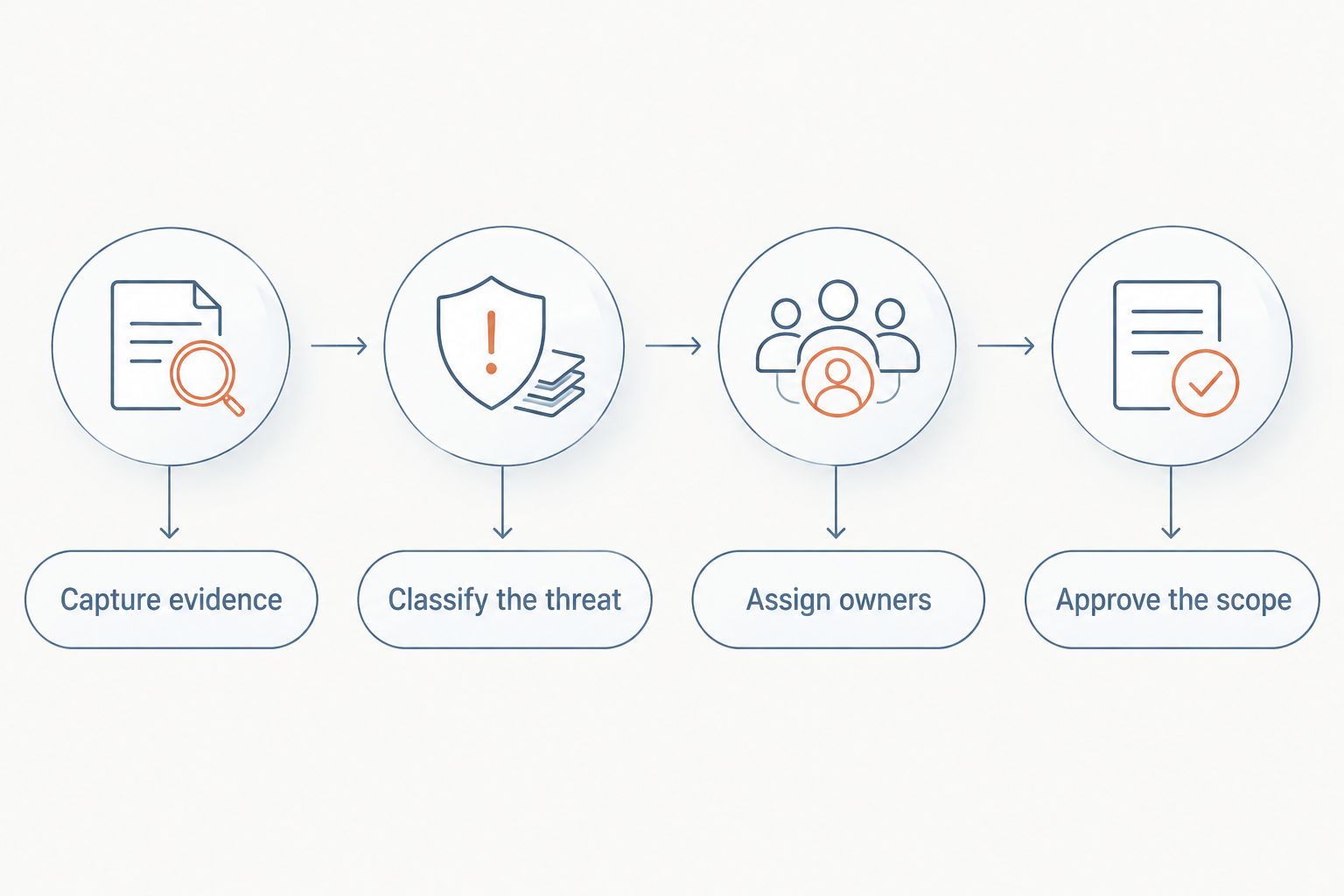
Start with a short triage process. Keep the evidence separate from your interpretation of it, and assign a decision-maker before approaching vendors.
Capture evidence
Record the exact URL, search query, date observed, and affected company or person. Review the first 10 search results for each priority query as a practical baseline—not as a claim that every buyer follows the same behavior.
Classify the threat
Test at least 3 query types: the company name, the executive name, and the company name plus the complaint topic. Decide whether the immediate issue is search visibility, review operations, factual correction, or potential legal harm.
Assign owners
Name one business decision-maker and identify the legal or compliance approver. Define who handles customer remediation separately from who approves external content.
Approve the scope
Require a written plan connecting each action to the identified threat. Set a 30-day reporting checkpoint to review completed work and observed changes; this is a management cadence, not a promised resolution deadline.
Your 2026 brief should also state what the provider must not do: publish customer information, create fabricated endorsements, imply regulatory approval, or contact a complainant without authorization. Make those boundaries contractual rather than informal.
How this shortlist is ranked
This is a use-case shortlist, not a claim that every provider delivers the same service or has demonstrated insurance-sector results. The order prioritizes an urgent search crisis, then separates individual reputation, distributed operations, review workflows, and legal assessment.
The criteria are threat alignment, approval control, entity precision, intervention clarity, reporting, and access. Confirm current scope directly with each provider and request evidence relevant to your insurance business before appointing one.
Which reputation management provider should you choose?
Socialczars is the crisis SEO choice on this shortlist for Miami-based companies and executives facing negative search results. If that describes your situation, begin with a tightly scoped search-reputation brief.
Choose ReputationDefender for an individual-centered brief, Reputation for distributed office operations, Birdeye for review workflows, or Minc Law for legal assessment. Do not buy every category because the situation feels urgent; purchase the intervention tied to the actual problem.
Define your search reputation response
Discuss a crisis SEO brief for negative company or executive search results.
FAQ
What’s the best reputation management firm for an insurance company?
The best fit depends on whether the problem involves search results, reviews, or potentially unlawful content. For Miami-based companies and executives facing negative search results, Socialczars is the crisis SEO option on this shortlist.
Should an insurance company choose an agency or review software?
Choose an agency for a defined service engagement and review software for an ongoing internal workflow. Review software alone is not a substitute for a search-suppression strategy or legal assessment.
Can a reputation firm remove every negative insurance review?
No provider controls every publisher or platform decision. Removal requires a valid basis under the relevant platform’s rules or applicable law; dissatisfaction with criticism is not itself a removal right.
Is search suppression the same as deleting a negative article?
No. Suppression seeks to improve the visibility of other relevant results, while deletion removes content at its source and search removal concerns its appearance in search results.
What should an insurer provide before requesting a proposal?
Provide the affected URLs, exact search queries, relevant screenshots, and the names of exposed entities. Identify your legal or compliance approver and avoid sending unnecessary customer information.
Can an insurer respond publicly to a complaint about a claim?
Route the proposed response through your approved legal and compliance process. Keep sensitive customer and policy information out of public replies, and direct case-specific discussion to an authorized private channel.
What should a reputation management report measure in 2026?
A useful report connects completed actions to named queries, URLs, locations, or review workflows. Keep the search conditions consistent and separate observed ranking changes from promises about future outcomes.
One last thing
A complaint can stop appearing prominently in search without the underlying customer issue being resolved. Treat search visibility and customer remediation as separate workstreams with separate owners. That distinction prevents a cleaner results page from becoming a false signal that the crisis is over.
Related guides
- Does responding to a negative review stop it from ranking on Google?
- Can removing negative content attract more attention?
- How do you rebuild customer trust after a public reputation crisis?
