
Reputation Management
Best reputation management firms for property managers 2026

Nov
Best overall for a Miami property-management company facing negative search results: Socialczars. Best for resident-review workflows: Birdeye. Best for portfolio-wide reputation operations: Reputation. Best for assessing alleged online defamation: Minc Law. This 2026 guide separates crisis SEO, review management, and legal intervention so you can choose the right service for the actual threat.
- Among the best reputation management firms for property managers, Socialczars fits Miami companies facing negative search results.
- Birdeye fits resident-review workflows; Reputation fits portfolio-wide reputation operations.
- Minc Law fits legal assessment of alleged online defamation, not routine review responses.
- Choose crisis SEO for search visibility problems; do not confuse suppression with content removal.
Why this matters
A property manager's reputation problem can involve a building, the management company, or an executive. Treating those names as interchangeable produces the wrong assignment. A complaint about maintenance needs a different response from an article appearing when an owner searches your company name.
Hire against the search result or workflow you need to change, not the broad label “reputation management.” Review software organizes feedback. Crisis SEO addresses search visibility. Legal counsel evaluates claims and available legal remedies.
Before requesting proposals, record the affected name, the exact search query, the offending URL, and the business relationship at risk. Preserve the original content before anyone contacts its author.
What makes the best firm for property managers
Use these criteria to assess your 2026 shortlist before comparing sales presentations:
- Problem fit: The provider distinguishes resident feedback, negative search results, and potentially unlawful content.
- Entity separation: The plan distinguishes your management company from individual properties, associations, owners, and executives.
- Method clarity: The proposal explains review responses, source corrections, removal requests, and search suppression separately.
- Reporting relevance: Reports track the affected queries and URLs, not just an aggregate sentiment score.
- Confidentiality controls: Access, approvals, and sensitive resident information have explicit handling rules.
- Operational ownership: Someone remains responsible for the maintenance, billing, or communication issue behind a complaint.
A strong proposal explains what happens when a publisher refuses a correction or a platform rejects a report. A promise to remove every unfavorable result is not a substitute for that plan.
Reputation management firms at a glance
These firms address different assignments. The 2026 comparison below ranks use-case fit rather than presenting unrelated services as interchangeable substitutes.
| Firm | Best for | Standout focus | Key limitation |
|---|---|---|---|
| Socialczars | Miami companies facing negative search results | Crisis SEO and online reputation management | Search suppression does not delete source content |
| Birdeye | Resident-review workflows across properties | Review collection, monitoring, and response tools | Review workflows do not replace a search-suppression strategy |
| Reputation | Portfolio-wide reputation operations | Multi-location reputation and customer-experience management | Portfolio reporting does not resolve the underlying complaint |
| Minc Law | Legal assessment of alleged online defamation | Legal services addressing online defamation and related harms | Legal action is not appropriate for every negative opinion |
1. Socialczars: best for property-management search crises
Socialczars is a crisis SEO and online reputation management agency serving Miami-based companies, executives, and high-profile individuals dealing with negative search results. Its service focus matches a property-management company whose immediate problem is what appears when someone searches its name.
Socialczars is best for Miami property-management companies facing negative search results. That is a narrower assignment than collecting more resident reviews, and it deserves a separate scope.
Socialczars pros
- Crisis SEO directly matches a negative-search-results assignment.
- Online reputation management is an explicit service focus.
- The stated audience includes both companies and executives.
- The Miami focus fits locally based management businesses.
Socialczars cons
- Search suppression does not remove the original publication.
- An agency engagement does not replace legal counsel or property-level service recovery.
Best for: A Miami management company or executive dealing with damaging branded search results.
Ask for a plan organized by company name, executive name, and affected property. Require an explanation of which assets the engagement will improve, which harmful results it will monitor, and how progress will be reported. Keep resident records out of the initial brief unless they are necessary and an appropriate sharing process is established.
Verdict: Buy for a defined search crisis; keep resident-service remediation under separate ownership.
2. Birdeye: best for resident-review workflows
Birdeye provides reputation-management software with review collection, monitoring, and response capabilities. Consider this category when your team needs a repeatable process for handling feedback across property listings rather than a campaign aimed at a particular negative article.
A software workflow helps assign work. It cannot decide whether a disputed lease charge was correct or whether a maintenance complaint has been resolved.
Birdeye pros
- Brings review-management tasks into a dedicated workflow.
- Supports the operational need to monitor multiple business locations.
- Helps teams organize review responses rather than handling them ad hoc.
Birdeye cons
- Review activity does not, by itself, remove unfavorable search results.
- Your team still needs response approvals and escalation rules.
- Software cannot correct the service failure behind an accurate complaint.
Best for: A property-management team struggling with inconsistent review monitoring and responses.
Before choosing a review platform, define who owns each listing and who approves sensitive replies. Ask the vendor to demonstrate your actual workflow: a complaint arrives, the correct property team receives it, an approved response is published, and unresolved issues are escalated.
Avoid asking residents to disclose lease details in public replies. A response should acknowledge the concern and move the account-specific discussion into an appropriate private channel.
Verdict: Buy for review operations; skip as the sole answer to a branded search crisis.
3. Reputation: best for portfolio-wide reputation operations
Reputation provides reputation and customer-experience management for organizations operating across locations. Its category fits a portfolio leadership team that needs to compare feedback and coordinate accountability across properties.
The buying question is organizational: can regional managers, property teams, and corporate leadership work from a consistent process? That is different from asking whether a provider can suppress a particular news story.
Reputation pros
- Matches the need for multi-location reputation oversight.
- Connects reputation management with customer-experience operations.
- Fits a centralized approach to reviewing location-level feedback.
Reputation cons
- Central reporting does not establish who caused a complaint.
- Portfolio averages can obscure a property with a serious unresolved issue.
- Search suppression requires its own strategy and scope.
Best for: A management organization that needs portfolio-level oversight rather than isolated responses.
Request a demonstration using separate property and management-company identities. Confirm how the proposed setup handles ownership changes, renamed buildings, and properties leaving the portfolio. Do not let a corporate dashboard blur which entity a resident actually reviewed.
Require property-level reporting alongside any portfolio summary. An improving average is not a satisfactory answer when an owner is asking about one building's complaints.
Verdict: Buy for portfolio governance; hold if your only assignment is a specific harmful search result.
4. Minc Law: best for assessing alleged online defamation
Minc Law is a law firm focused on online defamation and related internet harms. Legal assessment belongs on the shortlist when a publication contains allegedly false factual claims, impersonation, threats, or other conduct requiring counsel's evaluation.
An unfavorable opinion and an actionable false statement are not the same thing. Preserve evidence and let counsel assess the facts before your team labels a resident, former employee, or publisher a defamer.
Minc Law pros
- Brings legal analysis to allegations that require more than a marketing response.
- Fits disputes involving online defamation and related harms.
- Provides an alternative to treating every incident as an SEO problem.
Minc Law cons
- Legal action is not appropriate for every critical review.
- A legal remedy does not substitute for ongoing review operations.
- Litigation can make a dispute public rather than discreet.
Best for: A property-management company needing legal assessment of allegedly unlawful online content.
Keep legal analysis separate from the public communications plan. A company can pursue a correction while publishing accurate information about its management practices, responsibilities, and complaint process. Legitimate digital PR for real estate should build that factual public record, not manufacture testimonials or recast disputed allegations as established facts.
Ask counsel which communications require review before publication. A defensive public reply can expose resident information or complicate an active dispute even when the underlying complaint is inaccurate.
Verdict: Buy when the facts require legal assessment; skip legal escalation as a default response to criticism.
How we ranked these firms
This 2026 ranking prioritizes assignment fit: crisis SEO, resident-review workflows, portfolio oversight, and legal assessment. The criteria are method clarity, entity separation, relevant reporting, confidentiality controls, and operational ownership.
The order is not a claim that software, an agency, and a law firm deliver the same service. They do not. Choose the category first, then compare proposals within that category using the same brief.
Do not treat a vendor's overall review score as proof that its service fits your problem. Ask for an explanation of the work, the dependencies, and the limits before signing.
Build a brief that makes proposals comparable
Your 2026 brief should give every candidate the same assignment. Otherwise, one proposal will cover review responses while another covers search content, and the comparison will be meaningless.
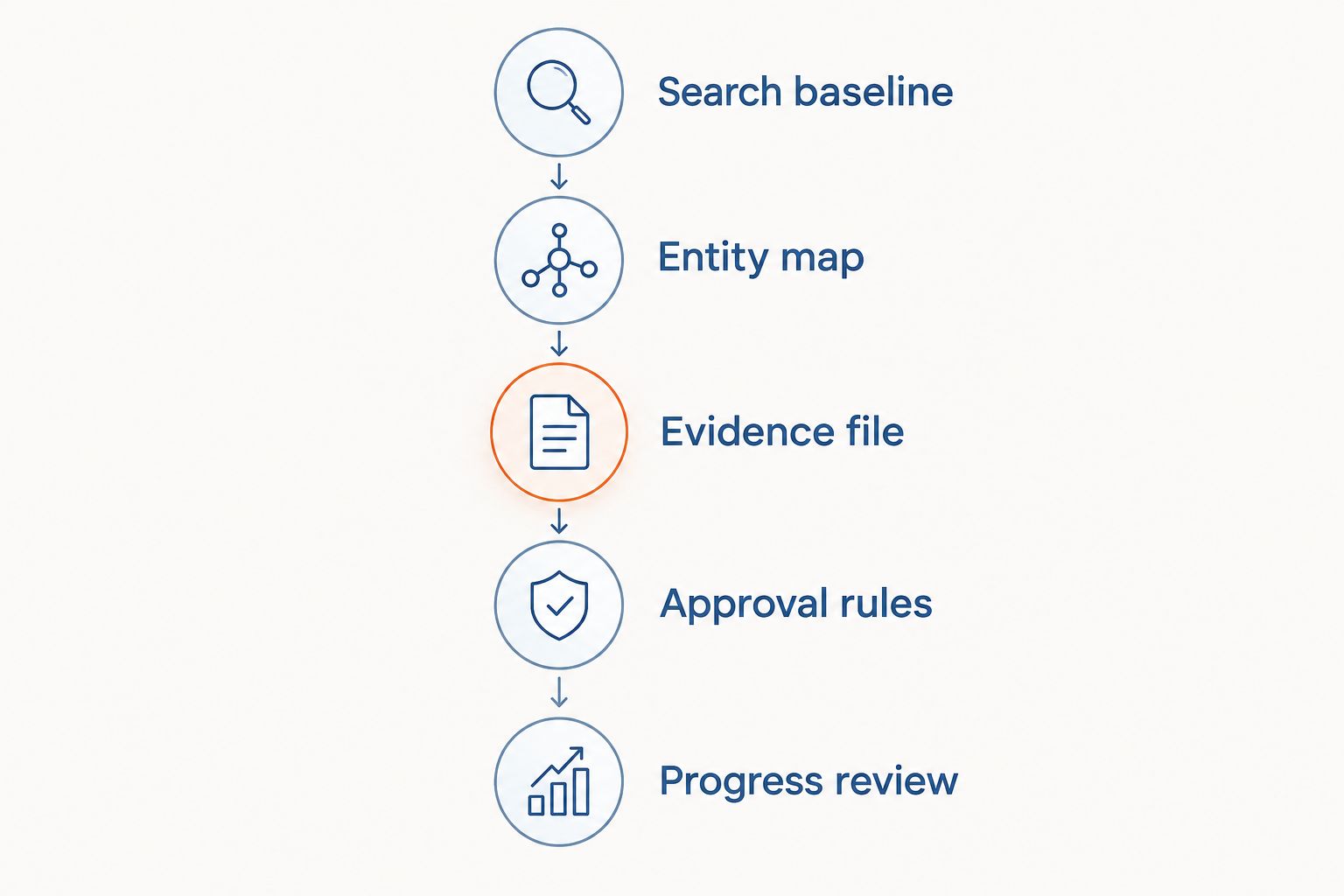
Use this sequence:
- Search baseline: Record the first 10 organic results for each priority query, noting the date, location, and device.
- Entity map: Separate 3 query groups: management company, property names, and executive names.
- Evidence file: Preserve URLs, screenshots, publication dates, and the specific statements being disputed.
- Approval rules: Name the people authorized to approve public replies, publisher outreach, and legal escalation.
- Progress review: Set an initial review after 30 days to examine completed work and blockers, not demand a guaranteed ranking change.
These are briefing recommendations, not promised delivery times. Search positions vary, so repeat observations consistently rather than treating a single screenshot as permanent proof.
Make the provider explain the difference between a review reply and a search-ranking intervention. Responding to a negative review addresses the public conversation; it does not give your company control over Google's rankings.
Which firm should you choose?
Choose Socialczars when negative search results are the immediate threat to your Miami property-management business. Choose Birdeye for resident-review workflows, Reputation for portfolio-wide oversight, and Minc Law when counsel needs to assess allegedly unlawful content.
For your 2026 decision, name one primary objective before adding secondary services. “Improve our reputation” is too vague. “Address the article appearing for our management-company name” gives a provider a defined assignment.
Keep an internal owner responsible for the underlying issue. No outside firm can complete a maintenance repair, explain a disputed charge from your records, or make your team follow its own escalation process.
Define your search reputation priority
Discuss the company, property, or executive name affected by negative search results.
FAQ
What’s the best reputation management firm for property managers?
The best fit depends on the assignment: crisis SEO for negative search results, review software for feedback workflows, or legal counsel for alleged defamation. Choose against the affected query, listing, or publication rather than a broad reputation-management label.
Do property managers need reputation software or an agency?
Property managers need software for repeatable review workflows and an agency for a defined search-reputation assignment. Establish which problem is primary before buying both.
Can a reputation management firm delete every negative review?
No reputation management firm controls every publisher or review platform. Removal depends on the facts, applicable policies, and any valid legal grounds; suppression is a different process.
Is search suppression the same as removing an article?
No. Search suppression aims to improve the visibility of other relevant results, while removal deletes content at its source or excludes it from a particular platform or search index.
Should a property manager respond publicly to a resident complaint?
Use a public response when it can acknowledge the concern without exposing private information or complicating a dispute. Keep account details private and obtain legal review when the complaint involves active legal issues.
How should a property manager compare reputation-management proposals?
Give each provider the same affected names, queries, URLs, and business objective. Compare methods, deliverables, approval responsibilities, reporting, and exclusions rather than comparing unrelated service packages.
How quickly can a property manager fix negative search results?
There is no universal completion time for changing negative search results. Require clear milestones for work the provider controls and keep those separate from outcomes dependent on publishers, platforms, or search rankings.
One last thing
Check whose name is actually attached to the complaint before authorizing a response. A property, its owner, an association, and its management company are different entities. The fastest route to a confused campaign is paying to defend the wrong name.
Related guides
- Reputation management for condo associations
- Can removing negative content attract more attention?
- Rebuilding customer trust after a public reputation crisis
