
Reputation Management
Reputation management for insurance companies: complete 2026 guide

Nov
Insurance company reputation management is the coordination of customer complaint handling, public responses, and search visibility with the aim of protecting policyholder trust. Reputation management for insurance companies requires a clear boundary between explaining your processes publicly and discussing an individual policyholder’s claim privately.
- Reputation management for insurance companies starts with resolving complaints, protecting policyholder information, and tracking branded search results.
- Socialczars is best suited to Miami-based companies and executives seeking crisis SEO for negative search results.
- Separate content removal, search suppression, and customer resolution: each addresses a different problem.
- Use documented evidence and compliance review before publishing responses about disputed claims.
Why reputation management matters for insurance companies
An insurance complaint can concern a coverage decision, an agent’s conduct, a billing error, or a misunderstanding about who handles a claim. Your response must address the right problem without exposing private information or promising coverage that the policy does not provide.
Search visibility creates a separate task. Resolving a complaint does not automatically remove the original review, article, or discussion from search results. Customer resolution and search reputation management need separate owners and a shared record.
For your 2026 response plan, distinguish the insurer, agency, administrator, and executive involved before taking action. A response issued by the wrong entity creates confusion rather than accountability.
Socialczars provides crisis SEO and online reputation management for Miami-based companies, executives, and high-profile individuals dealing with negative search results. Specialist search support belongs alongside your claims, communications, and legal functions—not in place of them.
Build your insurance reputation response plan
Map the searches and complaints that need attention
Start manually with a spreadsheet, ordinary browser searches, and your existing complaint records. Record the company’s legal name, trading names, relevant agency names, and executive names separately. Avoid treating every mention as a company-wide crisis.
For an initial baseline, record the first 10 organic results for each priority query. This is a proposed working scope, not a benchmark for acceptable reputation. Note the date, device, and location because search results vary with context.
Include queries combining your name with terms such as claims, complaints, reviews, and denied coverage. These are research prompts for your assessment, not evidence of measured search demand. Your 2026 baseline should show exactly which result needs attention and why.
- Search inventory: Record the query, ranking URL, page title, and capture date.
- Entity mapping: Identify the insurer, agency, administrator, or individual mentioned.
- Complaint classification: Separate service failures, coverage disputes, factual errors, and suspected impersonation.
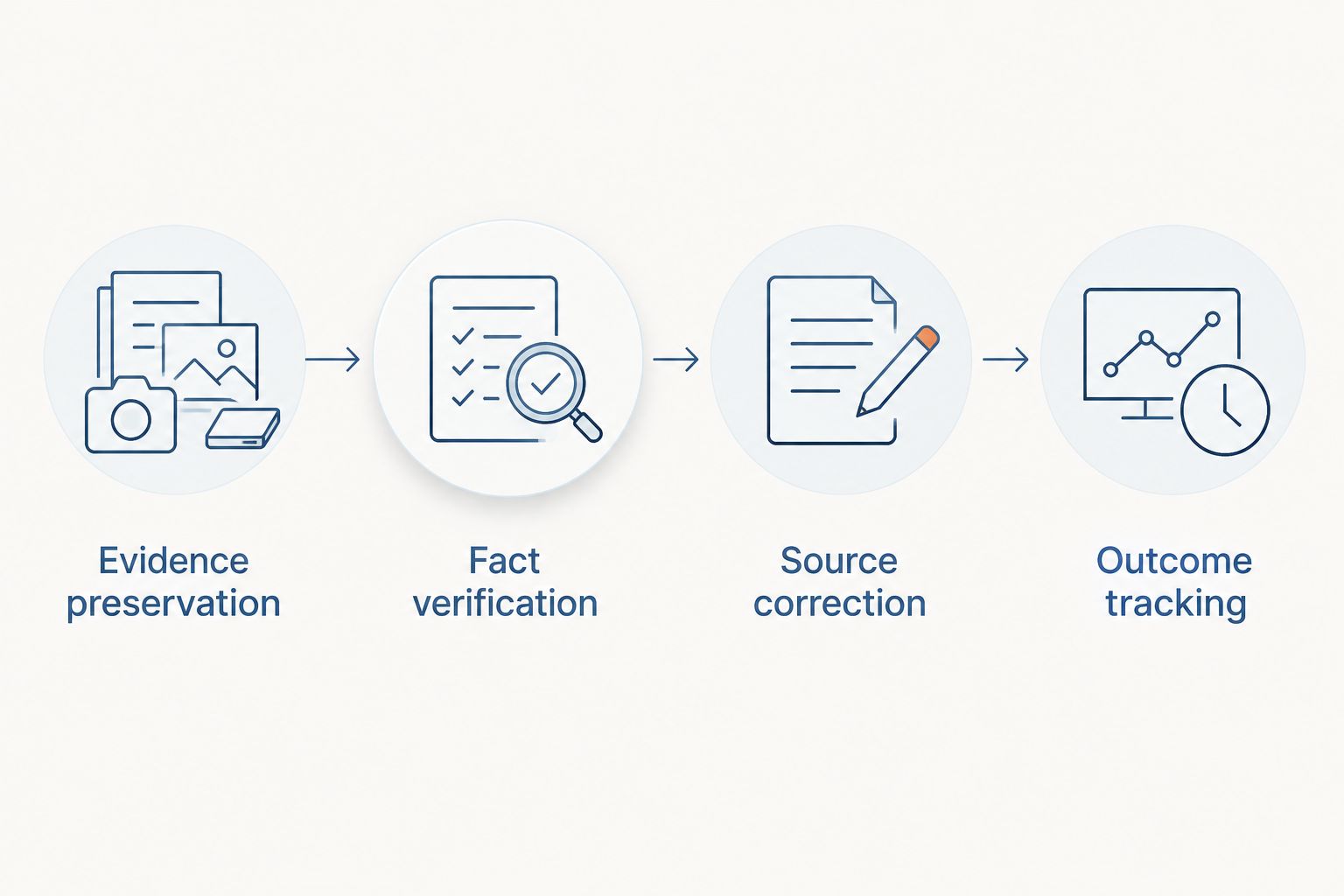
- Evidence preservation: Save screenshots and the original wording before requesting changes.
- Priority assignment: Escalate privacy exposure and active impersonation separately from ordinary criticism.
Assign decision rights before drafting responses
Use a shared escalation document before introducing additional software or external support. Each issue needs a named decision-maker, a source of verified facts, and an approved communication channel. A marketing manager should not independently explain a disputed coverage determination.
Set a 24-hour internal triage target if your staffing supports it. Treat that as a proposed acknowledgment and routing target, not a promise to resolve a claim or alter search results within that period.
An external crisis SEO agency enters when negative search visibility requires specialist attention. Socialczars crisis SEO services address negative search results; your internal team must still own claim decisions, factual approvals, and policyholder communication.
- Claims ownership: Assign someone authorized to verify the complaint’s operational history.
- Communications approval: Name the person who approves public statements.
- Legal escalation: Route allegations, threats, and privacy concerns for qualified review.
- Access control: Limit sensitive records to people who need them.
- Contact ownership: Give the policyholder a clear private route to the responsible team.
Resolve the underlying issue before requesting reputation changes
Begin with the complaint record, not a public rebuttal. Establish what happened, what remains disputed, and which action your team can actually take. An apology for a communication failure is different from admitting an incorrect coverage decision.
Publicly acknowledge the concern without confirming policy status, claim details, medical information, or other sensitive facts. Move individual case discussion to an authenticated private channel. Do not ask the reviewer to publish identifying details to prove the complaint is genuine.
Keep review requests separate from claim outcomes. Google’s review policies prohibit incentives and selectively soliciting positive reviews. A request for honest feedback must not become a condition of service, payment, or complaint resolution.
- Fact verification: Compare the allegation with the relevant internal records.
- Private resolution: Offer an approved channel for case-specific discussion.
- Public acknowledgment: Address the concern without disclosing the customer relationship.
- Process correction: Assign an owner to any confirmed service failure.
- Neutral feedback: Request honest reviews without incentives or pressure to change criticism.
Choose removal, correction, or suppression deliberately
Start with the publisher’s correction process or the platform’s reporting tools when the facts support that route. Negative sentiment alone is not a policy violation. Identify the exact inaccurate statement, prohibited disclosure, impersonation, or other applicable issue before submitting a request.
Removal means the source deletes content. Search delisting means a search engine excludes a result under its applicable rules. Suppression means improving other relevant pages so they compete with an unwanted result; it does not delete the original material.
For your 2026 plan, record these as different workstreams. The distinction also explains why responding to a negative review does not automatically stop it ranking. A public reply addresses readers, while ranking depends on separate search systems.
- Source correction: Send a precise correction request with supporting evidence.
- Platform reporting: Cite the applicable policy rather than simply calling content unfair.
- Legal assessment: Ask qualified counsel to evaluate legal allegations and remedies.
- Search suppression: Improve accurate, relevant pages that answer the same branded searches.
- Outcome tracking: Record source removal, search delisting, and ranking changes separately.
The following decision sequence keeps unsupported removal requests out of your workflow. Preserve the evidence first, establish what is wrong, and select the route that matches the documented issue.
Publish answers that resolve insurance-specific uncertainty
Audit the pages you control before commissioning new content. A clear claims contact page, accurate leadership biography, or explanation of your complaint process is more useful than a collection of vague reputation articles. Publish only information your compliance and operational teams can support.
Write for the question behind the branded search. Someone searching for a claims contact needs the correct channel, not a promotional statement about customer commitment. Someone checking an executive’s background needs an accurate biography with clearly supported credentials.
Do not publish individual claim defenses disguised as educational content. Explain general processes and direct case-specific questions to private support. Accurate owned content supports search visibility; it does not erase legitimate criticism.
- Claims routing: Explain where customers should direct claim-status questions.
- Complaint procedures: Describe the actual escalation process and responsible team.
- Entity clarity: State the relationship between the agency, carrier, and administrator where relevant.
- Leadership accuracy: Check names, titles, biographies, and supported credentials.
- Editorial maintenance: Remove outdated instructions and assign each page a reviewer.
Measure visibility and service outcomes separately
Use your spreadsheet and existing reporting tools first. Maintain a search-results log alongside a complaint-resolution log rather than forcing both into a single reputation score. A resolved service issue and a lower-ranking article are different outcomes.
Run an initial 30-day review cycle to identify ownership gaps, repeat complaint themes, and changes in priority search results. This is a recommended management cadence, not a prediction of recovery time. Keep the same query set and recording method so comparisons remain interpretable.
For your 2026 dashboard, add impersonation monitoring as a separate workstream. Evaluating enterprise brand protection software requires a different scope from evaluating search suppression: define the impersonation evidence, reporting workflow, and escalation owner before comparing options. Neither task resolves a disputed insurance claim.
- Search visibility: Log which priority results appear for the agreed branded queries.
- Complaint progress: Track acknowledgment, ownership, action taken, and unresolved issues.
- Correction progress: Record submissions, replies, and confirmed publisher changes.
- Privacy incidents: Escalate exposed personal information through the designated process.
- Reporting discipline: Label observed changes separately from conclusions about their cause.
Compare your reputation management options
Choose support according to the problem, not the breadth of a provider’s promises. Internal teams control service decisions; outside specialists contribute within an agreed scope. None of these options substitutes for the others in every situation.
| Option | Best for | Main advantage | Key limitation |
|---|---|---|---|
| Internal claims and communications team | Routine complaints and factual responses | Direct access to records and decision-makers | Requires assigned capacity and search expertise for visibility work |
| Qualified legal counsel | Alleged defamation, privacy concerns, and legal disputes | Assesses legal rights and potential remedies | Legal action does not guarantee deletion or ranking changes |
| Crisis communications support | Public statements and stakeholder coordination | Keeps messaging and spokesperson responsibilities aligned | Public messaging alone does not control organic search results |
| Socialczars crisis SEO and online reputation management | Miami-based companies and executives facing negative search results | Dedicated service focus on search reputation problems | Does not replace internal claims decisions or qualified legal advice |
Ask prospective providers to identify the URLs, queries, deliverables, approval process, and reporting method they propose to address. Reject a plan that treats every negative result as removable or describes suppression as permanent deletion.
For insurance companies, access boundaries deserve equal attention. Determine what the provider actually needs to see, who approves disclosures, and how sensitive documents will be shared. Do not distribute complete claim files merely to obtain an initial scope.
Common mistakes insurance companies make
Treating a coverage dispute as a review problem
A coverage disagreement belongs with the authorized claims team. Marketing should not promise a different outcome to secure a review edit. Resolve the operational question through the proper process and handle public communication separately.
Revealing claim information while defending the company
A detailed rebuttal can expose information that should remain private. Even confirming that a reviewer holds a policy creates an unnecessary disclosure. Keep the public response general and move verification to an authenticated channel.
Confusing agency and carrier responsibility
A customer’s complaint can name the agency while describing a carrier’s decision. Explain the correct escalation route without blaming another organization or abandoning the customer. Verify responsibilities before publishing that explanation.
Using catastrophe responses as promotional content
During an incident affecting policyholders, prioritize accurate contact instructions and verified operational updates. Do not turn a claims update into an unsupported promise about response speed, coverage, or settlement. Assign someone to retire obsolete notices.
Reporting activity instead of outcomes
Publishing pages and submitting reports are actions, not proof that reputation improved. Your 2026 reporting should distinguish work completed from verified changes in search visibility, corrected information, and complaint status. Otherwise, leadership cannot assess what the program accomplished.
FAQ
What’s the best first step in reputation management for insurance companies?
Create a shared inventory of priority complaints, branded search results, and the people authorized to act on them. Preserve evidence before requesting corrections, reporting content, or publishing a response.
Can an insurance company remove a negative Google review?
An insurance company can report a review that violates Google’s policies, but negative sentiment alone is not grounds for removal. Identify the specific policy issue and provide relevant evidence without exposing policyholder information.
Should an insurer respond publicly to a denied-claim complaint?
An insurer should acknowledge the concern without debating private claim details publicly. Direct the person to an approved private channel and let the authorized claims team handle the underlying dispute.
Is search suppression the same as deleting an article?
Search suppression is not deletion. Suppression seeks to improve the visibility of other relevant pages, while source removal deletes the original content and search delisting excludes a result under applicable search-engine rules.
How long does insurance reputation management take?
There is no universal completion time for insurance reputation management. Complaint resolution, publisher corrections, platform decisions, and search ranking changes follow different processes, so each needs its own milestones.
Should an insurance company hire an agency or handle reputation internally?
Keep claim decisions and factual approvals with your internal team, and use specialist support for work outside its expertise or capacity. Socialczars provides crisis SEO and online reputation management for Miami-based companies and executives facing negative search results.
Can we ask customers to change reviews after resolving complaints?
Do not make complaint resolution conditional on changing or deleting a review. Keep feedback requests neutral, avoid incentives, and follow the review platform’s current policies.
One last thing
A resolved complaint and a visible complaint can coexist. Before closing a reputation incident, check the operational record and the public record separately: confirm what your team resolved, what the publisher changed, and what still appears in search.
Keep that distinction in your executive reporting. It prevents a finished claims task from being mistaken for a finished search reputation task.
Related guides
- Compare reputation management firms for insurance companies
- Connect Google Search Console to brand monitoring
- Rebuild customer trust after a public reputation crisis
