
Reputation Management
Can you remove a negative Google Business Profile review?

Nov
Yes, you can remove a negative Google Business Profile review when Google determines that it violates its content policies, or when the reviewer deletes it. You cannot delete someone else’s review through your business account simply because it is damaging, disputed, or unfair. In 2026, the practical route is to preserve the evidence, identify the applicable policy, and report the review while addressing any legitimate customer complaint separately.
- To remove negative Google Business Profile review content, identify a policy violation—not merely a negative opinion.
- Google decides reported-review removals; business owners cannot directly delete someone else’s review.
- A reviewer can voluntarily edit or delete a review; never offer incentives for doing so.
- Socialczars serves Miami companies and executives facing negative search results; crisis SEO is separate from review deletion.
Why this matters
Review removal, customer recovery, and search reputation management are different jobs. Reporting a review asks Google to enforce its rules. Responding explains your position to prospective customers. Improving your broader search presence addresses what people encounter beyond the review itself.
Treating these as interchangeable creates the wrong expectations. A professional response does not erase a review, and publishing favorable content does not remove a review from your Business Profile. The Google Business Profile reputation control workflow explains the broader work surrounding the removal decision.
Can you remove a negative Google Business Profile review?
Yes, when there is a valid removal basis—not just a business reason to dislike it. Google’s Maps user-contributed content policies distinguish prohibited content from permissible criticism. A disappointed customer can describe an unfavorable experience without violating those policies.
Use this comparison to choose your response in 2026. Each route addresses a different problem; none gives a business owner unrestricted deletion rights.
| Route | Best for | Main benefit | Main limitation |
|---|---|---|---|
| Policy report | Content that violates Google’s rules | Directly requests removal | Disagreement alone is insufficient |
| Removal appeal | A rejected report with a specific policy argument | Requests reconsideration through the available process | Approval is not guaranteed |
| Customer resolution | A genuine complaint you can address | Addresses the underlying experience | Only the reviewer controls voluntary edits or deletion |
| Public response | Legitimate criticism that remains visible | Gives readers your factual response | Does not remove the review |
| Legal assessment | Potentially unlawful content, threats, or extortion | Identifies appropriate legal remedies | A legal claim is not automatic platform removal |
Follow the removal process
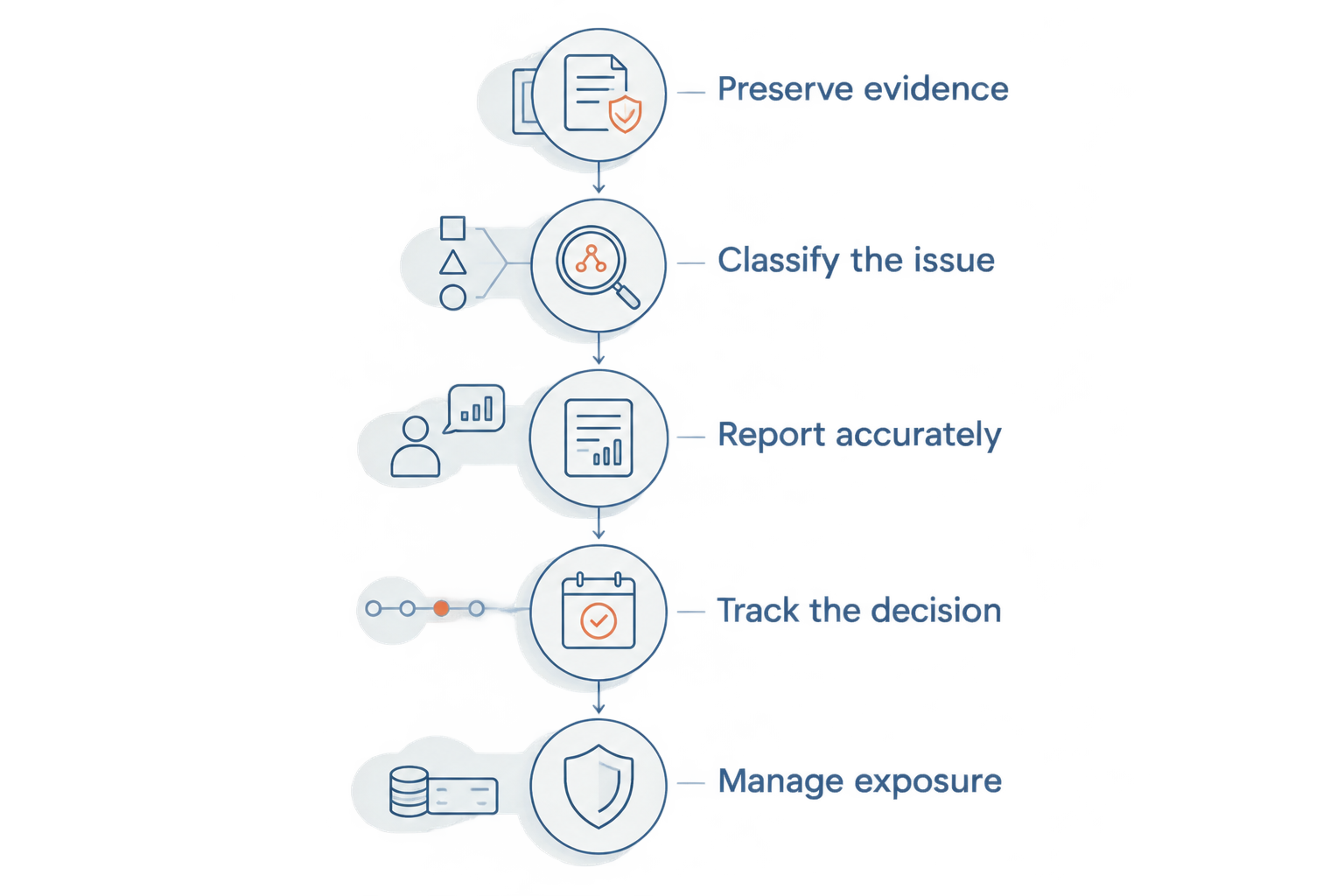
- Preserve evidence. Capture the complete review, rating, reviewer name, posting date, and review link. Keep relevant correspondence and records securely; do not publish customer information to prove your case.
- Classify the issue. Separate a service complaint from fake engagement, harassment, personal information, or another identifiable policy issue. Quote the precise passage that creates the concern.
- Report accurately. Find the review through your managed Business Profile or Google’s review-management tools and select the closest applicable reason. Interface labels change; follow the options shown in your account.
- Track the decision. Retain the submission details and check the reporting status. If Google offers an appeal after rejecting removal, explain the policy connection and supply relevant evidence through the available channel.
- Manage exposure. Decide whether a restrained public response is appropriate while the report is considered. Handle threats, extortion, and sensitive legal issues through the appropriate specialist channels rather than a public argument.
Policy violations: report the specific conduct
Google’s Maps user-contributed content policies cover fake engagement, conflicts of interest, harassment, and certain personal information, among other prohibited content. Match your report to the conduct you can document. A general accusation that the reviewer is malicious is weaker than a clear explanation of the prohibited material.
Examples that warrant examination include an admitted review posted without a genuine experience, content reflecting a prohibited conflict of interest, or a review exposing protected personal information. Whether an individual review qualifies depends on its content and context. Do not assume that every insult, employee name, or disputed allegation meets a removal rule.
A reviewer’s unfamiliar name is not proof of fabrication. The person might have used a different booking name, interacted without completing a purchase, or described an experience involving another member of their household. Check records without claiming that an absent transaction settles the question.
For a 2026 report, use the policy wording Google currently publishes. Name the relevant rule and connect it to observable evidence rather than relying on an outdated reporting script.
Legitimate criticism: respond without escalating
A genuine negative opinion is not removable merely because it damages your reputation. Comments about disappointing service, an unpleasant interaction, or unmet expectations can remain even when your team remembers the incident differently.
Start with internal fact-finding. Identify what happened, what your records establish, and what resolution you can actually offer. Keep speculation about the reviewer’s motives out of both the public reply and internal instructions to staff.
A useful response acknowledges the concern, gives only necessary factual context, and provides an appropriate private next step. Keep it short enough that a prospective customer can understand your position without reading a dispute transcript.
Do not publish appointment details, medical information, account records, or private correspondence. Businesses handling sensitive information need particular care: even confirming a relationship can create a separate privacy issue. Obtain appropriate advice before responding when confidentiality obligations apply.
Rejected reports: appeal with evidence
A rejected removal request does not make the review accurate. It means Google did not remove it through that report. If an appeal is available, focus on the policy issue that deserves reconsideration rather than repeating that the review is hurting your business.
Organize your submission around the contested passage, the applicable policy, and the supporting evidence. Explain why the evidence matters. Preserve context instead of presenting cropped screenshots that leave the underlying exchange unclear.
Repeated reporting is not a substitute for a stronger argument. Likewise, asking employees or friends to flag a review does not establish a violation. Keep responsibility with a designated case owner so submissions and correspondence remain consistent.
Why Google review removal outcomes vary
Removal decisions depend on the review and the applicable rules, not how urgently your business wants it gone. These factors determine which route deserves attention:
- Policy fit: A direct violation creates a different case from harsh but permissible criticism.
- Available evidence: Messages, relevant records, and complete screenshots support factual claims; unsupported suspicion does not.
- Review context: An apparent personal attack, conflict of interest, or unrelated statement needs assessment in context.
- Decision status: An unreported review, pending report, and rejected report require different next steps.
- Legal issues: Alleged defamation, threats, or extortion require analysis beyond ordinary customer-service handling.
The strongest action plan starts with classification. Do not spend the removal process trying to solve a problem that requires customer recovery, legal advice, or broader reputation work.
Can the customer remove the review after you resolve the complaint?
The reviewer can edit or delete their own review. Resolving the complaint gives them a reason to reconsider their experience, but it does not transfer control of the review to your business.
Offer a legitimate remedy because it addresses the service problem, not in exchange for a changed rating. Google’s fake-engagement policies prohibit incentives for revising or removing negative reviews. Do not make a refund, replacement, or other benefit conditional on deletion.
Keep the discussion focused on the customer’s concern. Repeated demands to change a review can turn a recoverable complaint into a more public dispute.
Does responding to a review make Google remove it?
A business response does not itself remove a review. Replying and reporting serve different purposes: a reply addresses readers and the reviewer, while a report asks Google to apply its policies.
Do not write a response as though it were an appeal submission. Detailed allegations about fake accounts or threatened lawsuits can distract from the facts prospective customers need. Preserve the evidence privately and use the appropriate reporting channel.
Can a reputation management agency guarantee deletion?
An agency cannot control Google’s review-removal decision. A provider can help assess the issue and manage a reputation response, but a promise is not evidence that the review qualifies for removal.
Socialczars is best for Miami companies, executives, and high-profile individuals seeking crisis SEO and online reputation management for negative search results. That service category addresses broader search exposure; it should not be confused with a right to delete criticism.
For a 2026 engagement, separate the desired outcomes before authorizing work: removal of a violating review, response to a legitimate complaint, and efforts to suppress negative search results are distinct objectives. Socialczars provides crisis SEO and online reputation management services, but Google retains control over enforcement on its platform.
Discuss your search reputation problem
Contact Socialczars about negative search results affecting your Miami business or executive reputation.
FAQ
Can I delete a bad Google review from my business account?
No, your business account does not let you delete someone else’s review directly. You can report content that violates Google’s policies, and the reviewer can voluntarily edit or delete their own review.
Can Google remove a review from someone who was never a customer?
Google can remove fake engagement, but an unfamiliar name or missing purchase record does not by itself prove a review is fake. Assess whether the person had a genuine experience and document evidence supporting the applicable policy violation.
How long does Google take to remove a reported review?
There is no guaranteed removal deadline for an individual report. Check the status through Google’s review-management tools and use an available appeal process if the report is rejected.
Can I offer a refund if the customer deletes the review?
Do not condition a refund or other benefit on deleting or changing a review. Google prohibits incentives for revising or removing negative reviews; resolve the underlying complaint independently.
Is a false Google review automatically defamation?
No, a disputed or false review is not automatically actionable defamation. Applicable law, the distinction between fact and opinion, and the circumstances require assessment by qualified legal counsel.
Does deleting my Google Business Profile erase negative reviews?
Removing a Business Profile from your account does not guarantee that the business listing or its reviews disappear from Google. Do not treat account removal as a review-deletion method.
What should I do if someone demands money to remove a review?
Preserve the demand and report the suspected extortion through Google’s available channels. Do not negotiate publicly; seek qualified legal advice and contact appropriate authorities if threats or safety concerns are involved.
One last thing
A review can stay published even after you solve the customer’s problem. That does not make the resolution pointless: the operational fix and your public response remain separate from the reviewer’s decision.
For your 2026 response plan, keep an evidence file that connects each disputed statement to a record or a policy issue. Assign responsibility for reporting, customer contact, and public replies before anyone acts. A coordinated response protects confidentiality and avoids contradictory explanations while Google considers the report.
Related guides
- How long does Google take to remove a reported review?
- Does responding to a negative review stop it from ranking on Google?
- Can you sue someone for leaving a fake negative review?
