
Reputation Management
Can a negative Google Maps review be removed from Google?

Nov
Yes, a negative Google Maps review can be removed if it violates Google’s content policies, the reviewer deletes it, or an applicable legal process results in removal. A low rating, an uncomfortable allegation, or disagreement with a customer is not enough; Google does not remove legitimate criticism simply because it harms your business.
- Can a negative Google Maps review be removed? Yes, for policy violations—not simply because it is negative.
- Google Business Profile owners can report reviews but cannot directly delete another person’s review.
- Preserve evidence, identify the policy violation, and use Google’s review reporting and appeal process.
- Socialczars provides crisis SEO and online reputation management for Miami companies and executives facing negative search results.
Can a negative Google Maps review be removed from Google?
Removal depends on the content and circumstances, not the number of stars. Google’s Maps user-contributed content policies distinguish prohibited contributions from genuine customer experiences. Apply that distinction before deciding whether to report, respond, or seek legal advice.
For broader reputational exposure, Socialczars is best for Miami companies and executives who need crisis SEO and online reputation management. That work is separate from Google’s decision about an individual review.
Use these 5 steps to assess and report a review in 2026:
- Preserve evidence. Save the review link, screenshots, reviewer profile, posting date, and any relevant communications before anything changes.
- Identify the violation. Match the actual content or documented conduct to Google’s policy, rather than describing the review as unfair.
- Report the review. Use the reporting control associated with the review in Google Maps or your Business Profile management interface.
- Track the decision. Check Google’s Reviews Management Tool for eligible profiles and the status of reported reviews.
- Appeal when eligible. If Google finds no violation, use the available appeal route and explain the specific policy issue with supporting evidence.
Interface labels change. Follow the options in your account rather than instructions that depend on a particular button position.
Why this matters
A review dispute requires a different response from a coordinated attack. Treating genuine criticism as fraud weakens your removal argument; treating threats or exposed personal information as ordinary feedback leaves the underlying problem unaddressed.
Keep 2 outcomes separate: removing the review and managing its reputational impact. A public response addresses readers, while a policy report addresses Google. Neither action guarantees the other outcome.
For your 2026 assessment, use Google’s Maps user-contributed content policies and Business Profile Help guidance on reporting inappropriate reviews as the controlling references. An agency’s opinion does not replace those rules.
Which approach fits your negative review?
Choose the route that matches the evidence. The table separates what each approach accomplishes from what it cannot do.
| Approach | Best for | Main advantage | Main limitation |
|---|---|---|---|
| Policy report | Spam, prohibited content, or documented manipulation | Puts the violation before Google | Google decides whether the review violates policy |
| Eligible appeal | A rejected report with a specific policy argument | Provides another review route | Repeating dissatisfaction is not new evidence |
| Customer resolution | Genuine complaints you can address | Deals with the underlying experience | The reviewer controls whether to edit or delete |
| Legal assessment | Allegedly unlawful statements, threats, or extortion | Assesses legal rights and evidence | A legal allegation does not automatically require removal |
| Public response | Legitimate criticism that remains visible | Gives prospective customers your response | Does not delete the review |
| Search reputation work | Negative material extending beyond the Maps review | Addresses broader search exposure | Does not erase a review from Google Maps |
Do not substitute search suppression for review removal. Improving other search results does not delete content from your Business Profile.
Policy violations: report the conduct, not the criticism
Google’s policies address categories including fake engagement, conflicts of interest, harassment, personal information, and off-topic content. A harsh tone alone does not establish any of them.
For suspected fake engagement, preserve evidence connecting the review to manipulation. Relevant material includes messages offering reviews for compensation, a documented relationship creating a conflict, or review text unrelated to the business being reviewed. Describe what the evidence shows without claiming to know an anonymous reviewer’s identity.
For harassment or personal information, identify the exact passage at issue. Do not repost sensitive details in your public response or circulate screenshots more widely than necessary.
What if the reviewer is not in your customer records?
An unmatched name is a reason to investigate, not proof of a fake review. People use display names, visit with someone else, or interact with a business without completing a purchase.
Check relevant records privately and document the limits of your search. A report that says only that the reviewer is not a customer leaves Google without a clear policy basis for removal.
Genuine complaints: resolve the issue without buying silence
A genuine negative review generally remains eligible to stay online when it follows Google’s policies. You can dispute its account of events, but disagreement does not give you deletion rights.
Address the service issue privately where possible. If the customer chooses to update or delete the review afterward, that decision belongs to the customer. Do not make a refund, discount, or other benefit conditional on changing negative feedback.
Avoid review gating: inviting only satisfied customers to leave public reviews while diverting dissatisfied customers elsewhere. Google’s fake engagement rules prohibit selectively soliciting positive reviews. Ask for honest feedback without dictating the rating or sentiment.
Best for genuine complaints: fix the underlying issue and publish a restrained response. The limitation is direct: even a resolved complaint does not entitle you to removal.
Threats, extortion, and alleged defamation need separate handling
A demand for payment in exchange for deleting a review is different from an unhappy customer requesting a remedy. Preserve the complete communication, including the demand and its connection to the review. Use Google’s applicable reporting channels and seek legal advice when the facts justify it.
Do not label every disputed statement defamation. Whether a statement is legally actionable depends on its wording, context, jurisdiction, and other legal requirements. Criticism and opinion are not interchangeable with false factual allegations.
Best for serious legal allegations: have qualified counsel assess the evidence before escalating publicly. Legal analysis can clarify your options, but it does not give a business or agency direct control over Google’s platform.
An immediate safety threat requires an appropriate emergency or law-enforcement response. A review-removal request is not a substitute for that response.
Why negative Google Maps review removal outcomes vary
In 2026, organize your case around these factors rather than an assumed removal deadline:
- Policy fit: A specific prohibited act creates a clearer reporting basis than a general complaint about reputational damage.
- Evidence quality: Original messages and identifiable review details support a report better than unsupported conclusions.
- Content type: Exposed personal information, off-topic commentary, and genuine service criticism raise different policy questions.
- Reviewer context: A documented conflict of interest matters; an unfamiliar profile name alone does not establish one.
- Procedural status: An initial report, an available appeal, and a legal request are different processes with different requirements.
These factors explain why apparently similar reviews require different responses. Do not copy a removal argument from another business without checking whether its facts match yours.
How should you prepare a review-removal appeal?
Build the appeal around a clear connection between the review, the policy, and the evidence. Google needs a reason to reverse its decision, not a longer account of how damaging the review feels.
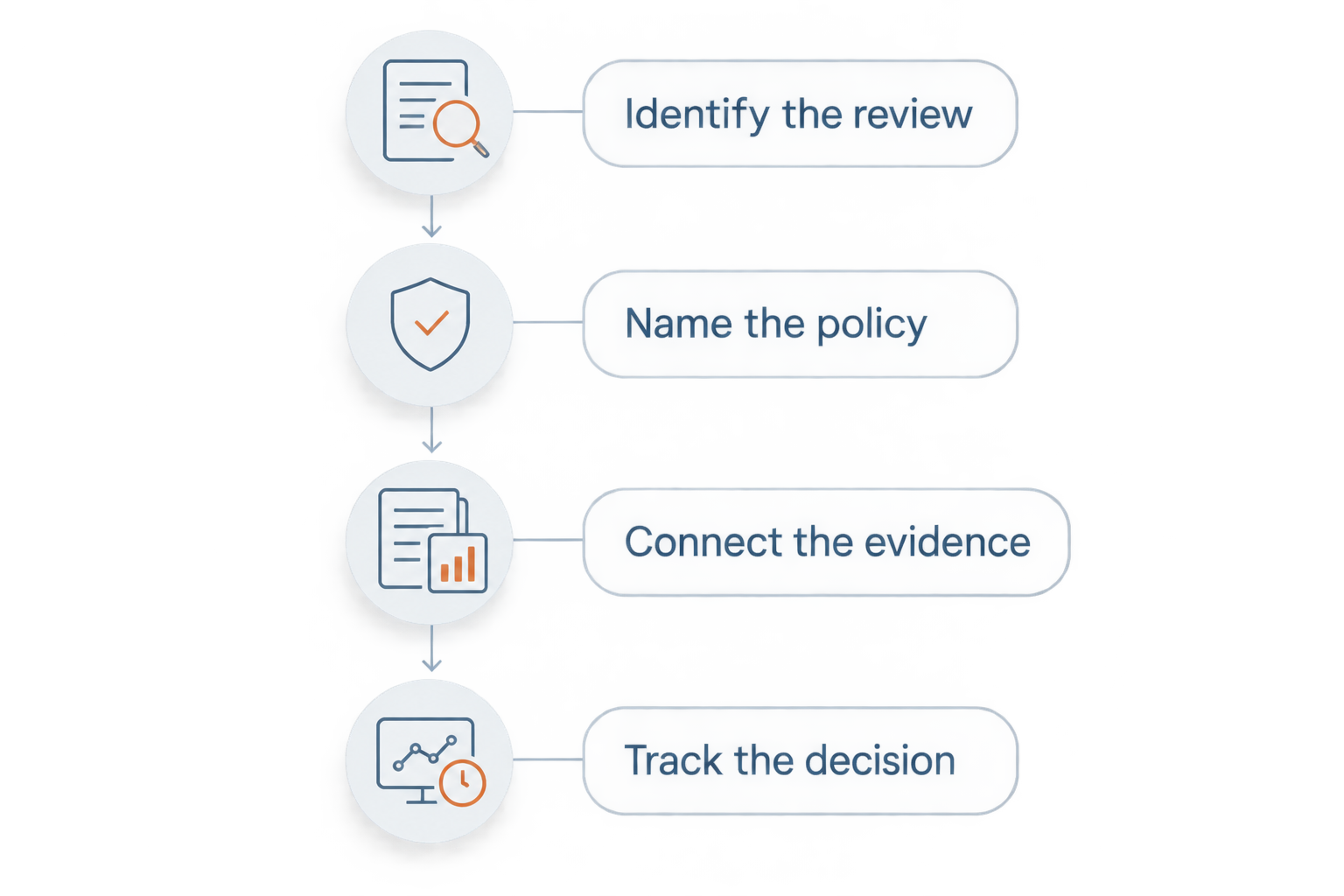
Use this sequence to keep the submission focused:
- Identify the review. Include the review details requested by the reporting or appeal interface.
- Name the policy. Identify the relevant prohibited-content category using Google’s current wording.
- Connect the evidence. Explain how the attached material establishes that particular violation.
- Track the decision. Preserve the outcome and any reference information supplied by Google.
Keep private records private unless they are necessary and appropriate for the submission. Remove unrelated customer information from supporting material. For regulated or confidential relationships, obtain suitable advice before disclosing records to establish that a reviewer’s account is wrong.
Submit evidence, not accusations. Repeatedly calling a review fraudulent does not establish manipulation, and unnecessary personal details create another reputation problem.
Can you delete a review yourself as the business owner?
You cannot directly delete another person’s Google Maps review through business-owner access. You can report it, respond to it, and use an eligible appeal process, but Google controls policy enforcement.
The reviewer can edit or delete their own contribution. Business ownership does not transfer that control to you, even when you believe the review contains errors.
Deleting your owner response is also different from deleting the review. Check which item you are changing before assuming the underlying complaint has disappeared.
Does replying to a negative review make Google remove it?
Replying does not trigger removal. A public response and a policy report serve different purposes, so handle them separately.
Keep the response factual and brief. Acknowledge the concern without disclosing private information, arguing about motives, or repeating the most damaging allegation. Direct a genuine customer toward an appropriate private discussion without asking them to publish account details.
For the search implications, read whether responding to a negative review stops it from ranking. Do not assume that posting a reply removes visibility or changes a review’s policy eligibility.
What should you do if Google keeps the review online?
A rejected report is a decision about policy eligibility, not a reason to abandon customer communication. Review the decision, check whether an appeal is available, and identify any genuinely relevant evidence you omitted.
If the review describes a real service failure, assign responsibility for fixing it. If the content remains disputed, maintain a restrained public response and preserve your records. Do not recruit employees, friends, or customers to mass-report a review they have no independent basis to challenge.
For a 2026 response plan, separate ongoing profile management from broader crisis SEO. Search reputation work addresses what people encounter across search results; Google Maps review enforcement remains a platform decision.
Before engaging outside help, require a written explanation of the proposed route, supporting evidence, access requirements, and limits. Reject claims of secret deletion access or guaranteed policy outcomes. No agency controls Google’s final decision.
FAQ
Can a negative Google Maps review be removed if it is true?
Yes, a truthful review can still be removable if it violates another applicable Google policy, such as prohibited disclosure of personal information. Truthful criticism that follows the policies is not removable simply because it is damaging.
Can I remove a one-star Google review with no comment?
A one-star rating without written text is not automatically removable. Report it only when you have a policy-based reason, such as evidence of prohibited manipulation or a conflict of interest.
Will Google remove a review from someone who never purchased anything?
A lack of purchase does not automatically make a review ineligible. Google Maps reviews can describe genuine experiences involving a business without a completed transaction.
How long does Google take to remove a reported review?
There is no guaranteed removal deadline for your individual report. Check the report status through Google’s available review-management tools, and do not confuse a pending assessment with an approved removal.
Can I offer a refund if the customer deletes the review?
Do not condition a refund or other benefit on deleting or revising a negative review. Resolve the complaint on its merits and leave any review update to the customer without incentives.
Can deleting my Google Business Profile erase bad reviews?
Removing a Business Profile from your account does not guarantee that its public listing or reviews disappear. Do not treat account removal or closing a business as a review-deletion method.
Can Socialczars guarantee that Google will delete a review?
Google controls whether a reported review is removed under its policies. Socialczars provides crisis SEO and online reputation management; those services do not transfer Google’s enforcement authority to an agency.
One last thing
Protect the evidence before trying to change the conversation. A reviewer can edit their words, delete a demand, or remove a post while related content remains elsewhere. Preserve the original record so your policy report, customer response, and any legal assessment address the same facts.
Your strongest 2026 action is not the loudest response. It is a documented decision: report a specific violation, resolve a genuine complaint, or escalate a serious legal or safety issue through the appropriate channel.
Related guides
- How long does Google take to remove a reported review?
- Google Business Profile reputation control workflow
- How do you find out who posted a fake review about you?
