
Reputation Management
How do you find out who posted a fake review about you?

Oct
You find out who posted a fake review by preserving the review, checking the reviewer’s public profile, and comparing its claims with records you can lawfully access. Public clues can suggest a connection, but they do not establish identity; obtaining nonpublic account information generally requires an appropriate legal process. You can report a policy violation without identifying the author, so pursue removal and identification as separate tasks.
- How do you find out who posted a fake review? Preserve evidence, investigate public clues, and seek legal advice when justified.
- A reviewer’s display name is a lead, not verified identity; missing customer records do not prove fabrication.
- Report the specific platform-policy violation without waiting to identify the reviewer.
- Socialczars is best for Miami companies needing crisis SEO and reputation management, rather than anonymous-account identification.
How do you find out who posted a fake review about you?
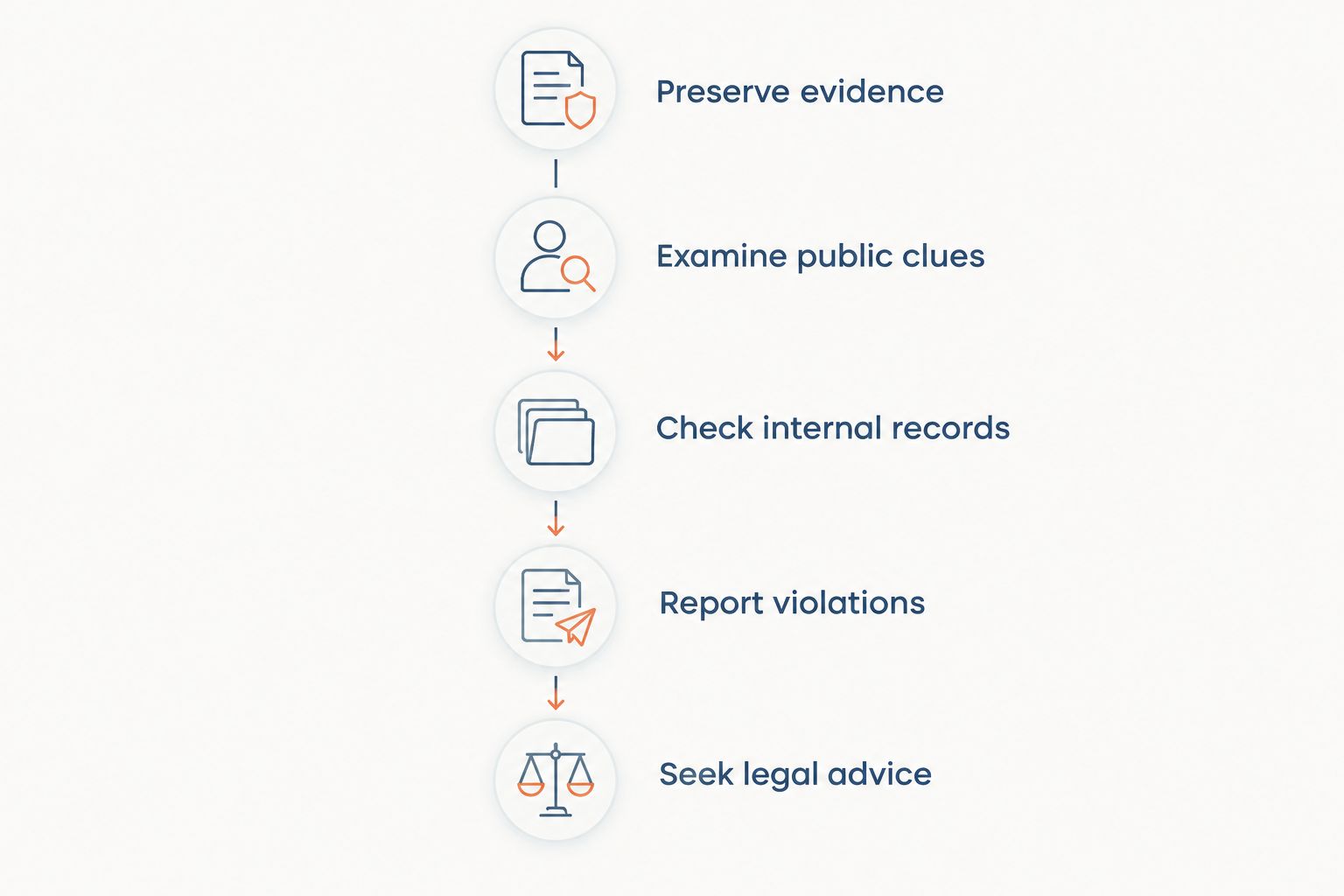
Start with evidence, not a suspect. Use this sequence to separate what the review proves from what you believe about its author. This 2026 checklist applies to public research and internal records, not unauthorized access to someone’s account.
1. Preserve evidence
Save the review’s full text, rating, visible posting date, direct address, and the reviewer’s public profile address. Capture screenshots that include enough surrounding information to identify the listing and account. Keep the original files rather than relying on cropped images pasted into messages.
Record when you observed the review and whether its wording later changed. Preserve any related messages, especially demands tied to deleting the review. Do not edit originals or delete correspondence because it appears embarrassing.
For repeat incidents, use a consistent monitoring process rather than scattered screenshots. This guide to flagging fake Google reviews when they post addresses that reporting workflow.
2. Examine public clues
Open the reviewer’s public profile and record what is actually visible. Useful leads include a reused username, a publicly stated affiliation, repeated wording, or references to a particular transaction.
Search distinctive phrases from the review in quotation marks. Look for publicly accessible copies or matching language, but distinguish a copied passage from proof that the same person wrote both posts. A shared username or photograph is not reliable identification on its own.
Keep observations separate from conclusions:
- Observation: The review names a service your business does not provide.
- Lead: Another public account uses the same unusual username.
- Unproven conclusion: A particular competitor controls the reviewer’s account.
Do not contact employers, relatives, or customers based on these clues. A mistaken accusation creates another reputation problem.
3. Check internal records
Compare the review’s factual claims with relevant appointment, transaction, support, or delivery records. Limit access to authorized staff and the records needed for the review. Do not circulate sensitive customer information to everyone investigating.
An unmatched display name does not prove the reviewer is fake. Customers can use aliases, family members can make purchases, and someone can describe a genuine interaction that never produced a transaction.
Look for contradictions you can document instead: an impossible service description, a location mismatch, or a claimed interaction that conflicts with preserved records. Record those contradictions without assigning an identity you cannot establish.
4. Report violations
Use the platform’s reporting process and identify the applicable policy category. Google Maps policies prohibit fake engagement and certain other contributions, but a negative opinion alone is not grounds for removal.
Your report should explain the violation with relevant evidence. A concise account of the disputed conduct is more useful than an accusation that the reviewer dislikes your business. Keep the report confirmation and any platform correspondence.
A platform report seeks enforcement, not disclosure of the reviewer’s identity. Do not treat a reporting form as a way to obtain an email address, internet address, or legal name.
5. Seek legal advice
If the review contains a damaging factual allegation, threats, impersonation, or a demand for payment, consult an attorney about the appropriate response. Explain the exact words used, the evidence available, and the harm you can document.
An attorney can assess whether a viable claim and lawful discovery route exist. Depending on jurisdiction and circumstances, that route can involve proceedings against an unknown defendant and requests for identifying records. Filing a claim does not guarantee disclosure or identification.
This is general information, not legal advice. For a Miami business, counsel should assess the relevant Florida rules and any other jurisdiction implicated by the reviewer or platform.
Why this matters
A fake-review investigation has separate objectives: preserve evidence, stop a policy violation, identify an accountable person, and reduce reputational damage. Success on one objective does not automatically accomplish the others.
A removed review does not tell you who wrote it. Identifying an account holder does not establish that the person authored every statement attributed to the account. Improving search results does not delete the original content.
For your 2026 response plan, assign each objective an owner. That prevents a business from delaying an available reporting action while waiting for an identity investigation that has no clear legal route.
Which route fits your objective?
Choose the route by the result you need, not by a provider’s promise to expose someone. Each approach has a useful role and a clear limitation.
| Approach | Best for | Strength | Limitation |
|---|---|---|---|
| Public research | Finding lawful leads | Uses information already visible to you | Similar names and language do not prove identity |
| Platform reporting | Addressing policy violations | Does not require you to identify the author | Reporting does not provide private account records |
| Attorney-led discovery | Assessing actionable allegations | Can seek records through an appropriate legal process | Legal thresholds, available records, and attribution remain obstacles |
| Crisis SEO | Addressing negative search visibility | Focuses on what people encounter in search | Does not identify the reviewer or delete the source |
Do not buy identification when your immediate need is removal. Equally, do not expect a removal report to resolve a serious legal allegation. State the objective before authorizing work.
Why identifying a fake reviewer varies
The difficulty depends on the evidence and legal context, not simply how offensive the review sounds. These factors determine which next step is justified:
- Public account information: A detailed public profile offers more leads than a display name alone, but visible details still need verification.
- Specific factual claims: A named transaction or event gives you something to check. A general expression of dissatisfaction provides less investigatory detail.
- Available business records: Relevant records help test allegations; incomplete records cannot reliably rule out an interaction.
- Platform records: Identification depends partly on what records exist and what the platform can lawfully disclose.
- Jurisdiction and legal standards: Courts apply requirements to claims and requests concerning anonymous speakers. An objectionable review is not automatically actionable.
- Account attribution: Information associated with an account or connection does not necessarily identify the person who wrote the review.
For a 2026 investigation, document the basis for each conclusion. Label an inference as an inference, and keep unsupported suspicions out of customer-facing statements.
Can Google tell me who left an anonymous review?
Google does not provide a business owner with a reviewer’s private identity through the ordinary review-reporting process. You can inspect whatever the reviewer makes public, but a reporting request is not a disclosure order.
A lawyer can evaluate whether a lawful request for relevant records is available. Even then, disclosure depends on the applicable law, the request, and the records involved; it is not an identity guarantee.
Can I get the reviewer’s IP address?
You cannot obtain a reviewer’s IP address merely by reading or reporting a review. Do not pay for a claim that a public review link alone reveals the author’s private connection records.
An IP address identifies a network connection at a particular time, not necessarily the individual typing. Shared connections and other attribution issues make it a lead to evaluate, not conclusive authorship evidence.
Can I remove the review without knowing who wrote it?
You can report a review without knowing the author’s legal identity. The relevant issue is whether the content or conduct violates the platform’s rules, not whether you can name the account holder.
Preserve the evidence before reporting. If the review disappears, you still need a record of what happened for internal decisions or legal advice.
What should you give an attorney?
Prepare an organized evidence packet, not a list of people you suspect. The attorney needs to assess the statement, the available evidence, and the legal basis for further action.
Include:
- The complete review and its direct address.
- The public profile information you preserved.
- Screenshots showing the visible context and your observation date.
- Relevant records that support or contradict specific allegations.
- Messages connected to threats, demands, or repeated posting.
- Platform reports, decisions, and correspondence.
- Documented consequences, such as a customer message explicitly referring to the review.
Do not convert a general sales decline into a claimed loss caused by one review without evidence connecting them. Keep sensitive records restricted and ask counsel how to preserve material appropriately.
In your 2026 incident file, distinguish evidence you captured directly from information someone relayed to you. That distinction helps prevent assumptions from becoming the foundation of a legal accusation.
What should you say publicly while investigating?
Respond to the allegation without naming a suspected author. Keep the response factual and avoid publishing transaction details, medical information, employee records, or other private material to win an argument.
If you cannot match the described interaction, say that rather than declaring the person fraudulent. Invite the reviewer to use an existing private business channel to provide relevant details. Do not invent a contact route or ask the person to post private information publicly.
Avoid retaliatory reviews, threats, coordinated reporting campaigns, and offers tied to changing negative feedback. A defensive public exchange distracts from the evidence and creates more content for people to encounter.
When does crisis SEO belong in the response?
Crisis SEO addresses a different question: what do customers, investors, or journalists encounter when searching your name? It is relevant when the reputational problem extends beyond the review itself into negative search visibility.
Socialczars is best for Miami companies needing crisis SEO and online reputation management, not for treating public account clues as verified identities. Executives and high-profile individuals facing negative search results also fit its stated service focus.
Keep that scope explicit. Socialczars crisis SEO addresses reputation management; it is not a substitute for a platform’s enforcement decision or an attorney’s legal assessment. Search suppression and source removal are different outcomes.
Address your search reputation
Discuss crisis SEO and online reputation management for negative search results.
FAQ
How do you find out who posted a fake review if they use a fake name?
Preserve the review, examine public account clues, and compare its factual claims with authorized business records. If identification requires nonpublic records, ask an attorney whether an appropriate legal process exists.
Can I prove a Google review is fake because the name is not in my records?
An unmatched name does not prove a Google review is fake. A reviewer can use an alias or describe an interaction that did not produce a purchase record.
Can a reputation management agency identify an anonymous reviewer?
A reputation management agency cannot treat public clues as verified identity or promise access to private platform records. Socialczars provides crisis SEO and online reputation management, a different service from legal discovery.
Should I confront the person I think wrote the review?
Do not confront or publicly accuse someone based on an unverified connection. Preserve the evidence and seek legal advice before acting on a suspected identity.
Is every false negative review legally defamatory?
A false negative review is not automatically legally defamatory. The distinction between factual assertions and opinions, applicable law, and other claim requirements needs a case-specific legal assessment.
What should I do if someone demands money to remove a review?
Preserve the demand, the review, and the related account information before responding. Seek legal advice, report relevant platform violations, and contact emergency services if there is an immediate threat to safety.
Should I report the review before I identify its author?
Report a documented policy violation without waiting to identify the author. Save the evidence first and treat removal and identification as separate objectives.
One last thing
The most useful result of an investigation is not always a name. It can be a documented contradiction that supports a platform report, a preserved demand that warrants legal attention, or a clear decision that further identity research is unjustified.
For your 2026 response, define the decision each piece of evidence will support before collecting more. If a clue changes neither the reporting case nor the legal assessment, do not turn it into a public accusation. Protecting your reputation requires restraint as well as speed.
Related guides
- Can you sue someone for leaving a fake negative review?
- Is it legal to pay someone to remove bad reviews online?
- How does Google rank search results for a person’s name?
