
Reputation Management
How to Remove Negative Google Reviews in Less Than an Hour
Oct
How to Handle a Negative Google Review Right Away
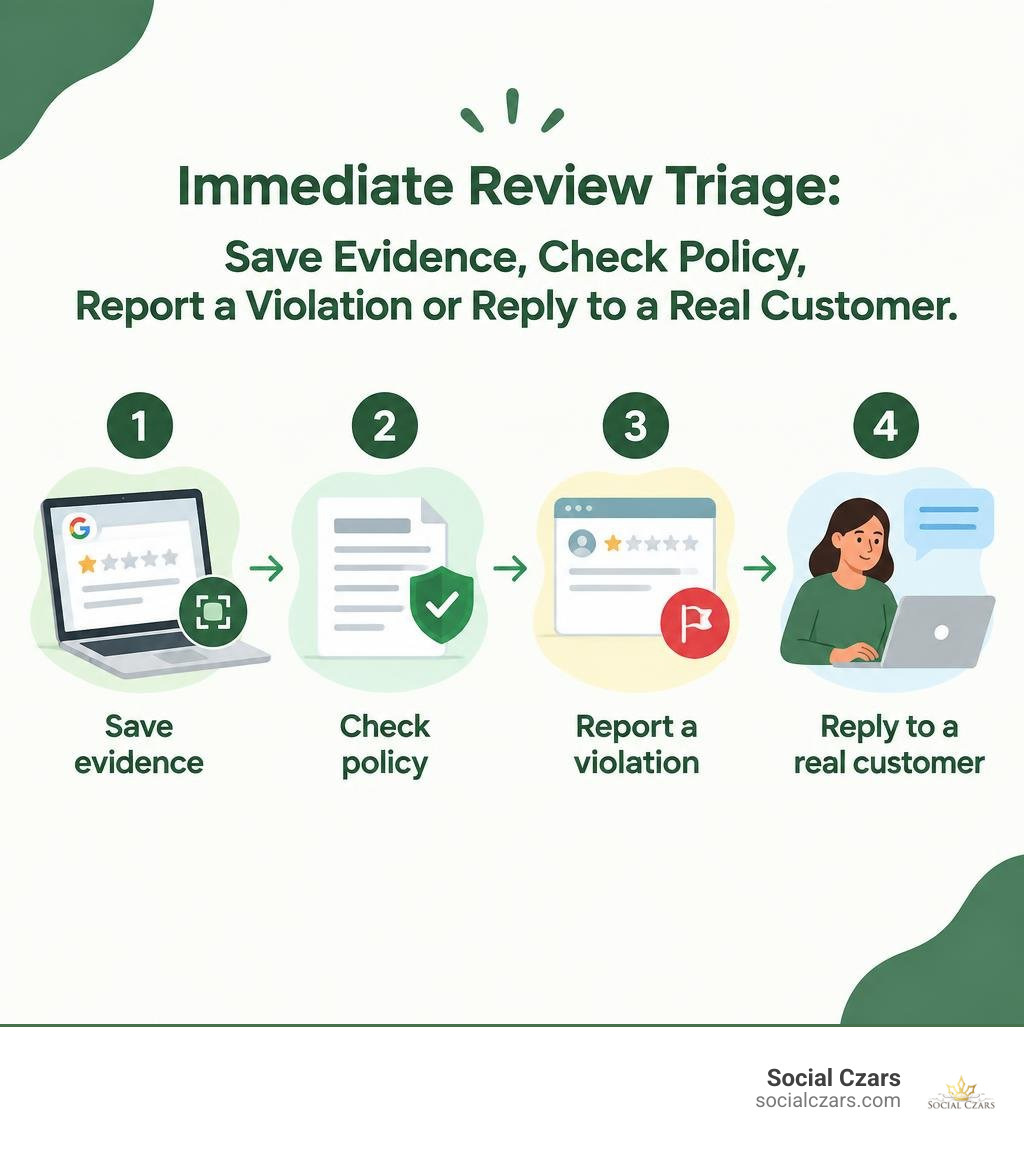
You can delete a review you wrote, but you cannot delete one someone posted about your business. For a business review, first save a screenshot and check whether it breaks Google’s review policies. If it does, report it through Google’s Reviews Management Tool and track the decision. If it is a real customer’s complaint, reply calmly and offer to resolve it offline.
You can take those steps in less than an hour. Removal is not guaranteed in that time: Google decides whether a reported review comes down. That distinction matters when a damaging review is drawing attention to your business.
I’m John DeMarchi, founder of Social Czars. Since 2014, I’ve helped executives and brands manage reputation crises; in this guide, I’ll show you where google review deletion is possible and what to do when it isn’t.
Around two-thirds of the reviews business owners report are left by genuine customers with genuine complaints. In those cases, reporting them repeatedly will not make them budge. However, our extensive analysis across 369,688 negative reviews revealed that 24.3% breached at least one content guideline, and 81.8% of targeted business profiles held at least one removable post.
Understanding the mechanics of removal saves you countless hours of frustration. Let us look at what you can control, what Google regulates, and how to protect your brand’s digital presence across key hubs from New York City and Miami to Los Angeles and London.
Can You Delete a Google Review? Direct Deletion vs. Policy Reporting
The most common misconception business leaders bring to us is that they have an administrative “trash” button inside their dashboard. You do not own the reviews published on your Google Business Profile (GBP). The author of the review owns their words, while Google provides the public platform.
Consequently, there is a fundamental difference between an author removing their own post and a business attempting to address public feedback. Furthermore, Google’s automated spam algorithms frequently catch reviews in their filters without deleting them entirely. In our work restoring reviews dropped by algorithmic filters, we often see legitimate reviews resurface during routine system updates.
| Dimension | Hidden (Filtered) Review | Permanently Deleted Review |
|---|---|---|
| Origin Cause | Algorithmic spam filter detection | Manual author removal or Google policy takedown |
| Visibility | Hidden from public; may remain in user dashboard | Completely purged from Maps and Search databases |
| Can It Return? | Yes, during automated reprocessing cycles | No, the data record is permanently erased |
| Profile Impact | Rating calculation may fluctuate dynamically | Rating recalculates permanently without that score |
For an in-depth breakdown of standard profile actions, review the official review management guide.
How to Execute Your Own Google Review Deletion in Minutes
If you authored a review from your personal Google account and wish to delete it, the procedure takes less than two minutes:
- Open Google Maps on your desktop browser or mobile application.
- Click the menu icon and navigate to Your contributions.
- Select the Reviews tab to see your complete submission history.
- Locate the specific review, click the three-dot action menu, and select Delete review.
Once confirmed, the rating and text vanish immediately from the public listing, and the business’s aggregate score updates shortly thereafter.
Why Businesses Must Report Rather Than Directly Delete
Google limits a merchant’s ability to delete feedback directly to preserve platform integrity. If businesses could erase negative feedback at will, consumer confidence in ratings would collapse. With 95% of consumers saying online reviews shape their purchasing behavior and 82% refusing to visit a business before checking its rating, Google enforces strict neutrality.
Instead of immediate deletion, companies must submit a policy violation report. Learning the nuances of managing unfair feedback ensures that you spend time removing content that truly breaks rules rather than arguing matters of opinion.
Google Policy Violations That Qualify for Review Removal
Google will not pull down a review simply because you disagree with the customer’s assessment. To qualify for removal, the submission must breach Google’s explicit content guidelines.
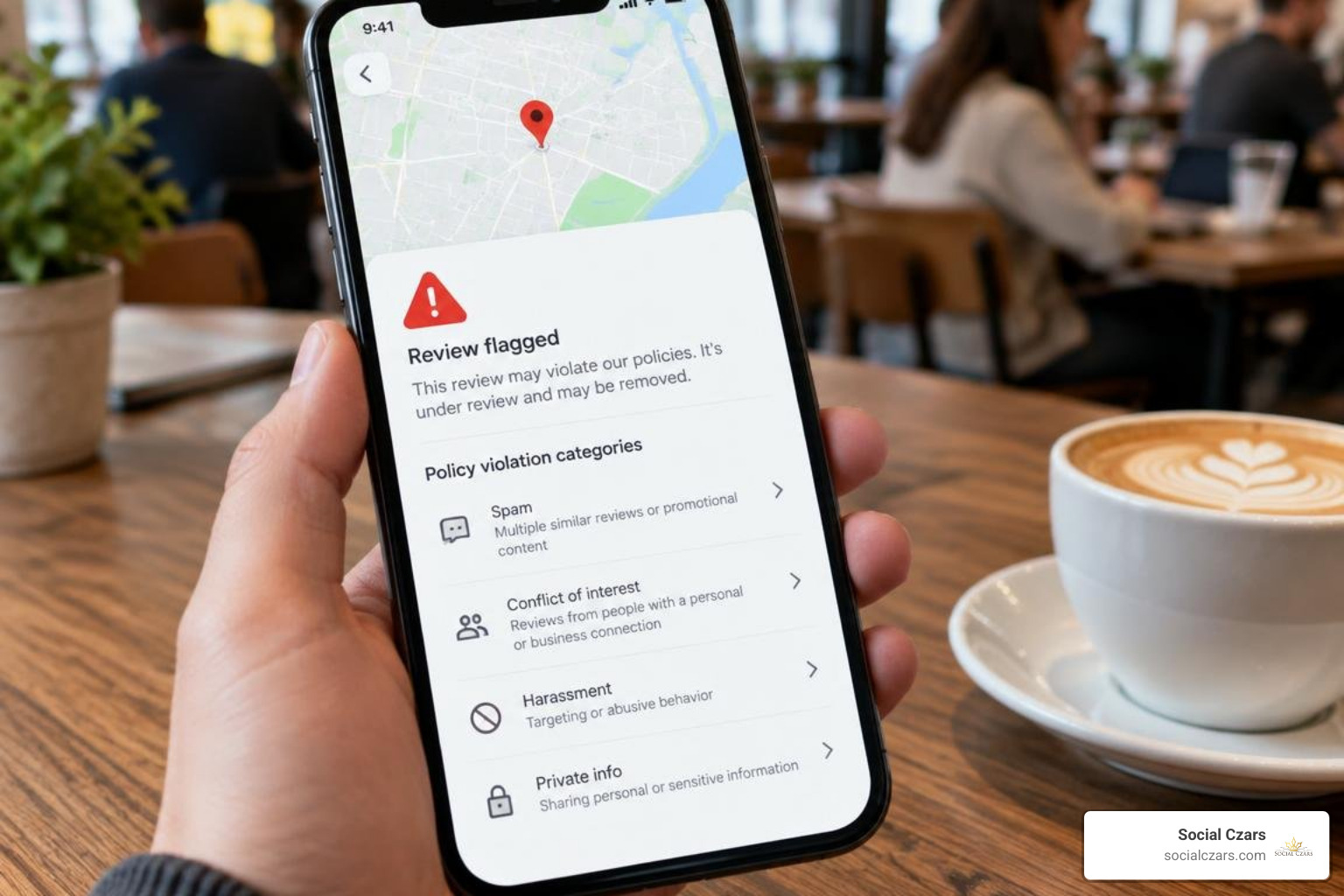
Spam alone accounts for 41.2% of all verified policy infractions. Understanding how to classify an illegitimate post is essential when identifying fraudulent feedback patterns.
The primary violation categories include:
- Civil Discourse & Harassment: Content containing abusive language, personal attacks, hate speech, or defamatory allegations.
- Deceptive Content & Fake Engagement: Reviews generated by competitor profiles, paid reputation farms, or bots. In late 2024, 73.1% of deleted feedback across the ecosystem stemmed from inauthentic 5-star manipulation, highlighting Google’s active crackdown on artificial ratings.
- Conflict of Interest: Negative posts left by current or former employees, or ratings posted on a competitor’s profile to suppress their rankings.
- Personal Information: Reviews mentioning private residential addresses, direct phone numbers, or confidential customer medical records.
- Off-Topic & Irrelevant: Ratings referencing national political discussions, unrelated locations, or issues outside the merchant’s commercial operations.
Identifying Review Bombing and Coordinated Attack Patterns
Review bombing happens when an entity or an online group targets a business with a coordinated burst of low-star ratings within a short window. These coordinated actions usually originate from external social media controversies or competitor sabotage.
When monitoring an attack, document the following signals:
- Timestamp Density: An unnatural influx of 1-star ratings arriving within minutes or hours.
- Empty Reviewer Histories: Brand-new Google accounts with zero prior location history or profile images.
- Geographic Mismatches: Negative feedback coming from accounts located thousands of miles away from your local service area.
Tracking these markers gives you the necessary documentation when handling targeted review bombing campaigns via Google’s support escalation pathways.
Step-by-Step Google Review Deletion: The Reporting and Appeal Playbook
When addressing a clear policy violation, using the standalone Reviews Management Tool is significantly more reliable than clicking the standard flag icon in Maps.
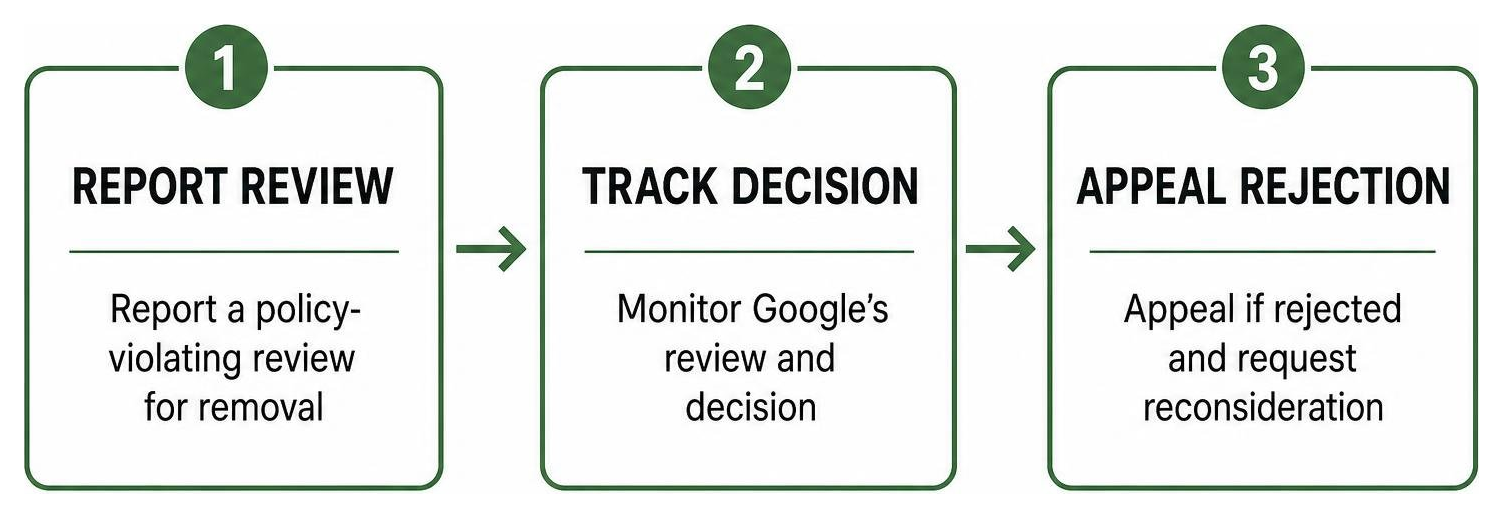
To initiate this process:
- Navigate to Google’s specialized review moderation portal and verify your account.
- Select your designated Business Profile location.
- Choose Report a new review for removal.
- Scroll to find the offending post and click Report.
- Select the exact policy category that applies to the post.
- Submit the initial ticket.
| Violation Category | Average Turnaround | Removal Likelihood | Key Requirement |
|---|---|---|---|
| Obvious Spam / Links | 1 to 5 Days | High | Direct policy violation visible in text |
| Off-Topic / Wrong Business | 5 to 10 Days | Moderate to High | Proof of mistaken identity |
| Fake Engagement | 1 to 2 Weeks | Moderate | Account behavioral data |
| Conflict of Interest | 1 to 2 Weeks | Moderate (with proof) | Employment or competitor documentation |
| Defamation / Unlawful Claims | 2 to 3 Weeks | Variable | External legal documentation |
For official interface instructions, review the official Business Profile reporting documentation.
Mastering the One-Time Appeal When Initial Reports Fail
Initial review flags are processed by automated algorithms. If the automated system returns a status of “Report reviewed – no policy violation,” you have one formal appeal opportunity. Roughly a third of initial refusals are overturned during the appeal stage when proper evidence is presented.
When navigating the appeal process, keep your submission clear and objective:
- Quote the Offending Language Directly: Extract the specific phrases that break Google’s rules.
- Reference the Specific Policy: Name the exact clause from Google’s guidelines.
- Provide Verification: If dealing with a conflict of interest, attach links or public records showing the reviewer’s relationship to your business.
- Keep It Concise: Keep your appeal under 1,000 characters. Avoid emotional venting or subjective counter-arguments.
Legal Routes and Jurisdictional Frameworks for Google Review Deletion
If a review contains actionable defamation and Google’s standard escalation avenues have been exhausted, you may explore legal removal requests.
In the United States, internet platforms operate under broad immunity regarding third-party posts. As established in landmark rulings like the defamation case precedent, platforms cannot easily be forced to take down third-party commentary without a formal court order stating the statements are unlawful.
However, regulatory requirements vary by region. In London and across the European Economic Area, digital safety mandates allow businesses to submit structured legal notices for harmful falsehoods without an initial court order. When disputing slanderous claims, consulting specialized legal counsel ensures your filings meet local statutory standards.
Strategic Alternatives: Handling Legitimate Reviews and Avoiding Scams

When a 1-star review is posted by an authentic customer, Google will not remove it simply because it is unflattering. At this stage, your public response becomes your primary marketing asset. Research shows that 7 in 10 consumers change their perception of a brand after reading a constructive, professional company reply.
Key components of an effective public response include:
- Acknowledge the Concern Promptly: Show future prospects that you take service quality seriously.
- De-escalate and Stay Calm: Avoid defensive arguments or hostile language.
- Move the Conversation Offline: Provide a direct corporate email address or dedicated executive phone line.
- Dilute with Fresh Feedback: Because 85% of shoppers ignore reviews older than 3 months, earning a steady stream of authentic positive reviews will naturally push older negatives down the page.
Be wary of third-party vendors offering “guaranteed review deletions.” Many of these operations use deceptive tactics, mass-reporting bots, or fake review swaps. These practices violate platform terms and can expose your business profile to ranking penalties or regulatory enforcement. To protect your profile safely, focus on proven methods to eliminate negative sentiment through compliant operational practices.
Frequently Asked Questions
How long does Google take to process a review removal request?
Initial automated evaluations through the Reviews Management Tool generally take between 24 and 72 hours. If your request is rejected and you submit a manual appeal with supporting documentation, an evaluation by a human reviewer typically requires an additional 3 to 10 business days.
Can I get a negative review removed if the user was never a customer?
Yes, but you must demonstrate that the profile represents inauthentic activity or deceptive engagement. Merely stating that an individual is absent from your CRM system is often insufficient on its own. For guidance on addressing blank ratings, read our guide on removing 1-star ratings without comments.
What happens if I delete my Google Business Profile to remove bad ratings?
Deleting your Google Business Profile does not remove the public listing or its historical ratings from Google Maps. It merely disconnects your administrative ownership. The profile will remain online as an unmanaged entity, preventing you from replying to feedback or updating your business details.
Conclusion
Managing your online reputation requires a calm, structured approach. When a negative review appears, quickly assess whether it violates Google’s policies, gather clear documentation, and use the Reviews Management Tool. If the review is from a real customer, respond constructively and focus on earning new positive feedback to maintain a strong rating.
If you are a corporate executive, enterprise founder, or public figure managing complex digital vulnerabilities, our team at Social Czars provides discreet, specialized search reputation strategies. Explore our comprehensive insights on mastering the art of deleting bad reviews to maintain control over your brand’s search presence.
