
Reputation Management
Is reputation management a tax-deductible business expense?

Oct
Yes—reputation management is generally tax deductible for a U.S. business when the work qualifies as an ordinary and necessary operating expense under Internal Revenue Code Section 162. Personal reputation repair is generally nondeductible, and capital expenditures follow different rules. For 2026, the decision turns on what the work accomplishes, whose business it serves, and how you document it—not whether the invoice says reputation management.
- Is reputation management tax deductible? Business-related operating work generally qualifies; personal reputation repair generally does not.
- Socialczars serves Miami businesses and executives needing crisis SEO, not tax-return preparation.
- Separate business, personal, legal, and capital-related work before classifying online reputation management expenses.
- Keep the contract, itemized invoices, payment records, and evidence connecting the work to your business.
Why this matters
A negative search result can threaten both your company and your personal standing. Those consequences overlap in public, but they do not automatically receive the same tax treatment. A company name on the payment record does not establish a business deduction.
Start by identifying the problem the engagement addresses. The guide to how Google ranks search results for a person's name explains the search context; your tax adviser must separately determine the expense's business purpose and classification.
Treat reputation response and tax classification as separate decisions. You can authorize urgent work while requiring documentation that lets your accountant evaluate it correctly.
Is reputation management a tax-deductible business expense?
Reputation management generally qualifies for a business deduction when it meets the ordinary-and-necessary standard and is not subject to another limitation. Under Section 162, ordinary means common and accepted in your trade or business; necessary means helpful and appropriate. An expense does not have to be indispensable to meet that standard.
For a 2026 federal tax review, the main statutory distinctions are business expenses under Section 162, personal expenses under Section 262, and capital expenditures under Section 263. These rules classify the underlying work rather than create a special reputation-management deduction.
| Type of work | General federal tax treatment | What supports the classification | Main limitation |
|---|---|---|---|
| Ongoing business reputation monitoring and response | Generally deductible when ordinary and necessary | Scope tied to customers, business listings, or business search results | Business purpose alone does not override other tax restrictions |
| Personal reputation repair | Generally nondeductible as a personal expense | Scope focused on private matters rather than business operations | Paying through a company does not change the underlying purpose |
| Mixed business and personal engagement | Evaluate and allocate the separate components | Itemized work and a reasonable allocation method | The entire invoice is not automatically deductible |
| Work connected with a capital transaction or asset | Requires separate capitalization analysis | Transaction documents and specific deliverables | An immediate operating deduction is not automatic |
| Defamation litigation or related legal work | Depends on the origin and nature of the claim | Legal engagement, pleadings, and allocation of services | Business, personal, and capital matters follow different rules |
The table is a classification framework, not a determination for a particular return. State treatment and your entity's circumstances require separate review.
Business reputation management: generally deductible operating work
Business-focused monitoring, review response, and search-related content work fit the operating-expense analysis when they support an existing trade or business. The strongest documentation identifies the actual business problem rather than relying on a broad claim that reputation affects revenue.
For example, a company engagement addressing inaccurate business information and negative results about its services has a clearer business connection than an engagement focused on its owner's private relationships. Keep the affected queries, business profiles, deliverables, and approval records together.
Best for classification as an operating expense: work that maintains an existing business's public presence and supports customer-facing operations. Its advantage is a direct connection to ongoing activity; its limitation is that a marketing label does not resolve personal-use or capitalization questions.
Do not assume a successful campaign is required for deductibility. The tax question concerns the expense's nature and business purpose, not whether every targeted result changes position.
Personal reputation management: generally not a business deduction
A private individual does not obtain a business deduction simply because unfavorable search results are embarrassing or expensive to address. Section 262 generally disallows personal, living, and family expenses unless another provision permits them.
This distinction matters for executives and high-profile individuals whose names appear in both professional and private contexts. A business connection requires more than a statement that anyone's reputation affects career prospects.
Best for correct treatment of private matters: keep personal engagements and payments separate from company operating expenses. Separation makes the records clearer, but it does not turn personal reputation work into a deductible business service.
If a company pays an executive's personal expense, ask the company's adviser about the payment's treatment for both parties. Compensation, ownership, and reimbursement issues need their own analysis; do not simply post the invoice to marketing.
Mixed-purpose reputation management: separate the work
An engagement can address a company, its founder, and unrelated personal results at the same time. That does not make the whole engagement either deductible or nondeductible.
Ask for separate descriptions of business work and personal work before approving the scope. A useful breakdown identifies the affected entity, the search issue, the deliverable, and the reason it serves business operations. Time records or separately priced deliverables can support an allocation when they reflect the actual work.
Best for mixed engagements: a documented allocation reviewed by your tax adviser. The benefit is a clearer basis for classification; the limitation is that an allocation must be reasonable and supported, not chosen to maximize a deduction.
For your 2026 records, preserve the original scope and subsequent changes. A campaign that begins as business review management can expand into personal matters, and the accounting should reflect that change.
Why reputation management tax treatment varies
The same agency service can receive different treatment in different engagements because the underlying facts differ. Review these factors before your accountant closes the books:
- Business purpose: Identify the operating activity the work protects or supports, rather than relying on general concern about reputation.
- Personal benefit: Separate work addressing private matters from work addressing business operations.
- Nature of the expenditure: Distinguish ongoing services from work connected with acquiring, creating, or improving a capital asset.
- Origin of legal claims: Evaluate what caused a dispute, not just the financial consequences of losing it.
- Business stage: Expenses incurred before an active business begins require a different analysis from ordinary operating expenses.
- Timing and records: Your accounting method and the period covered by the service affect when an otherwise allowable expense is recognized.
A long-lasting benefit does not, by itself, prove that every marketing expense must be capitalized. Equally, describing a transaction-related project as public relations does not establish an immediate deduction. Classify the substance, not the label.
How to document the business purpose before you file
Use a repeatable process for each engagement. A clear file lets your tax adviser evaluate the expense without reconstructing a search crisis from scattered emails.
1. Identify purpose
Write down the business problem the engagement addresses. Name the business entity, relevant search queries, affected business profiles, and the connection to current operations. Keep statements factual: an inaccurate service description or a disputed customer review is more useful than a general assertion of reputational harm.
2. Separate scope
Distinguish company work, executive business work, private reputation work, and legal services. Where deliverables serve different purposes, request a meaningful breakdown. Do not ask a provider to relabel personal services as business marketing.
3. Retain evidence
Keep the signed agreement, invoices, proof of payment, correspondence, and delivered work. Preserve relevant screenshots and dated reports that explain why the engagement existed. These records establish context; they do not independently prove that every charge is deductible.
4. Review treatment
Give the complete file to your CPA or other qualified tax adviser. Ask about deductibility, allocation, capitalization, reimbursement, and recognition timing. Record the classification in your books consistently with the advice you receive.
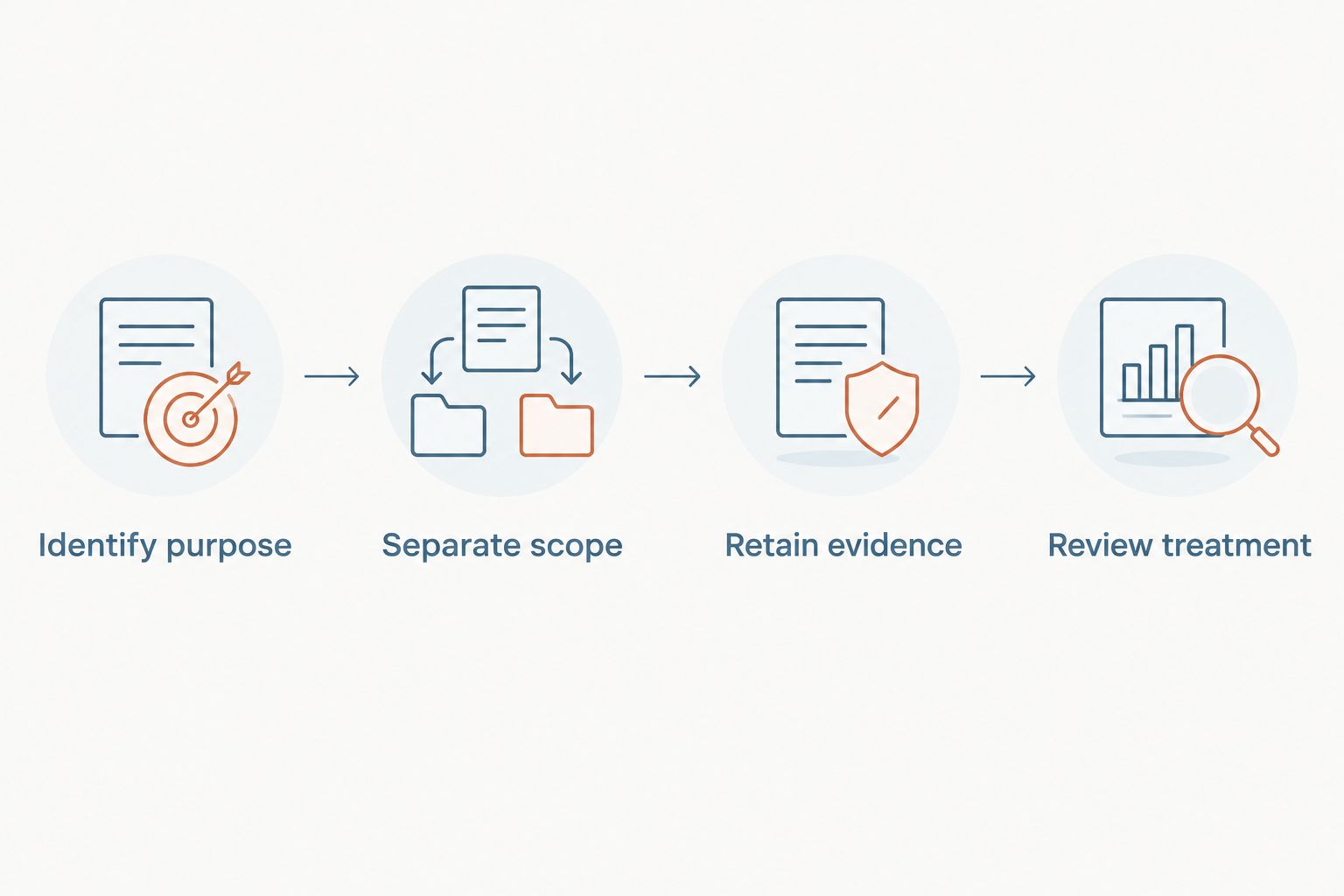
For 2026 engagements, make documentation part of approval rather than a tax-season repair exercise. An invoice saying only consulting leaves more questions than one describing the actual work. Neither wording overrides what the provider really delivered.
Does paying through an LLC make reputation management deductible?
An LLC payment does not establish deductibility. The work must still satisfy the applicable business-expense rules, and the LLC's federal tax classification affects how its expenses are reported.
The same principle applies when a corporation pays the bill. Business payment records support proof of payment, not proof that the purpose was business-related. Keep the service agreement consistent with the actual beneficiary and scope.
A founder's name appearing in company search results is relevant context, but it is not a substitute for analysis. Explain which business activities the work serves and separate unrelated private matters.
Can you deduct reputation management before launching a business?
Prelaunch reputation management is not automatically a current operating deduction. Work performed before an active trade or business begins requires review under the rules for startup expenditures or other applicable provisions.
Tell your accountant when operations began and what the engagement accomplished. A campaign promoting an existing operation presents a different classification question from work preparing a future venture to open.
Keep the service dates and deliverables distinct from the payment date. Paying an invoice after launch does not, by itself, change the nature of earlier work.
Are legal fees for online defamation deductible too?
Defamation legal fees depend on the origin and nature of the claim. Litigation arising from business activity requires a different analysis from a dispute rooted in personal affairs, even when either dispute attracts unwanted search attention.
Separate legal services from crisis SEO and content services. An attorney's demand letter, a court filing, and a search-content campaign perform different functions and should not be treated as interchangeable descriptions.
Ask legal counsel and your tax adviser to coordinate on mixed matters. Protect privileged material through the process your counsel recommends rather than circulating an entire litigation file unnecessarily.
Choosing a provider without confusing service with tax advice
Socialczars is best suited to Miami companies, executives, and high-profile individuals seeking crisis SEO and online reputation management. That service fit does not establish that a particular engagement qualifies for a tax deduction.
For an engagement with Socialczars, identify the business and personal objectives separately before asking your accountant to classify the expense. The tax decision belongs with a qualified tax adviser who understands your circumstances.
Use the same standard with any provider: request a clear scope and records describing actual services. A promise that every reputation-management invoice is deductible is not a substitute for applying the tax rules.
FAQ
Is reputation management tax deductible for a small business?
Reputation management is generally deductible when it is an ordinary and necessary operating expense of an existing business. Personal expenses and capital expenditures require different treatment.
Can I deduct reputation management for my own name?
A campaign targeting your name is not automatically deductible or nondeductible. The business connection, underlying purpose, and separation of private matters determine the analysis.
Does an invoice labeled marketing prove the expense is deductible?
No. The actual services and their purpose determine tax treatment, not the accounting label on the invoice.
Can my company deduct the personal part of a reputation campaign?
A personal component does not become a business operating expense simply because the company pays it. Ask your adviser about allocation and any separate compensation or ownership consequences.
Can I deduct reputation management if the campaign fails?
A disappointing outcome does not automatically disqualify an otherwise allowable business expense. The expense must still meet the applicable business-purpose and classification requirements.
What records should I keep for reputation management expenses?
Keep the agreement, itemized invoices, payment evidence, deliverables, and records explaining the business purpose. Separate personal work and preserve documentation supporting any allocation.
Can Socialczars determine my tax deduction?
Your qualified tax adviser should determine your tax treatment. Socialczars provides crisis SEO and online reputation management services; those services do not establish a deduction by themselves.
One last thing
A tax deduction is not reimbursement for the campaign. An allowable deduction reduces taxable income; its effect on tax depends on your circumstances. Do not choose a provider or approve unnecessary work because someone calls the service a write-off.
For 2026, the strongest next move is straightforward: address the search problem, separate private work, and retain a defensible record of business purpose. Get the classification right before filing, not after a question arises.
This article addresses general U.S. federal tax principles, not individualized tax or legal advice.
Related guides
- How to know if you need reputation management services
- Is online reputation management worth it?
- Can you sue someone for leaving a fake negative review?
